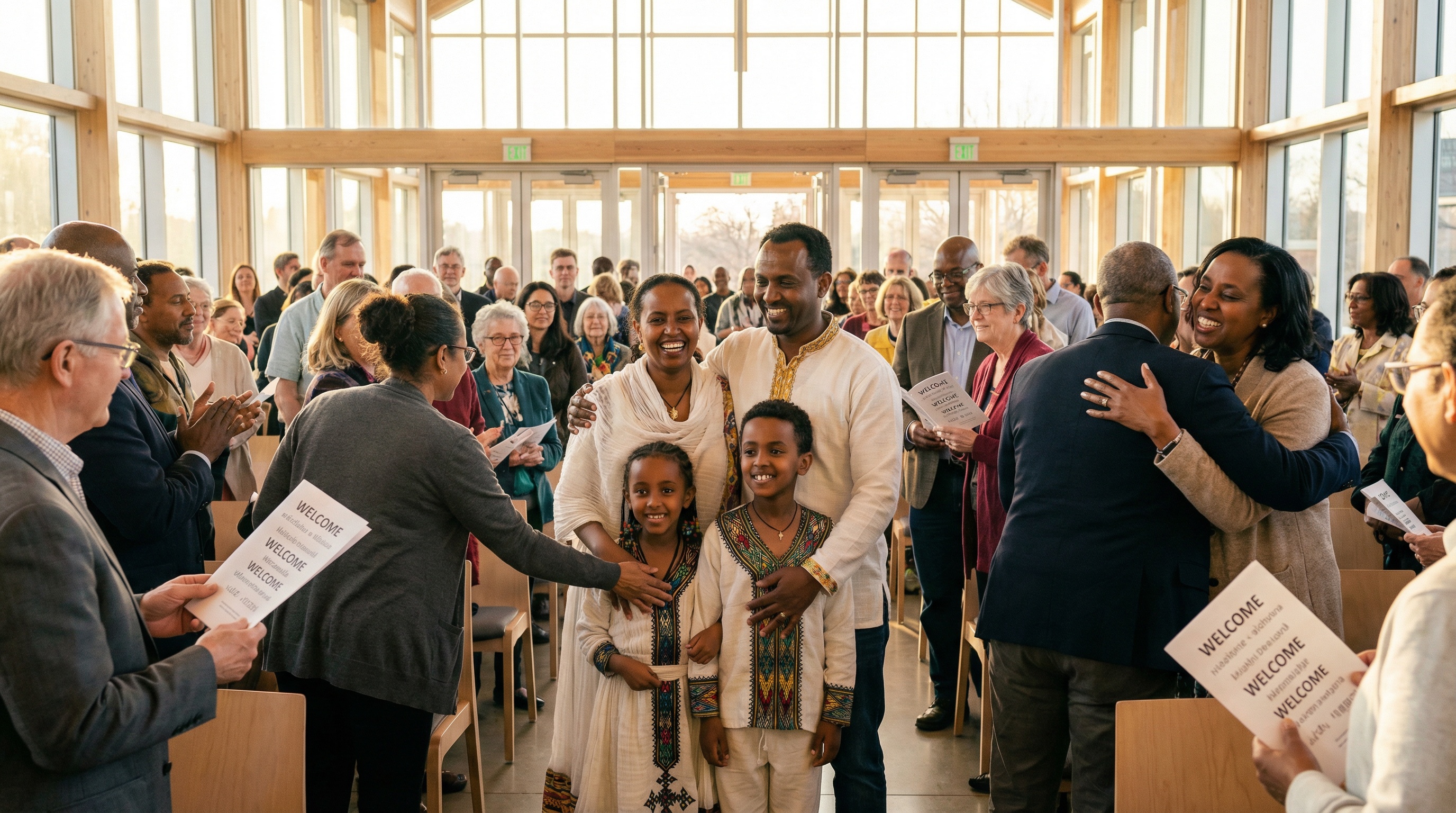
How to Reach Ethiopian-Speaking Families at Your Church
If your community includes Ethiopian families—and in cities like Washington D.C., Dallas, Minneapolis, Seattle, and Atlanta, there's a good chance it does—your church has an incredible opportunity to welcome one of the fastest-growing immigrant communities in America. But reaching Ethiopian families takes more than putting up a sign in Amharic. It requires understanding a rich cultural and spiritual heritage, addressing real language barriers, and creating a space where Ethiopian newcomers feel genuinely at home.
The Ethiopian diaspora in the United States has grown rapidly over the past two decades. Today, an estimated 2 million Ethiopian Americans live across the country, with the Washington D.C. metropolitan area home to the largest concentration outside of Ethiopia itself. Many of these families are deeply devout Christians—Ethiopia has one of the oldest Christian traditions in the world, dating back to the fourth century. Yet language barriers, cultural differences, and unfamiliarity with American church practices can keep Ethiopian families from connecting with your congregation.
The good news? You don't need a massive budget or specialized staff to start. With the right approach—including real-time AI translation tools like Glossa.live—your church can begin reaching Ethiopian families this month.
Why Ethiopian Families Are a Growing Part of Your Community
The Ethiopian-American community is one of the most significant African diaspora populations in the United States. According to the U.S. Census Bureau and Migration Policy Institute data, Ethiopian immigrants have steadily increased since the 1980s, driven by political upheaval, economic opportunity, and family reunification. Major metro areas with large Ethiopian populations include Washington D.C., the Twin Cities (Minneapolis-St. Paul), Dallas-Fort Worth, Seattle, Houston, Denver, and Atlanta.
What makes Ethiopian families unique in the context of church outreach is that the vast majority are already Christian. Ethiopia is roughly 60-65% Christian, split primarily between the Ethiopian Orthodox Tewahedo Church (the largest denomination) and a growing Protestant evangelical movement. This means many Ethiopian families arriving in your community already have a deep, personal faith—but they may struggle to find a church where they can worship in a language they understand.
For church leaders, this represents a remarkable opportunity. Unlike outreach to communities where Christianity may be unfamiliar, reaching Ethiopian families is often about removing barriers to belonging rather than introducing the faith for the first time.
Understanding Ethiopian Church Culture and Traditions
Before you reach out to Ethiopian families, it's important to understand where they're coming from spiritually. Ethiopian Christianity is one of the oldest in the world, and its traditions shape how Ethiopian families experience worship.
The Ethiopian Orthodox Tewahedo Church
The Ethiopian Orthodox Tewahedo Church traces its roots to the fourth century, making it one of the earliest organized Christian communities anywhere. The church uses Ge'ez—an ancient Semitic language—as its liturgical language, though sermons and readings are increasingly delivered in Amharic, the most widely spoken language in Ethiopia.
Orthodox services are deeply liturgical, often lasting several hours. They include chanting, processionals, and elaborate rituals that may feel quite different from a typical American Protestant service. Members fast regularly (the Ethiopian Orthodox calendar includes over 200 fasting days per year), observe the Sabbath on Saturday, and maintain traditions that date back centuries.
Growing Ethiopian Protestant Community
Alongside the Orthodox tradition, Ethiopia has experienced significant growth in Protestant and Pentecostal Christianity over the past few decades. Many Ethiopian immigrants, particularly younger ones, come from evangelical backgrounds and may be more familiar with contemporary worship styles. However, they still carry cultural values and expectations that shape their church experience—including a deep reverence for Scripture, strong community bonds, and the expectation that church is a place for the whole family.
What This Means for Your Church
Understanding these backgrounds helps your church avoid missteps and build genuine connections. Ethiopian families coming from an Orthodox background may appreciate liturgical elements, reverence during worship, and a sense of sacred space. Those from evangelical backgrounds may connect more easily with contemporary worship but still value strong community, intergenerational fellowship, and shared meals.
The Language Factor: Amharic, Tigrinya, and Oromo
Language is often the single biggest barrier between Ethiopian families and your church. While many younger Ethiopian Americans are bilingual or English-dominant, older family members—grandparents, recent arrivals, and first-generation immigrants—may be most comfortable in their native language.
The three most common languages among Ethiopian Americans are Amharic (the official language of Ethiopia, spoken by the largest group), Tigrinya (spoken by Eritrean and northern Ethiopian communities), and Oromo (spoken by the Oromo people, Ethiopia's largest ethnic group). Of these, Amharic is by far the most widely spoken in the diaspora.
Here's the practical challenge: most churches don't have Amharic-speaking volunteers, and hiring professional interpreters is expensive and logistically complex. This is where technology makes a real difference.
With real-time AI translation tools, your church can offer Amharic translation during services without needing a human interpreter. Congregation members simply open the translation on their phone, tablet, or any device, and follow along in Amharic while the pastor preaches in English. It's the same approach that hundreds of churches are already using to reach Spanish, Korean, Vietnamese, and Arabic speakers—and it works just as well for Amharic.
Tools like Glossa.live support 100+ languages including Amharic, Tigrinya, and Oromo, making it possible to welcome Ethiopian families from multiple ethnic backgrounds in a single service. There's no special equipment required, no training needed, and setup takes less than 15 minutes.
Practical Steps to Welcome Ethiopian Families
Reaching Ethiopian families isn't just about translation—it's about creating an environment where they feel seen, valued, and welcome. Here are concrete steps your church can take.
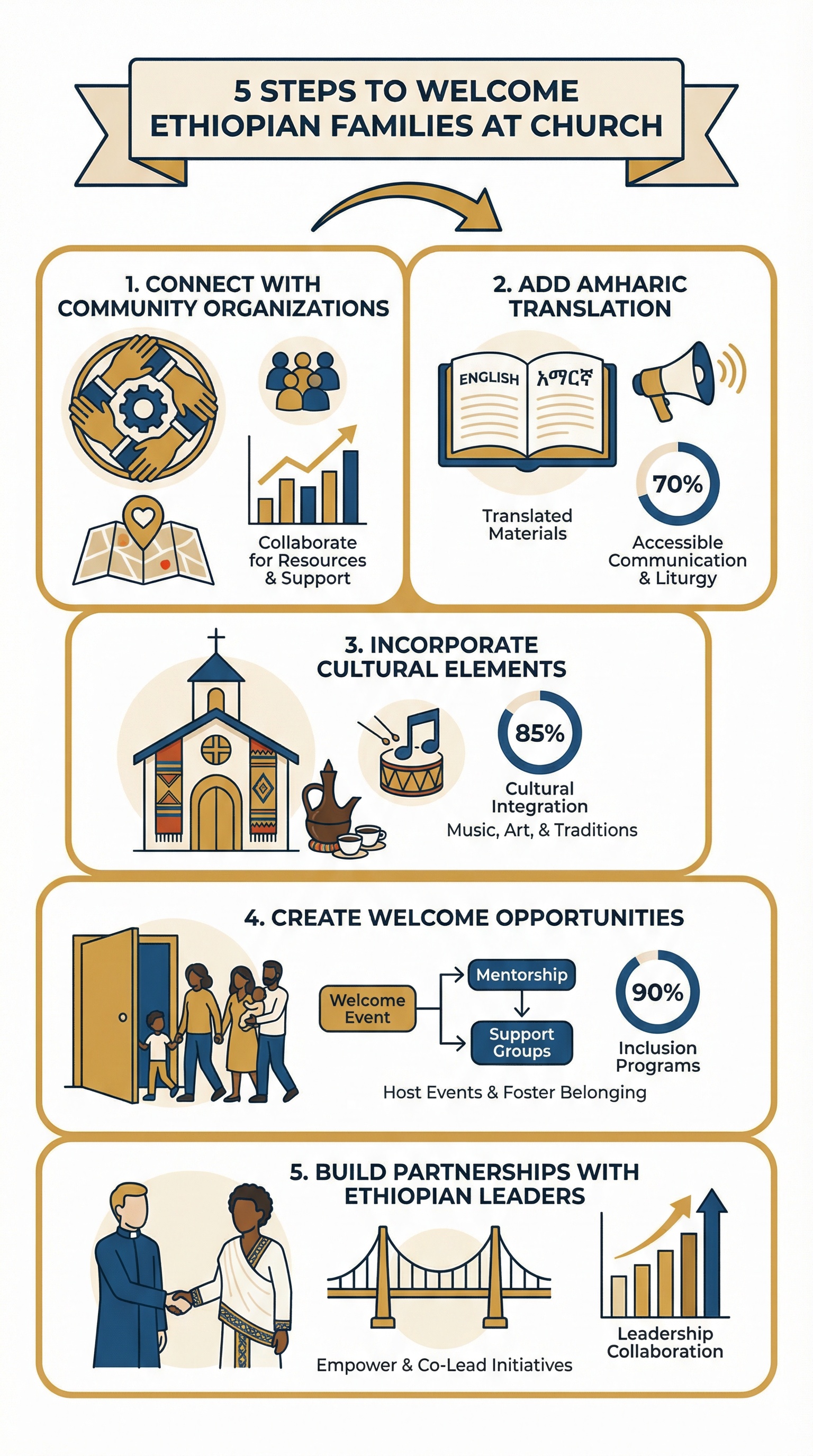
1. Start with Community Connections
Ethiopian communities in America tend to be tightly knit. Many Ethiopian families are connected through community associations, cultural organizations, and existing Ethiopian churches. Start by identifying these networks in your area.
Reach out to local Ethiopian community centers, cultural associations, or business owners. Attend Ethiopian cultural events like Timkat (Epiphany), Meskel (Finding of the True Cross), or Ethiopian New Year celebrations. These connections build trust and show that your church genuinely cares about the Ethiopian community—not just about growing your attendance numbers.
2. Offer Amharic Translation at Your Services
This is the most impactful single step you can take. When an Ethiopian family walks into your church and discovers they can follow the sermon in Amharic on their phone, the message is immediate: "You belong here."
Tools like Glossa.live make this simple and affordable. You can set up real-time translation for your Sunday service in minutes. Include a note in your church bulletin or welcome materials letting visitors know that Amharic translation is available.
3. Incorporate Ethiopian Cultural Elements
Small gestures make a big difference. Consider incorporating Ethiopian worship songs occasionally, using Ethiopian coffee (a cultural cornerstone) at fellowship events, or acknowledging Ethiopian holidays in your church calendar.
Ethiopian coffee ceremonies, in particular, are a powerful ministry tool. In Ethiopian culture, the coffee ceremony is a deeply social tradition that brings people together for conversation, community, and connection. Hosting an Ethiopian coffee ceremony as a fellowship event shows respect for the culture and creates a natural space for Ethiopian families to feel at home.
4. Create Intentional Welcome Opportunities
Assign a greeting team member who can offer a warm welcome to Ethiopian visitors. Provide translated welcome packets or at minimum a QR code that links to church information in Amharic. Follow up personally with Ethiopian families after their first visit—a personal phone call or text means far more than a generic email.
5. Build Relationships with Ethiopian Church Leaders
Many cities have Ethiopian-specific churches (both Orthodox and Protestant). Rather than viewing them as competition, see them as potential partners. Ethiopian pastors can help your church understand cultural nuances, connect with families who might benefit from a bilingual or multilingual church experience, and collaborate on community events.
This kind of partnership is especially valuable for reaching second-generation Ethiopian Americans—young people who may be looking for a church that bridges their Ethiopian heritage with their American identity.
Addressing Common Concerns About Reaching Ethiopian Families
Church leaders often have practical questions about Ethiopian outreach. Here are honest answers to the most common ones.
We Don't Have Any Ethiopian Members. How Do We Start?
You don't need existing Ethiopian members to begin. Start by checking whether Ethiopian families live in your community—look at census data, school enrollment demographics, or local business directories (Ethiopian restaurants and shops are a good indicator). If there's an Ethiopian presence in your area, there are families looking for connection. Adding Amharic translation to your services and reaching out to community organizations are low-cost, high-impact first steps.
Will Ethiopian Families Feel Comfortable in Our Church?
Many Ethiopian families are already Christian and understand church culture deeply. The main barriers are language, unfamiliarity with your specific church's style, and not knowing anyone. Remove the language barrier with translation, create intentional welcome moments, and invite Ethiopian families to smaller community settings (small groups, meals, fellowship events) where relationships can develop naturally.
Is AI Translation Accurate Enough for Amharic?
Modern AI translation has made remarkable strides with Amharic. While no translation is perfect, AI tools trained on biblical and worship contexts—like Glossa.live—deliver quality that allows Amharic speakers to follow sermons, understand announcements, and engage meaningfully with the service. It's far better than having no translation at all, and the quality continues to improve.
What About the Cost?
Church translation doesn't have to be expensive. AI-powered tools like Glossa.live offer flexible pricing that works for churches of all sizes. Compared to hiring professional Amharic interpreters (which can cost 00-00 per service), AI translation is a fraction of the cost and available every single Sunday without scheduling headaches.
Building Long-Term Ministry with Ethiopian Families
Welcoming Ethiopian families is just the beginning. Building lasting ministry relationships requires ongoing intentionality.
Invest in Second-Generation Ministry
Second-generation Ethiopian Americans often navigate between two worlds—the Ethiopian culture of their parents and the American culture they grew up in. These young people may speak English fluently but still value their heritage. Youth programs, college ministries, and young adult groups that honor both identities can be life-changing for second-generation Ethiopian Americans.
Develop Ethiopian Leadership
As Ethiopian families become part of your congregation, invite them into leadership roles. Ethiopian members serving as greeters, small group leaders, worship team members, or deacons sends a powerful message that this is truly their church too—not just a place where they're welcome as visitors.
Support Practical Needs
Many Ethiopian families, especially recent immigrants, face practical challenges like navigating the immigration system, finding employment, learning English, and accessing social services. Churches that offer practical support alongside spiritual community build trust that lasts for generations. Consider partnering with local organizations that serve immigrant families, or starting your own support ministry.
Celebrate Ethiopian Heritage
Acknowledge Ethiopian holidays, share Ethiopian food at potlucks, invite Ethiopian members to share their testimony and cultural traditions, and incorporate Amharic worship songs into your service rotation. When Ethiopian families see their culture reflected in your church community, they know they've found a place where they truly belong.
The Vision: A Church That Reflects Heaven
Revelation 7:9 paints a picture of every nation, tribe, people, and language worshipping together. When your church welcomes Ethiopian families—offering translation in Amharic, honoring their rich spiritual heritage, and creating genuine community across cultures—you're living that vision right now.
The Ethiopian diaspora represents one of the most faith-filled, community-oriented immigrant populations in America. These are families who already love Jesus and are looking for a church home where they can worship, grow, and serve. Your church can be that home.
Start simple. Add Amharic translation to your next service with Glossa.live. Reach out to one Ethiopian community leader this week. Host an Ethiopian coffee fellowship next month. Each small step brings your church closer to the multilingual, inclusive community God designed it to be.
The Ethiopian families in your neighborhood are waiting to be welcomed. Will your church be the one to open the door?