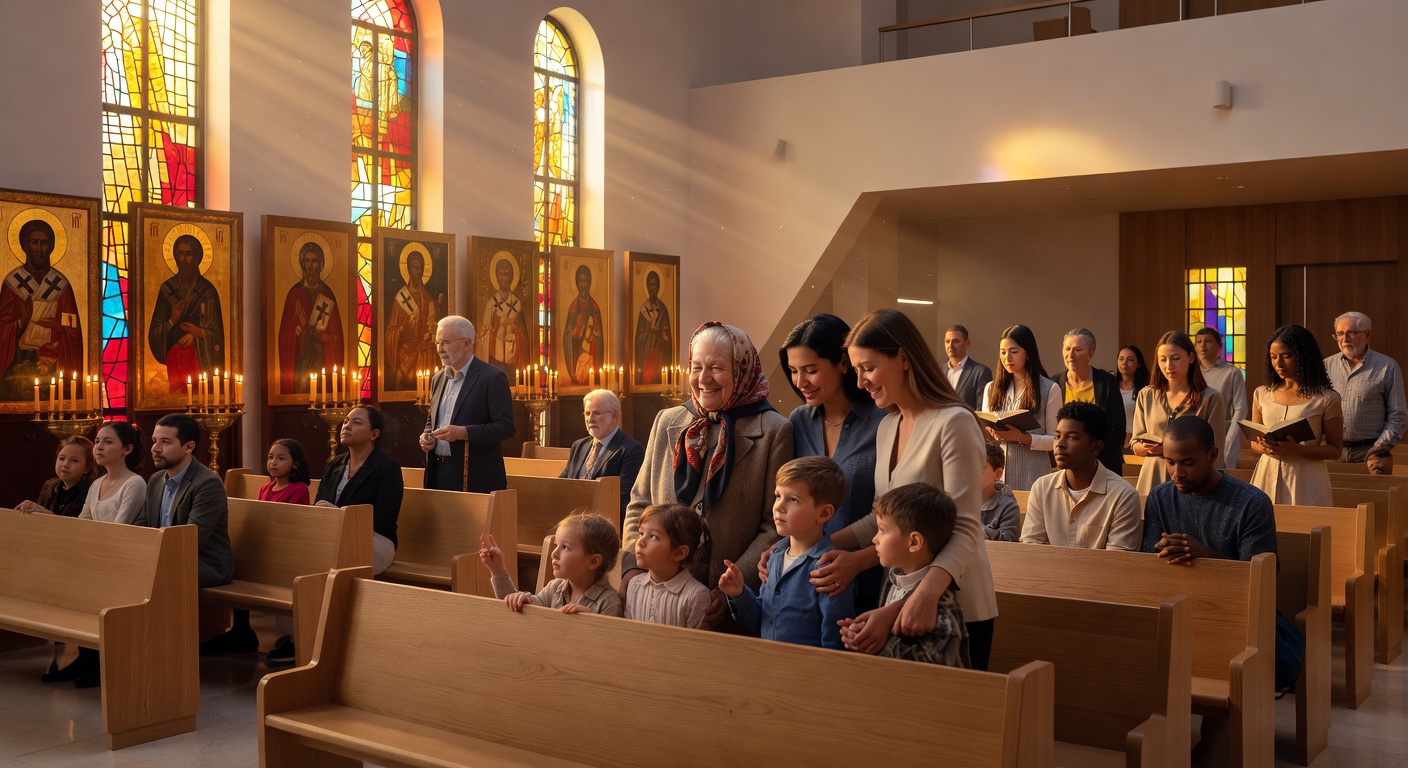
How to Reach Bulgarian-Speaking Families at Your Church
There is a Bulgarian family in your city right now Googling "bulgarian church near me," and most of the time they cannot find one. Bulgarian Orthodox parishes in America cluster around Chicago, New York, Indianapolis, Cleveland, Las Vegas, Los Angeles, and Toronto — but the Bulgarian diaspora itself is spread across nearly every state. A software engineer in Austin. A trucking family in Atlanta. A grandmother who came to live with her grandchildren in Charlotte. They are looking for a parish that knows the words Hristos Voskrese, that lights candles before icons, that bakes a kozunak at Pascha — and they often settle for a non-denominational church down the street because nothing closer matches.
Your church can be that home. With a little cultural fluency, a few practical adjustments, and live Bulgarian translation during the service, you can become the parish a Bulgarian family tells their cousins about. This guide will walk you through who Bulgarian-speaking families in America actually are, what shapes their faith, where they are settling, and exactly how to welcome them this Sunday.
Who Are Bulgarian-Speaking Families in America Today?
There are roughly 150,000 to 250,000 Bulgarian-Americans in the United States today, with another 30,000–50,000 in Canada. The community is small relative to other Eastern European diasporas, but it is growing — and it is more dispersed than people assume. Three immigration waves built the community you serve today.
The first wave (1903–1924) brought Macedonian-Bulgarians fleeing the failed Ilinden Uprising and the collapse of the Ottoman millet system. They settled in steel-mill and meat-packing towns: Granite City, Illinois; Steelton, Pennsylvania; Indianapolis; Toledo; Detroit; Toronto. Many of the oldest Bulgarian Orthodox parishes in North America — Saint Stefan in Indianapolis, the Saints Cyril and Methodius Cathedral in Toronto, Holy Trinity in Madison — trace to this generation.
The second wave (1944–1989) were Cold War refugees. They escaped a communist regime that imprisoned priests, dynamited monasteries, and made faith politically dangerous. They came carrying stories of grandmothers baptizing babies in secret and of icons hidden behind family photographs. This wave is now grandparents and great-grandparents, and they are often the most fervent custodians of Bulgarian Orthodox identity in your community.
The third wave (1990–present) is the largest and most likely to move into your suburb. After the 1989 fall of communism, Bulgarians left in waves driven by economic pressure, the EU enlargement of 2007, and — more recently — H-1B and EB-5 professional migration. This wave includes software developers in Silicon Valley, medical residents in Cleveland, civil engineers in Houston, and casino-industry families in Las Vegas (the largest single Bulgarian community per capita in the US). They are typically in their 30s and 40s, with school-age children who speak English fluently and Bulgarian at home.
The community is overwhelmingly Eastern Orthodox by heritage but only loosely affiliated by attendance. Many third-wave Bulgarians arrived spiritually skeptical after a generation under state atheism and are more openly searching than their grandparents would have predicted. This is your opening.
The Bulgarian Orthodox Tradition (and What Pastors Should Know)
Bulgarian Orthodoxy is not a footnote to Greek or Russian Orthodoxy — it is, in many ways, the mother church of Slavic Christianity. The brothers Saints Cyril and Methodius, two ninth-century missionaries from Thessaloniki, created the Glagolitic alphabet to translate Scripture and the liturgy into Slavonic. Their disciples Clement and Naum brought that work to Bulgaria, where it was protected, refined into Cyrillic, and exported across the Slavic world. When a Russian, Ukrainian, or Serbian Christian crosses themselves today, the words they whisper trace back through Bulgaria. May 24 — the Day of Slavonic Literature and Bulgarian Culture — is the single most important cultural holiday for Bulgarian families abroad. If you mention it from the pulpit, mark it on your bulletin, or host a children's program around it, you will earn instant credibility.
A few practical theological notes for non-Orthodox pastors:
- The Bulgarian Orthodox Church is autocephalous (self-governing) and traces its independence to AD 870. It is in full communion with the Ecumenical Patriarchate of Constantinople and the other Eastern Orthodox churches.
- The Bulgarian Orthodox Church follows the Revised Julian Calendar for fixed feasts (so Christmas — Koleda — is December 25), but Pascha is calculated on the Orthodox paschalion and usually falls on a different date than Western Easter.
- There are two Bulgarian Orthodox jurisdictions in North America: the Bulgarian Diocese of the USA, Canada, and Australia (under the Holy Synod in Sofia) and the smaller Bulgarian Eastern Orthodox Diocese (under the Ecumenical Patriarchate). Both are valid; families may have history with either.
- Saint John of Rila (Sveti Ivan Rilski, †946) is the patron saint of Bulgaria. His feast on October 19 is widely celebrated. Rila Monastery, where his relics are venerated, is a national symbol comparable to what Mount Athos is to Greeks.
- Veneration of icons, candles before liturgy, fasting before communion, and the kolyvo (boiled wheat memorial) at funerals are not optional folk customs — they are confessional. A Bulgarian visitor will notice immediately whether you respect this.
If your church is Protestant, evangelical, or Catholic, none of this disqualifies you from welcoming Bulgarian families. It simply means you are inviting them across a real boundary, and small gestures of cultural respect become enormous bridges. Many third-wave Bulgarian families, especially those married to American partners, are quietly looking for a Christian community that takes their heritage seriously without demanding they choose between it and the Gospel.
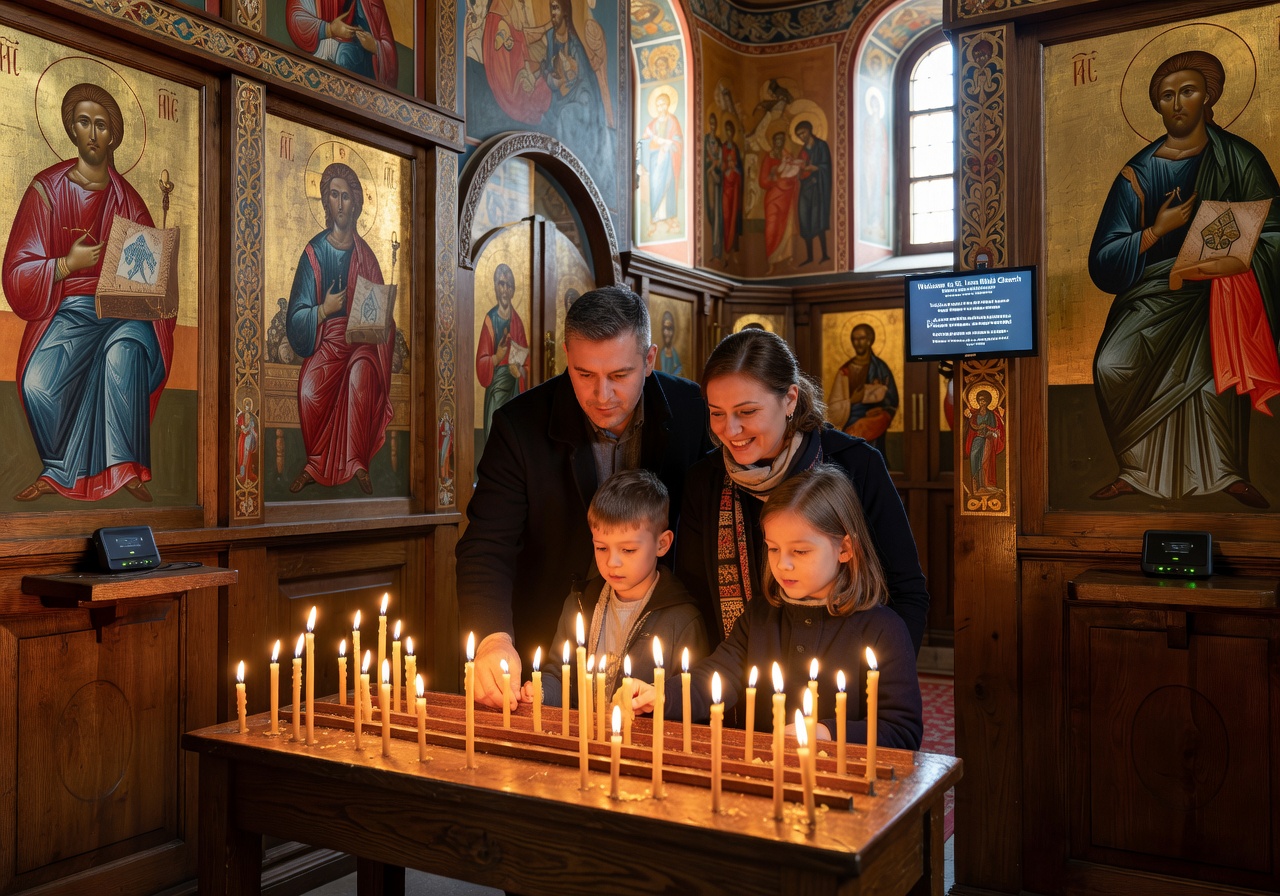
Where Bulgarian Families Are Settling — and Why It Matters
If you serve in any of the cities below, there are Bulgarian-speaking families within twenty minutes of your sanctuary:
- Chicagoland — The largest Bulgarian community in the US. Concentrated in Des Plaines, Palatine, Schaumburg, Glenview, and Mount Prospect. Saint Sophia Bulgarian Orthodox Cathedral (Des Plaines) and Saint John of Rila (Mount Prospect) are anchors.
- New York and New Jersey — Astoria, Queens has a long-standing Bulgarian community. Saint John of Rila in the Bronx and the cathedral parish in Manhattan serve thousands.
- Las Vegas — The fastest-growing Bulgarian community in the country, drawn by hospitality-industry jobs. Saint Sophia in Las Vegas was founded by recent immigrants and is one of the youngest Bulgarian parishes in America.
- Indianapolis — One of the oldest Bulgarian-American settlements (Saints Stefan and Demetrius parish, founded 1915). Macedonian-Bulgarian roots run deep here.
- Cleveland and Akron — Old steel-mill diaspora plus new arrivals.
- Detroit and Toledo — Saint George Bulgarian Orthodox Church (Toledo) is one of the historic centers.
- Los Angeles, San Diego, and the Bay Area — Tech and medical migration, plus a small but visible community of Bulgarian-American filmmakers and artists.
- Atlanta, Charlotte, Orlando, Tampa, Houston, Dallas, Phoenix — Sun Belt growth cities with rapidly expanding Bulgarian populations and very few existing Bulgarian Orthodox parishes.
- Toronto and Mississauga — The largest Canadian Bulgarian population.
If you serve in a Sun Belt growth city without a nearby Bulgarian Orthodox parish, the spiritual demand exceeds the supply. Bulgarian families in those cities are often driving 90 minutes to attend a Bulgarian liturgy once a month and worshipping somewhere closer the other three Sundays. That somewhere closer could be your church.
Why Bulgarian Families Visit a Church — and Why They Stay
In conversations with Bulgarian-American pastors, lay leaders, and immigrants themselves, the same five reasons keep surfacing for why a Bulgarian family walks through a church door for the first time:
- A baby is on the way and the grandmother is asking about baptism.
- A parent has died abroad and there is no Bulgarian Orthodox parish to hold the forty-day memorial (sorochina).
- The kids are growing up "too American" and parents want them to know that faith is part of being Bulgarian.
- A health crisis or job loss has shaken a family that previously got by without church.
- Easter (Pascha) is approaching and the smell of kozunak in the oven has triggered a longing.
What makes them stay is different. They stay when the church takes time to learn how to say Dobre doshli (welcome), when someone asks about their hometown without making them feel exotic, when their child is invited into a children's ministry where being Bulgarian is celebrated rather than corrected, and — increasingly — when the Sunday sermon is available in Bulgarian on their phone.
That last point is what most American churches still miss. A Bulgarian husband may have arrived at age 22 and be fully fluent in English, but his 70-year-old mother who came last year on a green-card sponsorship is sitting in the third row trying to decode the pastor's idioms. If she cannot follow the message, she will not come back, and the family will follow her.
When my mother visits from Sofia for three months at a time, she comes to church with us — but she sits there politely and goes home not knowing what was said. The Sunday we offered her Bulgarian on her phone was the first Sunday I saw her crying for joy.
Practical Ways to Welcome Bulgarian-Speaking Families This Sunday
Here is what a culturally-aware welcome looks like in practice.
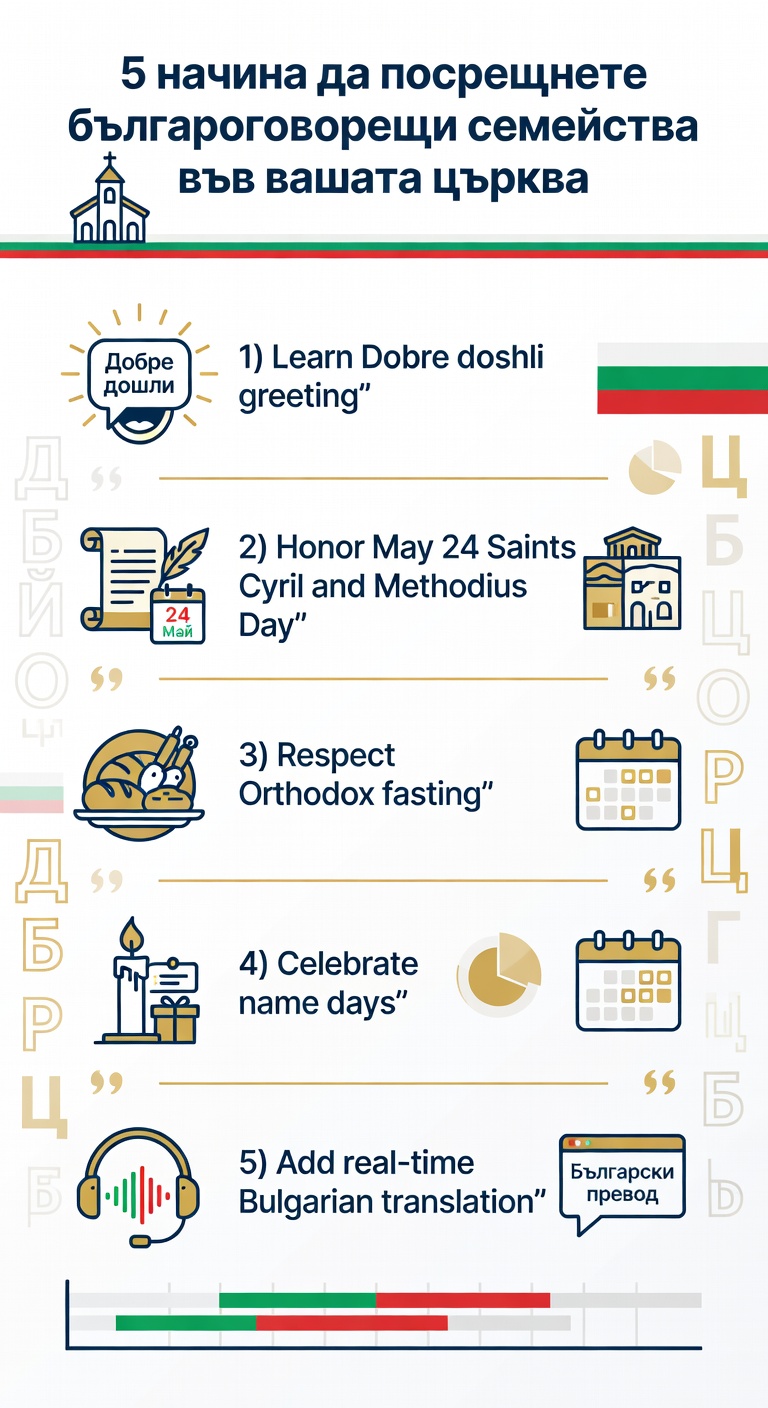
Learn Three Bulgarian Words
Dobre doshli (welcome), blagodarya (thank you), and Hristos Voskrese / Voistina Voskrese (Christ is risen / He is risen indeed — used from Pascha through Pentecost). A greeter who can say these three phrases will make any Bulgarian visitor feel seen.
Mark May 24 on Your Calendar
A short paragraph in your bulletin honoring Saints Cyril and Methodius and the gift of Slavonic Scripture costs you nothing and signals worlds. Some Bulgarian families consider this date as important as Bulgaria's National Day on March 3.
Respect Orthodox Fasting Practice
During Great Lent, Holy Week, the Apostles' Fast, the Dormition Fast, and the Nativity Fast, observant Bulgarian families avoid meat, dairy, fish, oil, and wine on certain days. If you host a fellowship meal, a vegan-friendly option (zelnik, beans, bread, olives, fruit) is more than hospitality — it is theological respect.
Don't Pressure on Baptism Timing
Orthodox families often baptize between 40 days and 1 year of age, with godparents (kum and kuma) chosen carefully. Pastors who push for an immediate decision can lose a family permanently.
Honor Name Days
Bulgarian families celebrate the feast day of the saint whose name they bear (imen den) — often more than birthdays. A handwritten card to "Boris" on May 2 (Saint Boris) or "Ivan" on January 7 (Saint John the Baptist) creates a relationship that lasts decades.
Invite Them to Host a Pascha or Koleda Table
A Bulgarian grandmother given the chance to bake kozunak, decorate red eggs, or prepare the Bogova pita Christmas bread for her new church family will tell every Bulgarian she knows that you are good people.
You can extend many of these same principles to other Slavic and Eastern European visitors. Our guide to reaching Russian-speaking families at your church covers shared cultural patterns, and our companion piece on reaching Ukrainian-speaking families at your church addresses the trauma-informed pastoral care that many Bulgarian-Americans recognize from their own families' Cold War history. For congregations building toward a fully multicultural church, Bulgarian outreach often becomes the bridge to a wider Eastern European ministry.
How Real-Time Translation Removes the Final Language Barrier
The single most common pastoral conversation we hear from churches reaching Bulgarian families goes something like this: "The grandkids love it, the parents are coming, but Baba sits with her arms folded because she can't follow what's being said."
This is the gap that live AI translation closes. With a tool like Glossa, every person in your sanctuary scans a QR code on the bulletin, picks Bulgarian (български), and reads — or listens through their earbuds to — the sermon in real time. No interpreter booth. No bulky receivers. No 40-minute volunteer training before each service. The pastor preaches in English; Baba follows in Bulgarian. The family sits together. They come back next Sunday.
Bulgarian is well-supported in modern AI translation models because Cyrillic-script Slavic languages have unusually rich training data. The result is conversational accuracy that handles theological vocabulary, biblical references, and idiomatic phrases the pastor reaches for in the heat of preaching. For a deeper look at how the technology actually works, our overview on how AI translation works for church services covers speech recognition, context-aware translation, and accuracy benchmarks.
If your service is also live-streamed, multilingual streaming opens the door to Bulgarian families in cities without any nearby parish. Our guide to streaming church services in multiple languages walks through how Glossa attaches to any livestream platform — YouTube, Facebook, Vimeo, your own embedded player — and how to embed translation into your church website. The technical setup, including how to display translations on screens in the sanctuary itself, is covered in our embed Glossa guide.
A Quick-Start Checklist for Bulgarian Outreach
Whether you have one Bulgarian family in your congregation or are intentionally building toward this community, this is the checklist that meaningfully moves the needle in 30 days:
- Audit your visibility. Search "bulgarian church near me" with location turned on for your city. Are you a result? If not, add the phrases "Bulgarian translation," "Slavic welcome," and "Eastern European outreach" to your website's outreach page.
- Add Bulgarian to your live translation. Whether you choose Glossa or another tool, Bulgarian must be listed alongside Spanish, Russian, and Ukrainian on whatever signage points visitors to translation. Visibility matters as much as accuracy.
- Train one greeter. One person at the door who can say Dobre doshli i blagodarya, che ste tuk ("Welcome, and thank you for being here") will transform first-time visitor experience.
- Plan one cultural moment per quarter. A May 24 children's reading of the Cyrillic alphabet. A Christmas Eve Badni Vecher fellowship table. A Pascha kozunak-and-red-eggs gathering. One a quarter, marked on your calendar a year out.
- Build a Bulgarian-specific landing page on your site. Use the keywords Bulgarian church, Saint John of Rila, Hristos Voskrese, and Bulgarian translation church. Link to it from your homepage and from any Slavic outreach materials you produce.
- Connect with Bulgarian community organizations locally — the Bulgarian Cultural Society in Chicago, the Bulgarian-American Heritage Association in Indianapolis, BG Voice and BG Glas community newspapers, Bulgarian schools (nedelno uchilishte) that meet on Saturdays in many cities. Send a short note offering pastoral care, baptisms, weddings, and funerals in coordination with local Orthodox parishes.
- Host a free community service — ESL classes, immigration paperwork help, tax-prep for new arrivals, after-school tutoring. Bulgarian families remember which church helped their cousin three years ago.
For broader patterns that apply to any immigrant community ministry, our guides on how churches reach immigrant communities through real-time translation and overcoming language barriers in church are the natural next reads.
Final Word: Welcome the Cyril and Methodius Tradition Home
When the brothers Cyril and Methodius walked into the court of King Boris I in 864, they brought with them an alphabet, a translated liturgy, and a conviction that every people had the right to hear the Word of God in their mother tongue. Bulgaria became the first Slavic nation to read Scripture in its own language. That moment — eleven centuries old — is the spiritual DNA every Bulgarian family carries when they walk into your church.
You do not have to be Orthodox to honor that legacy. You only have to make the Word audible again, this time in their language, in your sanctuary. A real-time translation, a greeter who knows three Bulgarian words, a kozunak on the fellowship table at Easter — these are not gimmicks. They are the same gesture Cyril and Methodius made: We have heard you, and the Gospel is yours.
If you want to see what a bilingual or multilingual welcome looks like in your own context, Glossa supports Bulgarian alongside 95+ other languages and runs from any phone or computer in your congregation. The Bulgarian family Googling "bulgarian church near me" tonight is looking for exactly the welcome you are now equipped to give them.