How to Plan a Multilingual Easter Service at Your Church
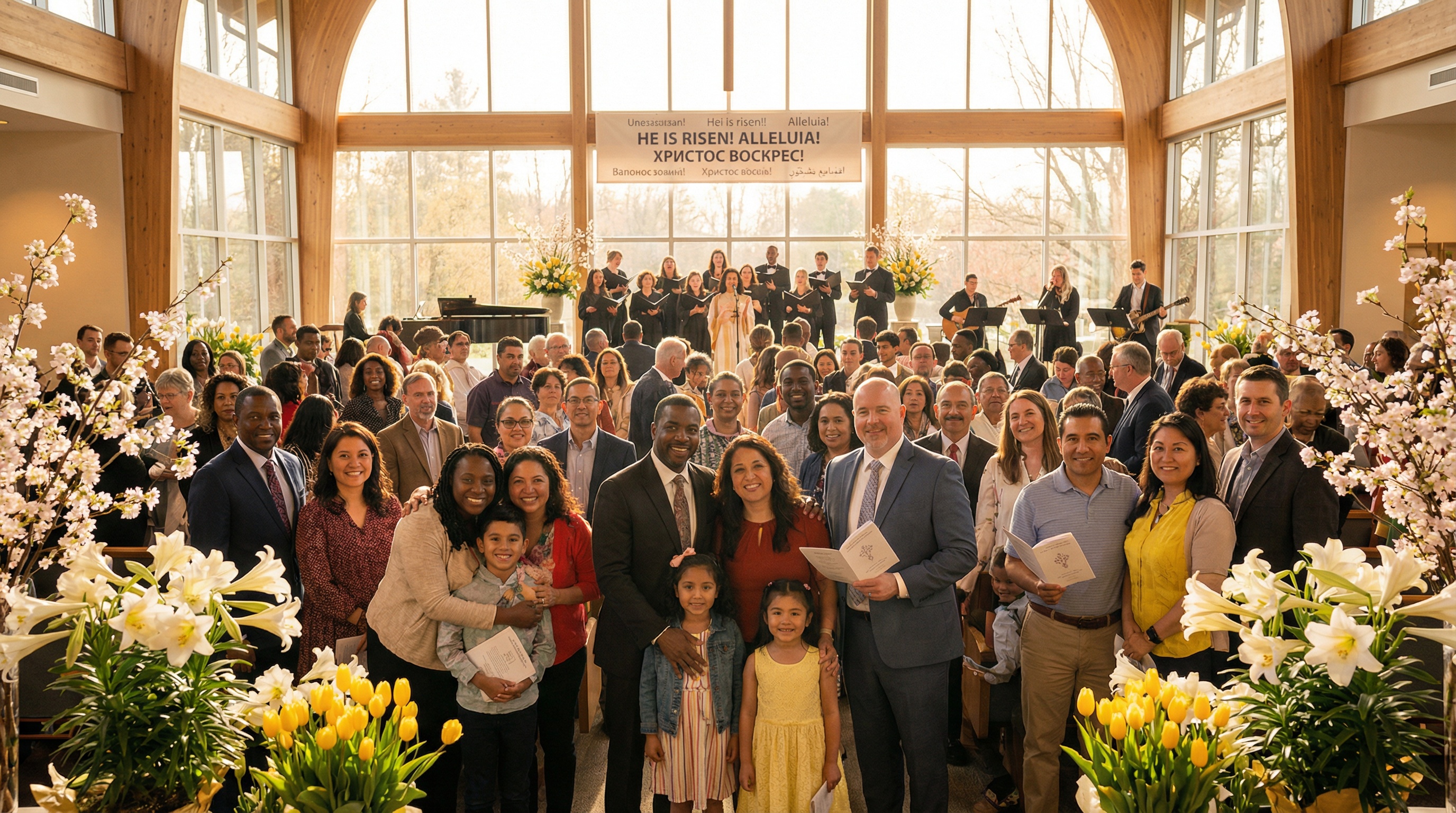
Easter Sunday is the single biggest opportunity your church has all year. More visitors walk through your doors on Easter than any other Sunday — families who've been invited by friends, neighbors curious about your community, and people searching for a place to belong. But here's a question too few churches ask: What language do those visitors speak?
If your community includes Spanish-speaking families, Vietnamese elders, Korean students, or Arabic-speaking refugees, Easter is the moment they're most likely to give your church a chance. A multilingual Easter church service tells every visitor, in the language closest to their heart, that they are welcome here.
The good news? Planning a multilingual Easter service is more achievable than you might think. You don't need a team of professional interpreters or expensive equipment. With the right preparation and tools like real-time AI translation, you can reach every language in your congregation this Easter — and turn first-time visitors into lifelong members.
Why Easter Is the Perfect Sunday to Go Multilingual
Easter draws people who don't normally attend church. According to church growth research, attendance on Easter Sunday can be 40-60% higher than a typical weekend. Many of those visitors are exactly the families you've been trying to reach — immigrant families, international students, and multilingual households looking for a spiritual home.
For churches in diverse communities, Easter is a critical first impression. A visitor who can't understand the sermon in their language is unlikely to return. But a visitor who hears the Gospel in Spanish, Mandarin, or Tagalog — that visitor feels seen. They feel valued. And they come back.
Churches that have embraced multilingual worship consistently report stronger visitor retention. When people hear the message in a language that resonates with them emotionally, the connection goes deeper than words. Easter amplifies this effect because the message itself — hope, renewal, new life — is universal.
Identify the Languages Your Community Speaks
Before you plan your multilingual Easter service, you need to know which languages matter most. Start with what you already know. Talk to your congregation members, your greeters, and your children's ministry volunteers. They often have the best sense of which families speak which languages at home.
Then look at your community data. The U.S. Census Bureau's American Community Survey provides language data by ZIP code. You might be surprised to learn that your neighborhood includes significant populations of Haitian Creole speakers, Hindi speakers, or Amharic speakers you didn't know about.
Don't try to cover every language at once. Start with the top two or three languages most represented in your community. For many U.S. churches, that's Spanish plus one additional language. If you serve an area with a large refugee population, you might prioritize Arabic, Swahili, or Burmese. The goal isn't perfection — it's progress toward reaching every family in your congregation.
Choose the Right Translation Approach for Easter
There are several ways to offer multilingual services, and the right approach depends on your church's size, budget, and technical comfort level. Here are the most practical options for Easter Sunday.
Real-Time AI Translation
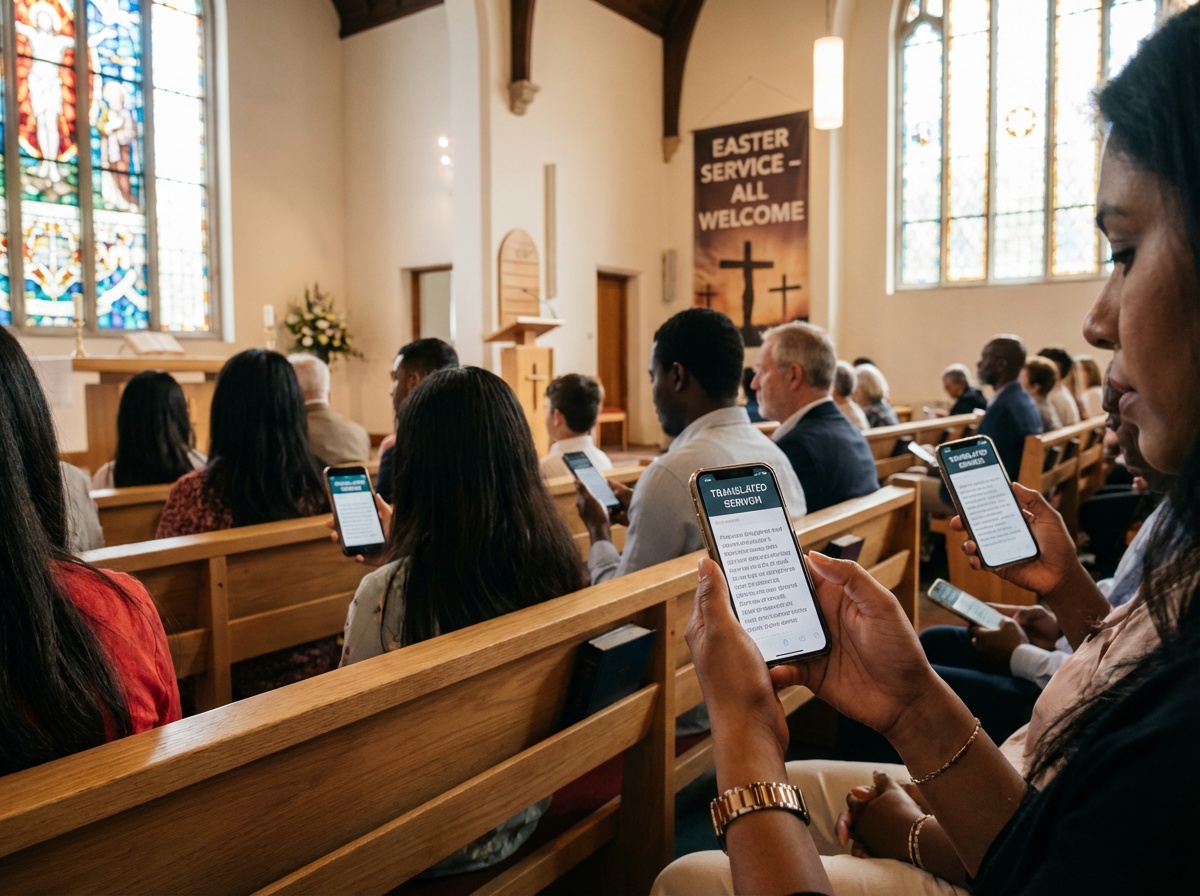
AI-powered translation tools like Glossa.live translate your pastor's sermon in real time into 100+ languages. Congregation members simply open the translation on their phone, tablet, or any device — no special equipment required. This is the fastest, most scalable approach, and it works for churches of any size.
Volunteer Interpreters
If you have bilingual members, you can set up a whisper interpretation station or a separate room with a live interpreter. This works well for one or two languages but gets complicated quickly if you need three or more. It also requires scheduling and training volunteers for Easter specifically.
Pre-Translated Materials
Print your bulletin, worship lyrics, and sermon outline in multiple languages. This is a great complement to real-time translation but isn't a substitute — visitors want to hear and understand the spoken message, not just read along.
For most churches, a combination of real-time AI translation and printed materials creates the best Easter experience. The affordable options available today mean budget doesn't have to be a barrier.
Practical Steps to Prepare Your Multilingual Easter Service
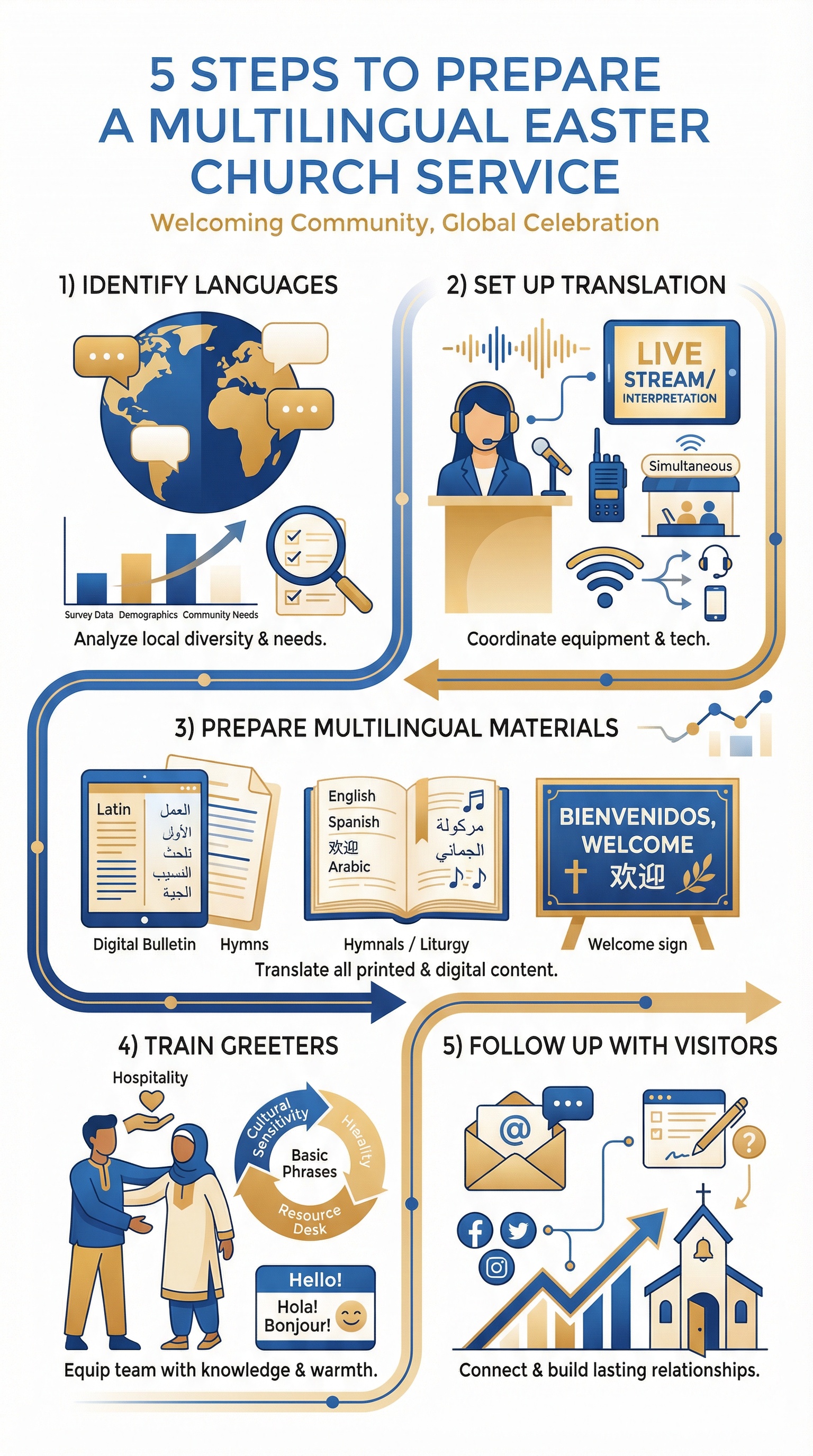
With Easter just around the corner, here's a week-by-week checklist to get your multilingual service ready.
Two Weeks Before Easter
- Survey your congregation: Ask members what languages are spoken in their households. A quick survey after service or via email works well.
- Choose your languages: Pick the top 2-3 languages based on your community research.
- Select your translation method: Set up an account with a real-time translation tool, or recruit and brief your volunteer interpreters.
- Test the technology: Run a short test during a weeknight Bible study or prayer meeting to make sure everything works smoothly.
One Week Before Easter
- Prepare printed materials: Translate your Easter bulletin, worship lyrics, and key announcements into your target languages.
- Brief your welcome team: Make sure greeters know how to direct non-English-speaking visitors to the translation service. A simple instruction card or QR code at the door is all you need.
- Promote it: Announce on social media, in your church newsletter, and on your website that Easter services will be available in multiple languages. This alone can attract new visitors.
- Prepare a follow-up plan: Create connection cards in multiple languages so visitors can share their contact information.
Easter Sunday Morning
- Set up signage: Place multilingual welcome signs at every entrance. Even a simple 'Bienvenidos' or 'Chào mừng' at the door signals inclusion.
- Station bilingual greeters: If possible, position bilingual members at the entrance to welcome visitors in their language.
- Display instructions: Project or print clear instructions for accessing translation (scan this QR code, open this link, etc.).
- Relax and worship: The preparation is done. Trust your plan and focus on the message.
Make Your Easter Outreach Count Beyond Sunday
The real impact of a multilingual Easter service isn't measured on Easter Sunday — it's measured in the weeks that follow. When a Guatemalan family attends your Easter service and hears the resurrection story in Spanish, the question isn't whether they were moved. The question is whether they'll come back next Sunday.
Here's how to turn Easter visitors into regular members.
- Follow up in their language: Send a welcome email or text in the visitor's preferred language within 48 hours of Easter. A personal touch in their language goes further than any generic English email.
- Keep the translation going: Don't make Easter a one-time multilingual event. Visitors who return the following Sunday and find the service is English-only will feel the gap. Commit to offering translation consistently.
- Connect visitors to community: Invite multilingual visitors to small groups, Bible studies, or social events where they can build relationships. Building a multicultural church happens in community, not just in services.
- Celebrate the diversity: Share stories of how multilingual services are impacting your church. When existing members see immigrant families being welcomed, it strengthens the whole congregation.
What Churches Get Wrong About Multilingual Easter Outreach
Some churches try to add multilingual services without really committing to inclusion. Here are the most common mistakes — and how to avoid them.
Treating it as a project, not a priority. If multilingual services are just a checkbox for Easter, visitors will sense it. Genuine inclusion means making language accessibility part of your church's identity, not just a seasonal gesture. Churches that have embraced immigrant community outreach as an ongoing mission see the most growth.
Assuming one language is enough. Spanish is the most common non-English language in the U.S., but it's not the only one. Your community might include Vietnamese, Korean, Arabic, Haitian Creole, or Mandarin speakers. Do the research before assuming.
Overcomplicating the technology. You don't need a full AV overhaul to go multilingual. Modern tools work on the devices people already have in their pockets. The simplest solution is often the best — a link or QR code that opens real-time translation on any smartphone.
Forgetting the follow-up. Easter without follow-up is a missed opportunity. The families who visit on Easter are giving your church a chance. Honor that by reaching out afterward in their language.
Start Planning Your Multilingual Easter Service Today
Easter is coming, and every day you wait is a day you could be preparing to welcome families in the languages they speak. The technology exists. The need is real. And the impact — for your visitors and your entire church community — can be transformational.
Here's the simplest path forward: identify the languages in your community, set up a real-time translation tool like Glossa.live, test it once before Easter, and let your welcome team know how to direct visitors. That's it. No expensive equipment. No complicated setup. Just a genuine commitment to reaching every person who walks through your doors.
Hundreds of churches are already offering multilingual services every Sunday — from small community churches to major denominations like the SBC and Hillsong. This Easter, yours can be one of them.
Every language spoken in your community deserves to hear the Easter message. A multilingual Easter church service isn't just a nice idea — it's an act of hospitality that reflects the heart of the Gospel. When you remove language barriers on the Sunday that matters most, you're telling every family: you belong here.
Start planning today, and make this Easter the one your whole community remembers.