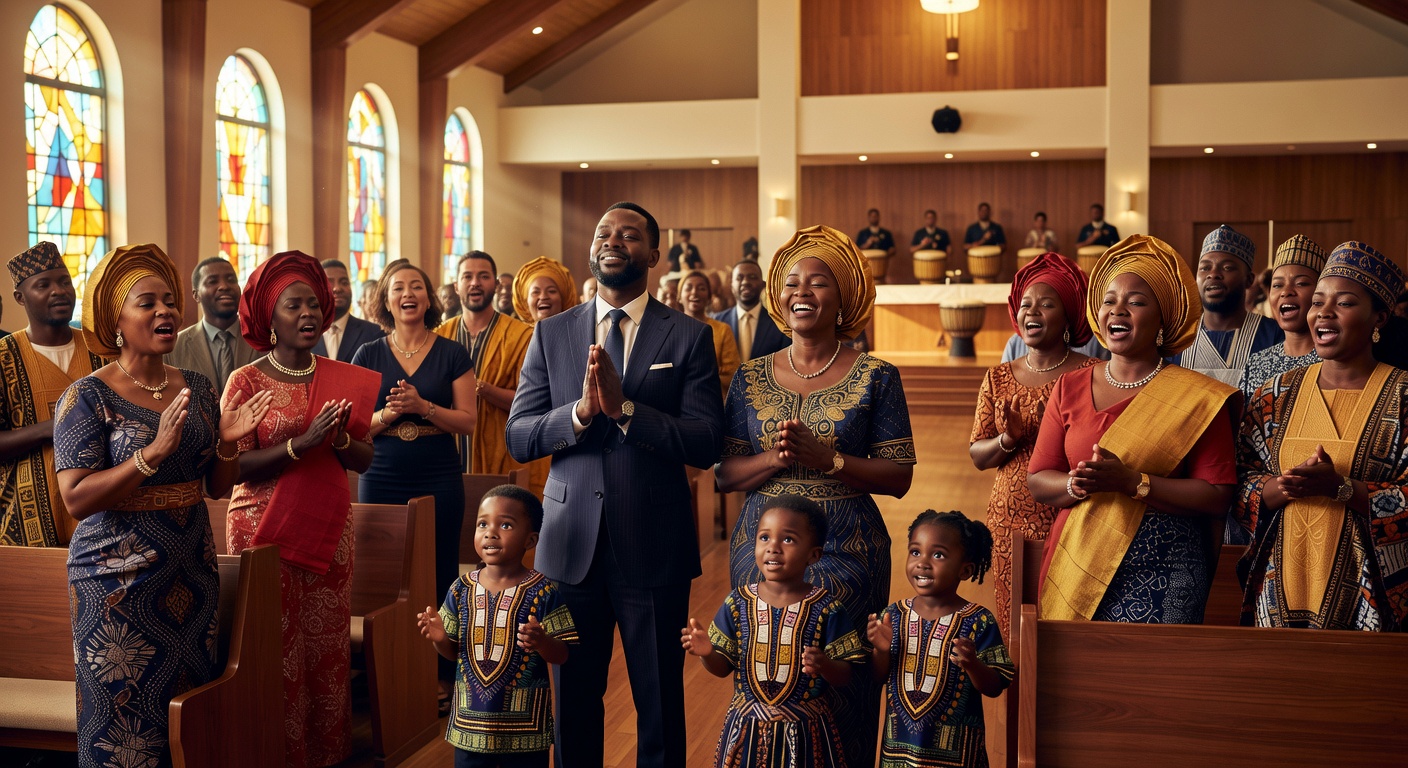
How to Reach Nigerian-Speaking Families at Your Church
Nigerian families are one of the most vibrant, faith-centered immigrant communities in the United States — and they may already be in your neighborhood. Yet many Nigerian families quietly search “nigerian church near me” because they’re looking for a place where they can worship, fellowship, and hear the Gospel in a way that truly resonates.
The good news? With the right welcome and the right tools, your church can become that place.
This guide will help you understand the Nigerian-American community, the languages they speak, and the practical steps you can take to make your church genuinely welcoming — including how real-time translation technology can bridge the language gap for first-generation immigrants in your congregation.
Understanding the Nigerian-American Community
There are more than 400,000 Nigerian-born immigrants living in the United States, making Nigerians one of the fastest-growing African immigrant groups in the country. When you count their American-born children and extended family networks, the total Nigerian-American community numbers well over one million people.
Nigerian immigrants are among the most highly educated immigrant groups in the United States, with college graduation rates exceeding the national average. Many Nigerian families arrive as doctors, engineers, academics, and entrepreneurs — and they build deep roots in their communities quickly.
Faith is absolutely central to Nigerian culture. Roughly half of all Nigerians identify as Christian, with strong representation in Pentecostal, Anglican, Catholic, Baptist, and Methodist traditions. Churches like the Redeemed Christian Church of God (RCCG) and Winners’ Chapel have built large global networks specifically to serve Nigerian diaspora communities. When Nigerian families move to a new city, one of their first priorities is finding a church community.
That’s why so many Nigerian Americans are actively searching for congregations right now — and why your church has a real opportunity to welcome them.
Key Nigerian Languages Your Church Should Know
Nigeria is linguistically one of the richest nations on earth, with over 500 languages spoken across its regions. In practical terms for churches serving Nigerian immigrants, four languages matter most:
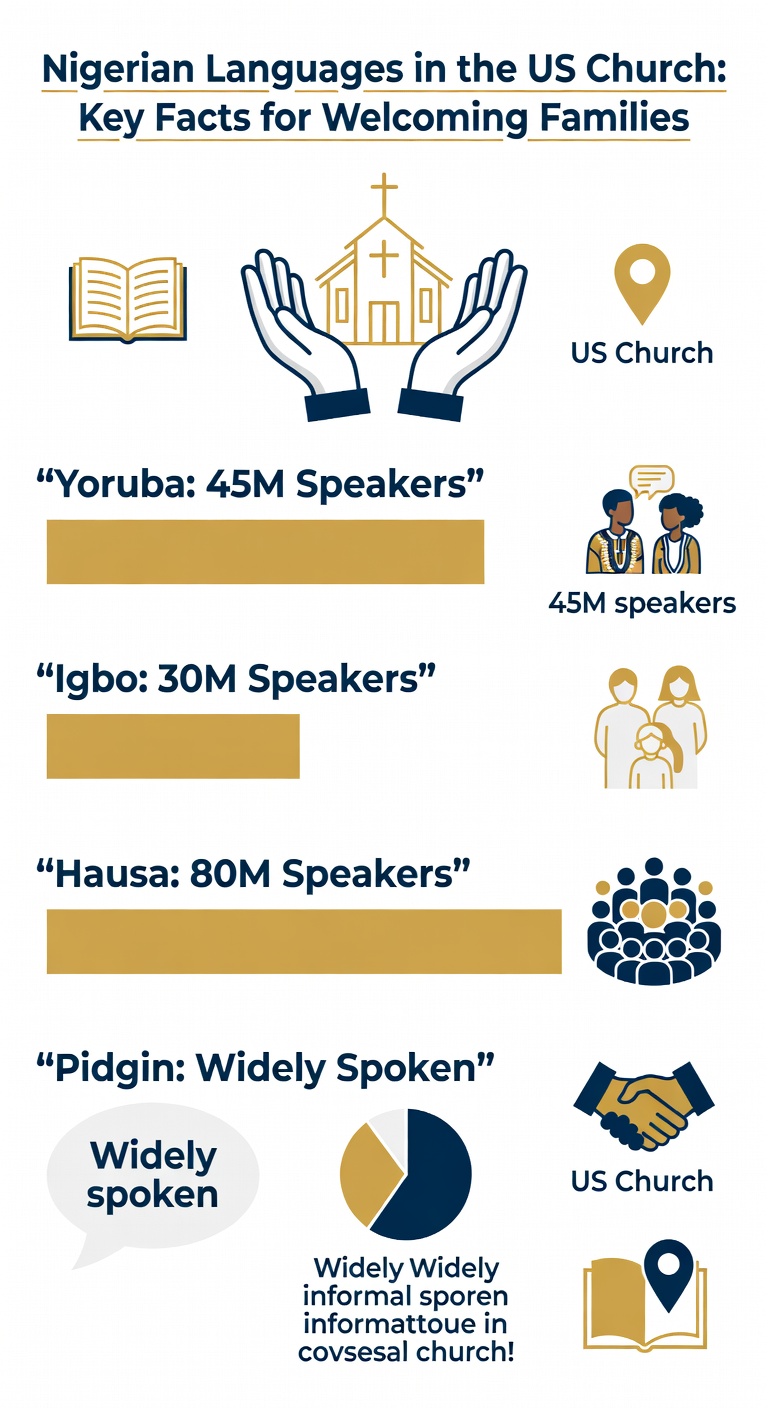
Yoruba is spoken by roughly 45 million people and is the primary language of southwestern Nigeria — cities like Lagos, Ibadan, and Abeokuta. Yoruba-speaking Christians include many Anglicans, Baptists, and Pentecostals. Yoruba has its own rich tradition of Christian hymnody and worship music.
Igbo (also spelled Ibo) is spoken by 30+ million people in southeastern Nigeria. Igbo Christians are predominantly Catholic, Anglican, and Pentecostal. Many Igbo families maintain a strong sense of community, and language is a key part of their cultural identity, especially among older first-generation immigrants.
Hausa is spoken by 80+ million people across northern Nigeria and neighboring countries. While Hausa speakers are majority Muslim, Christian Hausa communities — such as members of the Church of Christ in Nigeria (COCIN) — do exist and worship in Hausa.
Nigerian Pidgin English (also called Naija) is a creole language widely understood across all Nigerian ethnic groups. It bridges ethnic and regional divides. Many Nigerian worship songs and sermons mix Pidgin with English, and it feels natural and warm to many Nigerian-Americans who speak formal English in public settings but prefer Pidgin among family and friends.
Understanding which language a Nigerian family speaks tells you a lot about their region, culture, and even denomination. It’s worth asking — respectfully and with genuine curiosity.
Why Nigerian Families Represent a Major Ministry Opportunity
Beyond simply growing your attendance numbers, welcoming Nigerian families brings specific gifts and strengths to any congregation.
Nigerian-American families tend to be deeply committed churchgoers. Attending services once a week is a minimum — many Nigerian Christians attend mid-week Bible studies, prayer meetings, and Sunday school in addition to main services. Their level of engagement often challenges and inspires longer-standing congregation members.
Nigerian Christians often bring a strong culture of giving and tithing. Stewardship is taken seriously in many Nigerian church traditions, and this commitment can be transformative for smaller or mid-sized congregations.
Nigerian families tend to settle and put down roots. When a Nigerian family finds a church home, they often stay — and bring siblings, cousins, and family friends with them.
Finally, Nigerian believers often carry a deep sense of evangelistic mission and community service. Welcoming one family often means eventually welcoming an entire extended network.
The Language Gap: What First-Generation Nigerian Immigrants Experience
For many first-generation Nigerian immigrants, sitting through an entirely English-language service can feel isolating — especially in the first years after arriving in the US, or for older family members who may have limited English fluency.
Imagine attending a church where you can follow the general flow of the service, but miss the nuances of the sermon, can’t keep up with fast-paced worship lyrics, or feel self-conscious about participating in conversation because your English isn’t strong. That experience is common for recent Nigerian arrivals, particularly:
- Elderly parents or grandparents who joined their family in the US
- Spouses who haven’t yet had the same exposure to English as their partners
- Recent arrivals from more rural parts of Nigeria where English is less dominant
- Families where Yoruba, Igbo, or another language is the heart language of prayer and worship
These family members may attend your church physically while never fully connecting spiritually. That’s a barrier worth removing. For more on this challenge, read our guide on overcoming language barriers in church.
How Real-Time Translation Makes Your Church Accessible to Nigerian Families
Glossa.live makes multilingual ministry simple. During your service, the speaker’s voice is translated in real time into 100+ languages, including Yoruba, Igbo, Hausa, and many others. Nigerian family members who prefer their heart language simply open Glossa on their phone, put in an earbud, and follow the service in the language they understand best — while still sitting with their family in the same pew.
No special equipment. No complex setup. No dedicated interpreter to schedule and pay. The church keeps running its English service while Nigerian family members participate fully in their own language.
For Yoruba and Igbo speakers specifically, this is a meaningful act of welcome. It communicates something powerful: we see you, we want you here, and we’ve prepared for your arrival.
You can learn more about how to get this set up at how to embed Glossa on your website, which walks through the technical steps for making translation available during your services.
Creating a Genuinely Welcoming Environment for Nigerian Families
Translation is an important tool, but it’s not the whole picture. Here are practical ways to create an environment where Nigerian families feel genuinely welcomed — not just tolerated.
Acknowledge their culture from the pulpit. A brief reference to Nigeria, a mention of Nigerian Independence Day (October 1st), or a prayer for the Nigerian-American community communicates that you know who is in your congregation. Small gestures like this go a long way.
Invest in relationships, not just services. Nigerian culture places high value on personal relationships, hospitality, and honor. When a Nigerian family visits, assign a warm and genuinely interested greeter to welcome them. A follow-up text or call within 48 hours communicates genuine care.
Celebrate Nigerian contributions to global Christianity. Nigeria has produced some of the most influential theologians, worship artists, and church planters in the world. Mentioning the explosive growth of Christianity in Nigeria helps Nigerian families feel seen as contributors to the global church, not just recipients of mission.
Be thoughtful about food and community. If your church hosts fellowship meals or potlucks, inviting Nigerian families to bring a dish is an easy way to honor their culture. Nigerian cuisine — jollof rice, egusi soup, puff puff — brings joy and opens conversation. Food is fellowship in Nigerian culture.
Create space for intergenerational needs. First-generation Nigerian parents and second-generation Nigerian-American children often worship differently. Our guide on how to build a multicultural church offers deeper strategies for welcoming diverse families across generations.
Nigerian Languages at a Glance: A Reference for Church Leaders
| Language | Approx. Speakers | Key Regions | Church Traditions | Notes |
|---|---|---|---|---|
| Yoruba | ~45 million | Lagos, Ibadan, Southwest | Anglican, Baptist, Pentecostal | Rich hymnody; strong in RCCG |
| Igbo | ~30 million | Enugu, Anambra, Southeast | Catholic, Anglican, Pentecostal | Community-centered; family honor important |
| Hausa | ~80 million | Kano, Kaduna, North | COCIN, Anglican (minority) | Hausa Christians are a minority but present |
| Pidgin English | Widely spoken | Nationwide | All denominations | Warm, informal; bridges all ethnic groups |
| Edo | ~2 million | Benin City, Midwest | Catholic, Anglican | Smaller diaspora; significant in some US cities |
How Churches Are Already Doing This
Churches in Houston, Dallas, Atlanta, and the Washington DC metro area have built thriving Nigerian-American ministries. Some maintain separate Yoruba or Igbo fellowships within the church; others have integrated their Nigerian families fully into English services with translation tools.
In our article on how churches are reaching immigrant communities through real-time translation, we look at how diverse congregations are using AI translation to make immigrant families feel welcome without requiring them to sacrifice their language or culture.
You’ll also find practical strategies in our step-by-step multilingual church services guide — from choosing which languages to prioritize to announcing the translation feature during your welcome segment.
Practical First Steps for Your Church
If you’re ready to take meaningful action, here’s where to start:
- Take stock of who’s in your congregation or neighborhood. Check your zip code’s demographic data — the US Census Bureau’s data explorer shows Nigerian-born population counts by area. If you have even a handful of Nigerian families attending, you likely have more who are searching.
- Reach out personally to Nigerian families already in your church. Ask them what languages they speak at home, whether they have family members who prefer their native language, and what would make their family feel more at home. Their insights will guide your next steps better than any guide can.
- Try Glossa.live for one service. Set it up for a single Sunday, announce it from the front, and watch what happens. You don’t need to commit to a long-term plan to take one small, meaningful step.
- Make a relationship, not a program. The most effective outreach to Nigerian families comes from a pastor or church member who genuinely cares — someone who communicates ‘you belong here’ in ways that go beyond a language app.
Language is no barrier to belonging when a church is intentional about welcome. Nigerian families bring extraordinary gifts — faith, generosity, and a global perspective on the Kingdom of God.
Conclusion: The Nigerian Church Is Already Growing — Will Yours Grow With It?
Nigerian Christianity is one of the most dynamic forces in global church history. Nigerian Christians plant churches, send missionaries, support families, and build communities wherever they live. When they arrive in your city, they’re not looking for charity — they’re looking for a church home where they can belong, serve, and worship in fullness.
Your church has a real opportunity to be that home. With tools like Glossa.live making real-time Yoruba, Igbo, and Hausa translation accessible to any congregation, the language barrier that once made it harder for first-generation Nigerian families to fully engage can now be removed in an afternoon.
The Nigerian families in your neighborhood are searching. They’re ready to find a church that’s ready for them.
Try Glossa.live free and see how easy it is to offer real-time translation at your next service.