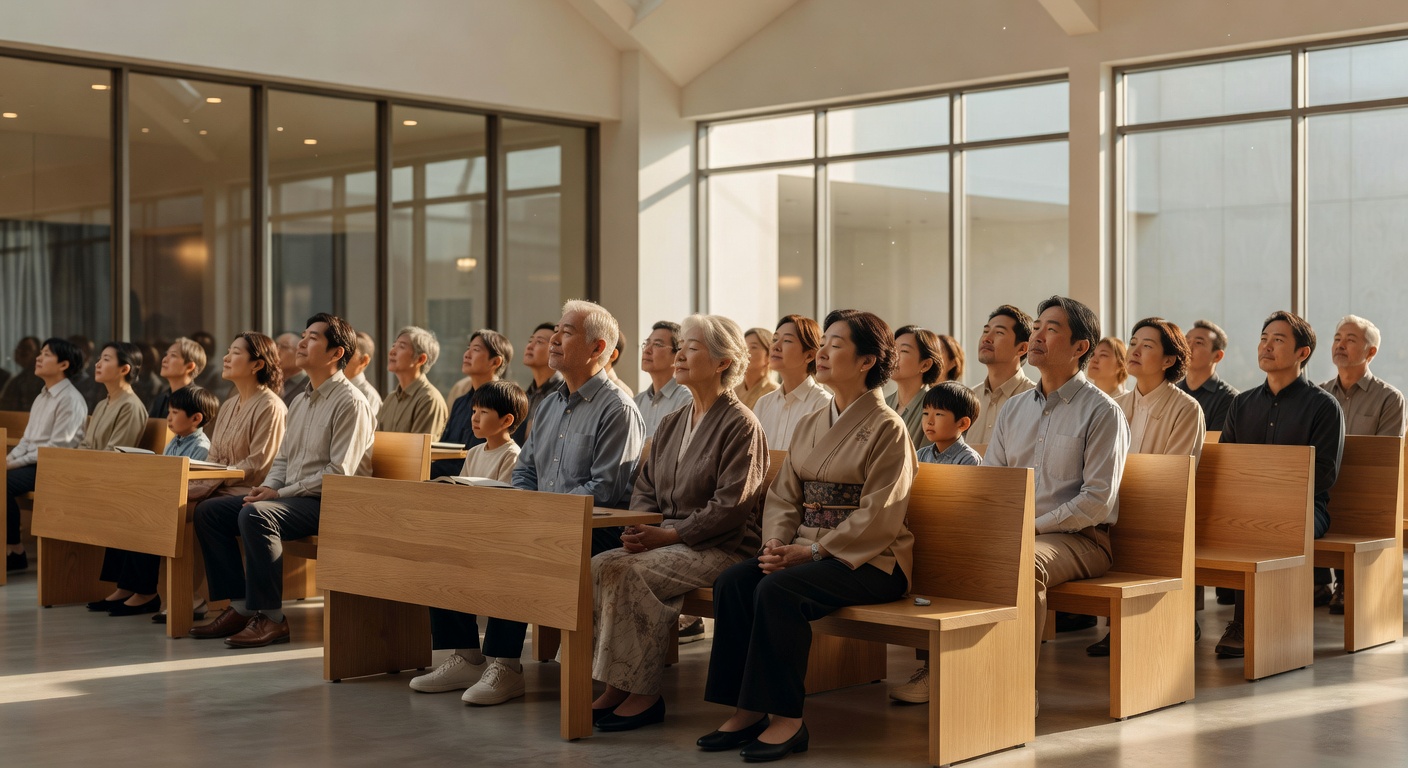
How to Reach Japanese-Speaking Families at Your Church
Why Japanese-Speaking Families Are Looking for Your Church
There are more than 900,000 Japanese speakers living in the United States today. From long-established Japanese-American communities in cities like Los Angeles, Honolulu, Seattle, and New York to newer waves of corporate transferees, students, and their families, the Japanese-speaking population is significant—and largely underserved by English-only churches.
Many Japanese families arrive in the U.S. with limited English, especially spouses and elderly relatives who accompany working professionals. They crave community, belonging, and spiritual connection. Yet the language barrier keeps them from walking through your doors—or, if they do walk in, from truly understanding the message.
Here's the encouraging news: Japanese-speaking families are often deeply receptive to the warmth and fellowship of a church community. In Japan, Christians represent only about 1-2% of the population, but Japanese people living abroad are significantly more open to exploring faith. Your church could be the place where that exploration begins—if you remove the language barrier.
Understanding Japanese Culture and Church Life
Before you launch any outreach effort, it helps to understand a few cultural dynamics that shape how Japanese families experience church.
A Culture of Respect and Indirect Communication
Japanese culture places a high value on wa (harmony), respect, and indirect communication. A Japanese family visiting your church for the first time will likely be observant, polite, and reluctant to ask for help—even if they're struggling to follow the service. They may smile and nod even when they don't understand. Don't mistake politeness for comprehension.
This means your welcome needs to be proactive, not reactive. Rather than waiting for a Japanese visitor to ask for translation or assistance, offer it naturally as part of the experience.
The Role of Community and Group Belonging
In Japanese culture, group identity and community belonging are deeply important. The concept of uchi (in-group) versus soto (out-group) shapes social interactions. When Japanese families feel like outsiders at your church, they're unlikely to return. But when they feel welcomed into the community—not just tolerated—they become deeply committed members.
Fellowship meals, small groups, and personal invitations carry enormous weight in Japanese culture. A single genuine connection can open the door for an entire family.
Faith in Context: Christianity in Japan
Japan has a complex history with Christianity. While Christians are a small minority in Japan, the country has a rich Christian heritage dating back to the 16th century with Francis Xavier's mission. Today, there are vibrant Catholic, Protestant, and independent churches across Japan. Many Japanese people have attended a church wedding or Christmas service without being Christian themselves.
This means Japanese visitors may have some familiarity with church settings but limited understanding of the Gospel message. Patience, clarity, and cultural sensitivity in how you share your faith will make all the difference.
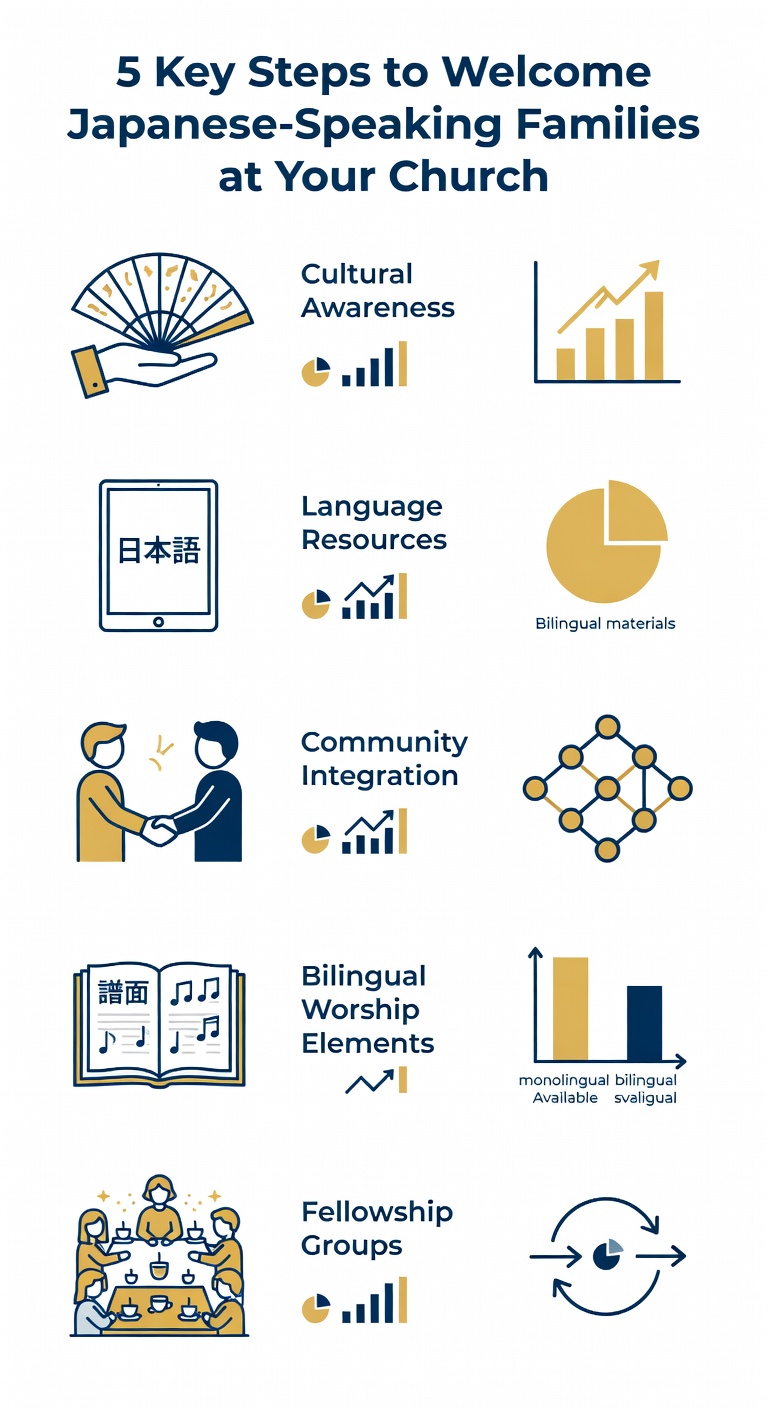
Practical Steps to Welcome Japanese-Speaking Families
Reaching Japanese-speaking families doesn't require a massive budget or a complete overhaul of your services. Here are practical steps any church can take, starting this month.
Offer Real-Time Translation During Services
The single most impactful thing you can do is let Japanese-speaking visitors hear the sermon in their own language. Tools like Glossa.live make this simple—your service is translated in real time into Japanese (and 100+ other languages), and attendees listen on their own phones. No special equipment. No interpreter scheduling headaches. Just a natural, seamless experience that lets every family understand the message.
This is especially powerful for Japanese families because the language gap between English and Japanese is significant. Unlike Spanish or Portuguese, where some English speakers can catch occasional words, Japanese and English share almost no vocabulary. Without translation, a Japanese-speaking visitor understands essentially nothing of the sermon.
Create Bilingual Welcome Materials
First impressions matter enormously in Japanese culture. Having basic materials available in Japanese signals that your church has thought about their needs. Consider printing bilingual welcome cards, a simple service guide explaining the order of worship, and connection cards in both English and Japanese.
You don't need to translate everything. Even a brief welcome message in Japanese—ようこそ (Yōkoso) means "Welcome"—shows thoughtfulness that Japanese visitors will deeply appreciate.
Train Greeters in Cultural Awareness
A warm handshake and a loud "Welcome!" might feel natural in American church culture, but it can be overwhelming for Japanese visitors who are accustomed to bowing and quieter greetings. Train your greeters to be warm but not overpowering. A slight bow alongside a handshake, a gentle smile, and a calm introduction go a long way.
If possible, identify a church member who speaks some Japanese—or pair Japanese visitors with a bilingual volunteer who can help them navigate the service and introduce them to others afterward.
Host Cultural Fellowship Events
Japanese culture has beautiful traditions around food, tea, seasonal celebrations, and hospitality. Hosting a Japanese cultural night, a sushi fellowship dinner, or a hanami (cherry blossom viewing) picnic in spring creates a low-pressure environment where Japanese families can connect with your congregation.
These events also educate your existing congregation about Japanese culture, building mutual understanding and genuine relationships that extend far beyond Sunday morning.
Where to Find Japanese-Speaking Families in Your Community
Japanese-speaking communities tend to cluster around specific industries and institutions. Here's where to look.
- Japanese companies and corporate offices: Cities with Toyota, Honda, Sony, Mitsubishi, or other Japanese corporate presences often have hundreds of Japanese families on temporary assignments. These families typically stay 3-5 years and are eager for community.
- Universities and colleges: Japanese exchange students and graduate students, along with their families, are present at most major universities.
- Japanese language schools (hoshuko): Weekend Japanese schools serve families who want their children to maintain Japanese language skills. These schools are community hubs and excellent places to connect.
- Japanese grocery stores and restaurants: Businesses like Mitsuwa, Nijiya Market, or local Japanese restaurants are gathering points for the Japanese community.
- Cultural organizations: The Japan-America Society, Japanese cultural centers, and sister city programs connect Japanese and American communities.
Reaching out through these channels—offering English classes, family events, or simply building genuine friendships—creates natural pathways to your church.
Real Churches Reaching Japanese Families
Across the United States, churches are already doing this work with remarkable results.
The Japanese American United Church in New York City has served the Japanese-speaking community for over 125 years, offering bilingual services and bridging the cultural gap between Japanese and American worship traditions. Their longevity proves that intentional ministry to Japanese speakers creates lasting, committed congregations.
In cities like Los Angeles, Seattle, and Honolulu, churches affiliated with organizations like the Japanese Evangelical Missionary Society (JEMS) run English-language ministries specifically designed to welcome Japanese families who are exploring faith for the first time. These ministries combine cultural sensitivity with clear Gospel communication.
Meanwhile, multicultural churches are discovering that adding Japanese translation through tools like Glossa.live allows them to serve Japanese families without creating a separate service. As one pastor shared, offering real-time translation "removed the biggest barrier" for Japanese corporate families in their community—and several of those families became committed members within months.
For more ideas on welcoming diverse communities, read our guide on how to build a multicultural church or explore practical strategies for overcoming language barriers at church.
The Unique Opportunity with Japanese Corporate Families
One of the most significant—and often overlooked—opportunities for churches is the Japanese corporate expatriate community. Tens of thousands of Japanese families are living in the U.S. on temporary work assignments, particularly in cities with major Japanese automotive, technology, and manufacturing presence: cities like Nashville, Columbus, Louisville, San Jose, and metro Detroit.
These families face unique challenges. They're far from extended family, navigating an unfamiliar culture, and often isolated—especially spouses who don't work outside the home and have limited English proficiency. Children attend local schools and adapt quickly, but parents can feel increasingly disconnected.
Your church can be a lifeline. By offering a welcoming community with Japanese translation, you provide something these families desperately need: connection, belonging, and support. Many of these families have never attended a church in Japan, but the warmth and community of an American church—combined with the ability to understand in their own language—opens doors to faith that might never have opened otherwise.
Churches in areas with Japanese corporate presence report that these families become some of their most engaged members. They volunteer, participate in small groups, and often continue their faith journey after returning to Japan—carrying the Gospel back home.
How Real-Time Translation Makes Japanese Outreach Possible
Traditional approaches to serving Japanese speakers—hiring a bilingual pastor, recruiting volunteer interpreters, or starting a separate Japanese-language service—require significant resources that most churches simply don't have. Finding a fluent Japanese-English church interpreter is extremely difficult, and maintaining a separate service splits your congregation rather than unifying it.
Real-time AI translation changes the equation entirely. With a tool like Glossa.live, your pastor preaches in English as usual while Japanese-speaking attendees hear the translation on their personal devices. No special equipment. No scheduling volunteer interpreters. No separate services.
This approach is particularly effective for Japanese outreach because it preserves the unified worship experience that Japanese families value. Rather than feeling separated into a "Japanese service," they worship alongside everyone else—fully understanding every word. It also works for the many Japanese families where one spouse speaks English well but the other doesn't, allowing the whole family to attend together.
For churches exploring how AI translation works in practice, our article on how AI translation works for church services explains the technology in simple terms. And if you're curious about costs, our church translation on a budget guide breaks down realistic pricing for churches of every size.
Getting Started This Week
You don't need a complete Japanese ministry program to begin reaching Japanese-speaking families. Here's what you can do right now.
- Identify Japanese speakers in your area: Check if there are Japanese companies, a hoshuko (weekend Japanese school), or Japanese grocery stores nearby. If so, Japanese families are already in your community.
- Set up real-time translation: Visit Glossa.live and activate Japanese translation for your next service. It takes minutes, not weeks.
- Prepare a simple welcome: Print a bilingual welcome card. Even a one-page guide in Japanese shows you care.
- Brief your greeters: Share a few cultural tips—bow slightly, speak calmly, offer to sit with the family during the service.
- Follow up personally: After a Japanese family visits, reach out with a personal message. In Japanese culture, this personal touch is far more meaningful than a generic email.
Every Japanese-speaking family in your community deserves to hear the Gospel in the language of their heart. The tools and strategies exist today to make that happen—no matter the size of your church or the limits of your budget. The question isn't whether you can reach Japanese-speaking families. It's whether you'll take the first step.
Your Church Can Be the Bridge
Japanese families living in the United States are navigating a massive cultural transition. They need community. They need belonging. And many of them are open to faith in ways they never were in Japan. Your church has an extraordinary opportunity to be the bridge—between languages, between cultures, and between a family and the Gospel.
With cultural sensitivity, a welcoming heart, and tools like Glossa.live that remove the language barrier in real time, you can reach Japanese-speaking families this Sunday. Not next year. Not when you find a Japanese interpreter. This Sunday.
Ready to start? Visit Glossa.live to see how real-time Japanese translation works for your church—free to try, no special equipment needed.