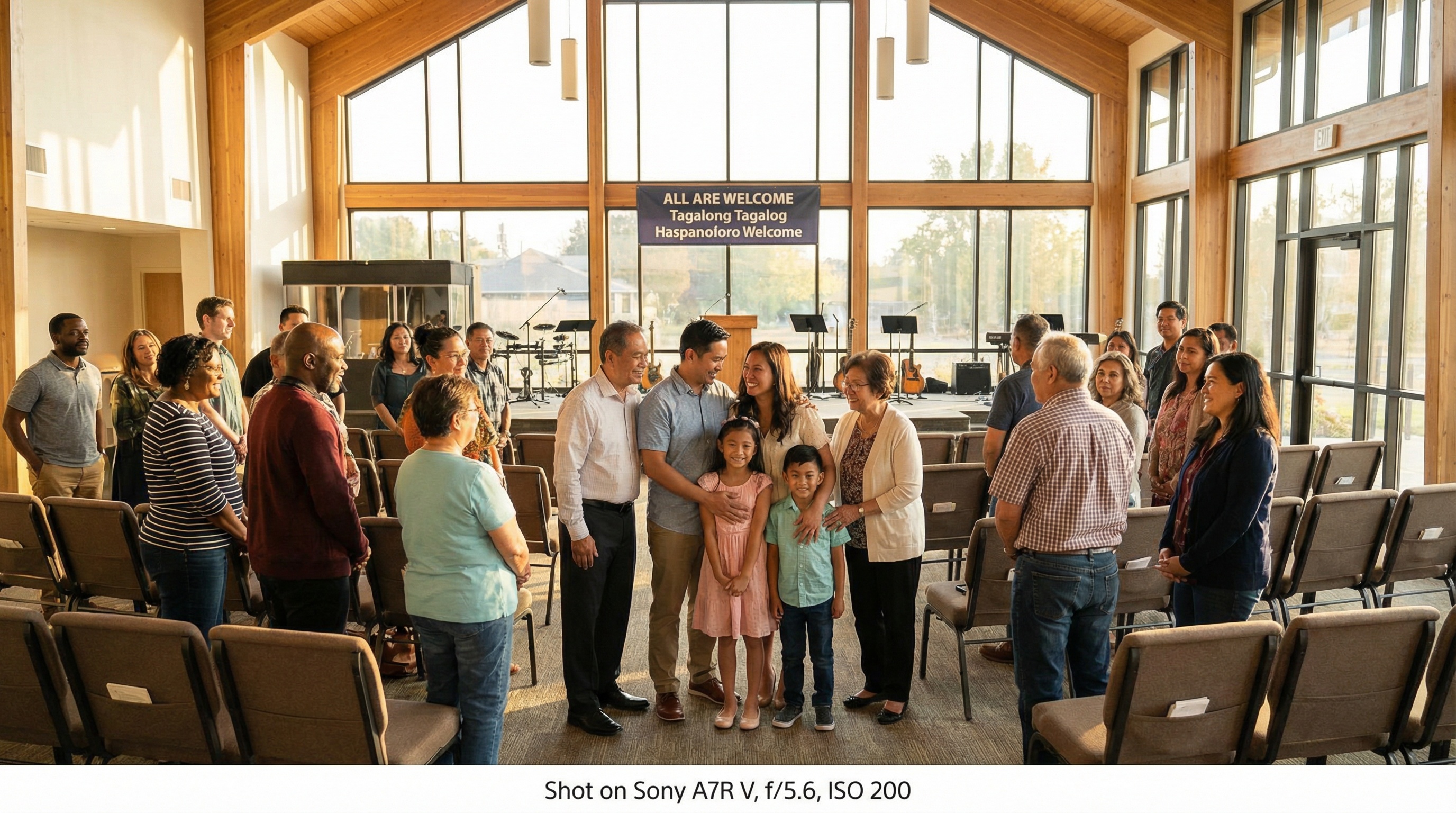
How to Reach Filipino-Speaking Families at Your Church
There are more than 4.6 million Filipino Americans living in the United States, making them the third-largest Asian origin group in the country. Many of these families carry a deep, vibrant faith tradition—the Philippines is more than 90 percent Christian, and Filipino Catholics alone number roughly 1.5 million in the U.S. Yet countless Filipino families attend English-only services each Sunday feeling like something is missing—a connection to the language, the worship style, and the cultural expressions of faith that shaped them.
If your church sits in a community with Filipino-speaking families, you have an extraordinary opportunity. Reaching Filipino families isn't just about adding Tagalog translation to your service—though that matters enormously. It's about understanding a culture where faith, family, and community are deeply intertwined, and creating space for that richness in your congregation.
This guide walks you through practical, proven strategies for welcoming Filipino-speaking families at your church—from offering real-time Tagalog translation to honoring beloved traditions like Simbang Gabi. Whether your community has dozens of Filipino families or just a few, these steps will help you remove barriers and build genuine belonging.
Understanding Filipino Faith and Culture: Why It Matters for Your Church
Before you launch any outreach effort, it helps to understand what makes Filipino faith culture unique. The Philippines has one of the highest rates of Christian identification in Asia—roughly 91.5 percent of the population identifies as Christian, with 79 percent Catholic and a growing Protestant and evangelical community. This deep-rooted faith doesn't disappear when families immigrate to the United States. It often intensifies.
For many Filipino Americans, church isn't just a Sunday activity—it's the center of community life. Filipino families tend to bring extended family, celebrate feast days together, and see the church as a gathering place for social connection as well as spiritual growth. Understanding these cultural values helps you design outreach that resonates.
Key Cultural Values That Shape Filipino Worship
- Bayanihan (community spirit): Filipinos have a strong tradition of communal support. Your church can tap into this by creating group activities, shared meals, and volunteer opportunities that feel natural to Filipino families.
- Pakikisama (getting along, belonging): Filipinos value social harmony and belonging. A warm, personal welcome—not just a generic greeting—goes a long way.
- Faith as family: Filipino faith is deeply intergenerational. Grandparents, parents, and children worship together. Ministries that include all ages will resonate strongly.
- Devotional traditions: Novenas, Simbang Gabi (the nine-dawn-Mass tradition before Christmas), Flores de Mayo, and Sinulog—these devotional practices are central to Filipino spirituality.
When your church shows awareness of these values, Filipino families feel seen. That recognition is the foundation of genuine welcome—and it's what transforms a visitor into a member.
Why Tagalog Translation Matters for Reaching Filipino Families
Here's a statistic that might surprise you: while 85 percent of Filipino Americans speak English proficiently, 43 percent still speak Filipino or Tagalog at home. That's nearly half the community. And among first-generation immigrants—the parents and grandparents who often anchor a family's church attendance—the preference for their heart language is even stronger.
Language isn't just about comprehension. It's about emotional connection. A sermon heard in Tagalog reaches the heart differently than the same message in English. When a Lola (grandmother) hears the Gospel in the language of her childhood prayers, something shifts. She doesn't just understand the words—she feels them.
The good news is that offering Tagalog translation no longer requires hiring professional interpreters or installing expensive equipment. Tools like Glossa.live provide real-time AI translation in Tagalog and 100+ other languages, allowing Filipino members to follow your service on their own phone, tablet, or any device. No special hardware needed. No complicated setup. Just genuine access.
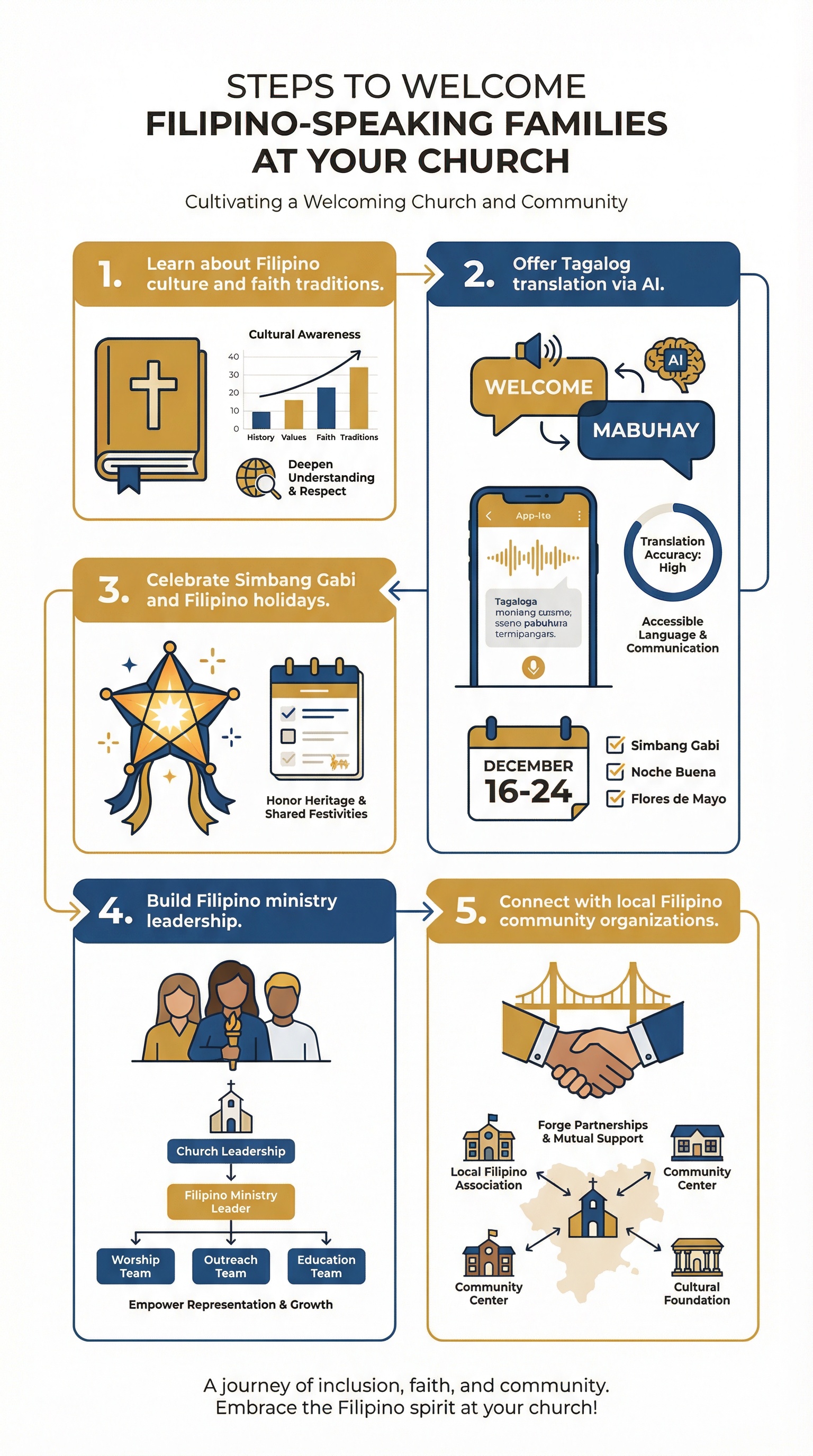
Practical Steps to Welcome Filipino-Speaking Families at Your Church
You don't need a massive budget or a dedicated Filipino ministry team to get started. Here are concrete, actionable steps that any church can take—whether you're in a major metro area with a large Filipino community or a smaller town where a few Filipino families have recently settled.
1. Start with Real-Time Tagalog Translation
The single most impactful thing you can do is offer your service in Tagalog. With AI-powered translation from Glossa.live, you can provide real-time Tagalog audio or text translation during worship—no interpreters, no booths, no FM receivers. Filipino members simply open their phone, select Tagalog, and follow along. It's that simple.
This is especially powerful for older Filipino members who may be less comfortable in English, and for families who want their children to hear the message in both languages. If you're already offering services for other language groups, you know how multilingual worship grows your church. Adding Tagalog is a natural next step.
2. Celebrate Simbang Gabi and Filipino Feast Days
If there's one tradition that unites Filipino Christians across denominations, it's Simbang Gabi—the beloved series of nine Masses (or worship services) held in the days leading up to Christmas, traditionally at dawn. In the Philippines, entire communities wake before sunrise to attend. In the U.S., Filipino communities have adapted this tradition, often hosting evening services.
Hosting or participating in Simbang Gabi is one of the most powerful signals you can send to Filipino families. It says: We see you. We honor your traditions. You belong here. Even if your church isn't Catholic, you can host an adapted version—a series of Advent worship gatherings that incorporate Filipino hymns, Tagalog prayers, and traditional foods like bibingka and puto bumbong afterward.
Other important celebrations include Flores de Mayo (a May devotion to the Virgin Mary), Sinulog (a feast honoring the Santo Niño), and Filipino Independence Day (June 12). Acknowledging these moments—even briefly from the pulpit—builds trust and connection.
3. Build Relationships Through Food and Fellowship
In Filipino culture, food is love. Shared meals are the foundation of community, and a church potluck or fellowship meal that includes Filipino dishes will draw families in faster than almost any formal program. Encourage Filipino members to bring traditional dishes like adobo, pancit, lumpia, and lechon to church gatherings.
Better yet, host a dedicated Filipino cultural night or a monthly fellowship lunch after services. These informal gatherings create the relational warmth that Filipino families are looking for—a sense of kapwa (shared identity) that makes church feel like an extended family.
4. Develop Filipino Ministry Leadership
Filipino families respond best when they see people who look and sound like them in leadership. This doesn't mean you need a Filipino pastor (though that's wonderful if possible). Start by identifying Filipino members who can serve as greeters, small group leaders, or worship team participants. Invite a Filipino lay leader to share a testimony or lead a prayer in Tagalog during the service.
As your Filipino ministry grows, consider appointing a Filipino community liaison—someone who bridges the church leadership and the Filipino congregation. This person can help plan culturally sensitive events, translate communications, and serve as a trusted point of contact for new Filipino families.
5. Connect with the Local Filipino Community
Filipino communities in the U.S. are often tightly knit, with established organizations, cultural centers, and social groups. Reach out to local Filipino-American associations, Filipino professional organizations, and cultural groups. Many Filipino communities have Facebook groups where thousands of local members connect—these can be powerful channels for outreach.
Consider partnering with Filipino community organizations for events like health fairs, immigration assistance clinics, or cultural festivals. When your church shows up as a genuine community partner—not just a recruiter—Filipino families take notice.
Understanding the Filipino-American Community: A Growing Presence
The Filipino-American community is one of the fastest-growing immigrant populations in the United States. With roots stretching back more than a century, Filipino Americans have built vibrant communities in California, Hawaii, Texas, Illinois, New Jersey, and beyond. Understanding this community's history, values, and needs is essential for effective outreach.
According to the Pew Research Center, Filipino Americans are among the most religiously active Asian American groups. About 65 percent of Filipino Americans identify as Catholic, while a growing number attend Protestant, evangelical, and non-denominational churches. This means there's a deep spiritual hunger in the community—and your church may be exactly what a Filipino family is looking for.
What Filipino Families Look For When Choosing a Church
Understanding what draws Filipino families to a church—and what pushes them away—helps you design welcoming experiences. Based on patterns from churches that have successfully reached Filipino communities, here are the key factors.
| What Filipino Families Value | How Your Church Can Respond |
|---|---|
| Warm, personal welcome | Train greeters to introduce themselves by name, not just hand out bulletins |
| Tagalog or Filipino language options | Offer real-time Tagalog translation via Glossa.live on any device |
| Intergenerational worship | Design services where grandparents and grandchildren worship together |
| Strong community and fellowship | Host regular shared meals and small groups that encourage relationship-building |
| Cultural respect and inclusion | Acknowledge Filipino holidays and traditions publicly |
| Practical support | Offer immigration resources, ESL classes, or community referrals |
Notice that technology alone isn't enough. Filipino families want to feel genuinely welcomed, not just accommodated. The translation is the bridge, but the warmth and community on the other side is what makes them stay.
How Churches Are Already Reaching Filipino Families
Across the United States, churches of all sizes and denominations are finding creative ways to welcome Filipino families. Here are a few patterns worth noting.
In California's Bay Area—home to one of the largest Filipino-American populations in the country—several non-denominational churches have added Tagalog translation to their services and seen Filipino attendance grow by 20-30 percent within the first year. Many started with nothing more than affordable church translation tools and a willingness to try.
In Texas, a Southern Baptist church partnered with a local Filipino nurses' association to host a community health fair at the church. That single event introduced more than 40 Filipino families to the church, and a significant number have since become regular attendees. The church now offers Tagalog translation and hosts a monthly Filipino fellowship lunch.
In New Jersey, a megachurch launched a Filipino small group ministry that meets weekly in Tagalog. The group has grown from 8 to over 60 members in two years, and it's become one of the church's most active outreach arms—its members consistently invite friends and family, bringing in new visitors every month.
These stories share a common thread: churches that invest in understanding Filipino culture and removing language barriers see real, measurable growth. For a deeper look at how language inclusion drives church growth, check out why multilingual worship grows your church.
Common Concerns About Filipino Church Outreach (And How to Address Them)
"Most Filipinos speak English—do we really need Tagalog translation?"
While it's true that 85 percent of Filipino Americans speak English proficiently, language preference and language proficiency are different things. Many Filipino families—especially first-generation immigrants and seniors—feel more spiritually connected when they hear the Gospel in Tagalog. Offering translation isn't about assuming people can't speak English. It's about honoring their heart language and removing a subtle barrier to deep engagement. Learn more about overcoming language barriers in church.
"We don't have the budget for a Filipino ministry."
You don't need a dedicated budget line to start. Real-time AI translation through Glossa.live is far more affordable than hiring interpreters, and many of the cultural strategies in this guide—shared meals, acknowledging holidays, developing lay leaders—cost little to nothing. Start small, measure the response, and grow from there. Check out our guide to church translation on a budget for practical ideas.
"We're not sure how to approach the Filipino community without being awkward."
The best approach is the most natural one: build relationships. If you have even one or two Filipino families in your church, start by asking them what they'd love to see. Filipino culture highly values pakikisama—harmonious relationships—and most Filipino families will be delighted that you asked. They'll likely become your most enthusiastic ambassadors.
Getting Started: Your First 30 Days of Filipino Outreach
You don't have to do everything at once. Here's a simple 30-day plan to begin welcoming Filipino-speaking families at your church.
- Week 1: Set up real-time Tagalog translation using Glossa.live. It takes less than 15 minutes. Announce it to your congregation and in your community.
- Week 2: Connect with existing Filipino members. Ask them about their experience, what they'd love to see, and whether they'd be willing to help with outreach. Host a small coffee gathering.
- Week 3: Research local Filipino-American organizations and Facebook groups. Introduce your church and share that you now offer Tagalog translation. Invite families to visit.
- Week 4: Host your first Filipino fellowship event—a potluck, a prayer night with Tagalog worship songs, or a family movie night featuring a Filipino film. Make it warm, informal, and welcoming.
After 30 days, assess what's working. Are new families visiting? Are existing Filipino members more engaged? Use what you learn to plan your next steps—whether that's launching a Filipino small group, hosting Simbang Gabi during Advent, or building a multicultural church that celebrates every language and culture in your community.
Every Language Deserves to Hear the Gospel
Filipino families bring extraordinary gifts to any congregation—deep faith, strong community bonds, joyful worship, and a commitment to intergenerational discipleship. When your church removes language barriers and honors Filipino culture, you're not just adding members. You're enriching your entire community with a tradition of faith that stretches back centuries.
The 4.6 million Filipino Americans in the United States represent one of the most faith-driven communities in the country. Many of them are looking for a church home that sees them—fully. A church that speaks their language, respects their traditions, and welcomes their whole family.
Your church could be that place. Start with Tagalog translation. Build from there. And watch what happens when every Filipino family in your community discovers that your church is a place where they truly belong.
Try Glossa.live free and start reaching Filipino-speaking families at your church today.