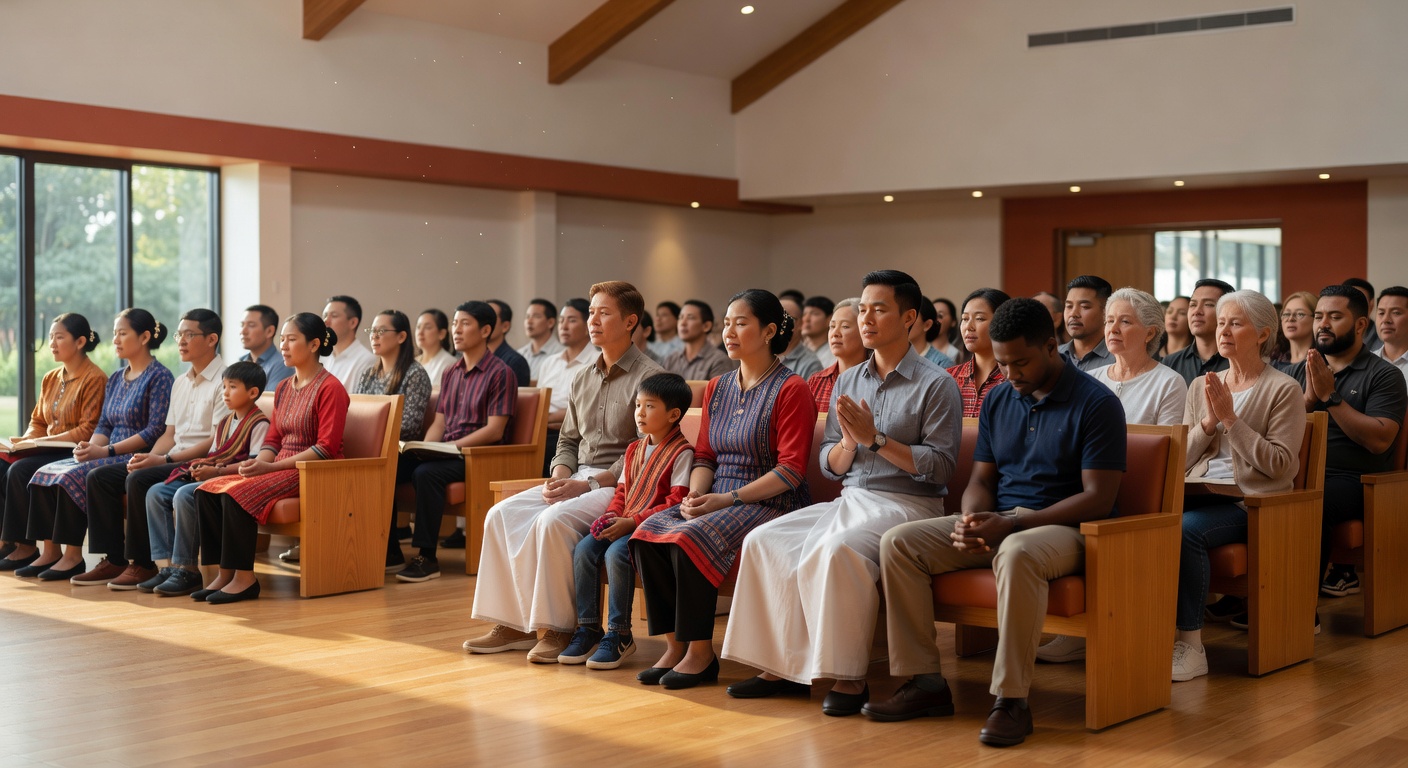
How to Reach Burmese-Speaking Families at Your Church
Is your community home to families from Myanmar—Burmese, Karen, Chin, or Kachin—who might never walk through your church doors because they can't understand the sermon? Across the United States, more than 200,000 refugees and immigrants from Myanmar have resettled since 2008, building vibrant communities in cities like Indianapolis, Fort Worth, Utica, and Minneapolis. Many of these families come from deeply Christian backgrounds, yet they struggle to find a church that speaks their language. If your congregation wants to reach Burmese-speaking families, you're not just growing your church—you're welcoming people who have already endured incredible hardship and are looking for a spiritual home.
Why Burmese and Karen Families Are Looking for Your Church
The story of Myanmar's diaspora is one of resilience and faith. Since the military coup of 2021—and decades of ethnic persecution before it—hundreds of thousands of Burmese, Karen, Chin, Kachin, and Shan families have fled to the United States. Many arrived through refugee resettlement programs, while others came on humanitarian parole or through family reunification.
Here's what makes this community unique for churches: Christianity runs deep in many of Myanmar's ethnic groups. The Karen Baptist Convention is one of the largest Christian organizations in Southeast Asia, tracing its roots to American Baptist missionaries in the 1800s. Roughly 25-30% of Karen people are Christian, and among resettled Karen refugees in the US, that percentage is even higher. The Chin people of Myanmar are approximately 90% Christian, largely Baptist and Presbyterian. The Kachin community is predominantly Christian as well.
That means many Burmese-speaking families aren't just open to church—they're actively searching for one. They type "burmese church near me" or "karen baptist church" into Google, hoping to find a congregation where they can worship in a language that touches their heart. When your church shows up with services they can understand, you're not converting strangers—you're reuniting believers with the body of Christ.
Understanding Myanmar's Diverse Language Communities
One of the first things to understand about reaching families from Myanmar is that "Burmese" isn't just one community. Myanmar is home to over 135 recognized ethnic groups speaking dozens of distinct languages. When you're planning outreach, knowing which communities live near your church makes all the difference.
Burmese (Myanmar Language)
Burmese is the official language of Myanmar, spoken by roughly 33 million people as a first language and used as a lingua franca across the country. Most refugees and immigrants from Myanmar understand Burmese to some degree, even if it isn't their mother tongue. Offering translation in Burmese reaches the broadest audience.
Karen (Kayin)
The Karen people are the largest refugee group from Myanmar in the United States. They speak several dialects—primarily Sgaw Karen and Paw Karen. Karen Baptist churches are well-established across the US, from Buffalo to St. Paul to Dallas. The Karen community places enormous value on church life, with Sunday worship often serving as the social and spiritual center of the entire community.
Chin
The Chin people, predominantly from Myanmar's mountainous Chin State, are among the most devoutly Christian communities in all of Southeast Asia. Most Chin refugees speak Hakha Chin, Falam Chin, or Mizo, and many also speak Burmese. Cities like Indianapolis, Tulsa, and Dallas have significant Chin communities with vibrant church networks.
Kachin
The Kachin people come from northern Myanmar and are predominantly Christian, with the Kachin Baptist Convention being one of the largest Protestant organizations in the region. Kachin communities in the US are smaller but deeply committed to church life.
Understanding which communities are present in your area helps you choose the right languages for translation and tailor your outreach appropriately. Your local refugee resettlement agency—organizations like World Relief, Church World Service, or the International Rescue Committee—can help you understand the demographics in your community.
How Real-Time Translation Makes Burmese Ministry Possible
Traditionally, churches serving Burmese and Karen communities have relied on one of two approaches: starting a separate-language congregation or finding bilingual volunteers to interpret live. Both approaches work, but they come with significant challenges.
Separate congregations create logistical complexity—you need dedicated leadership, worship teams, and scheduling for each language group. And bilingual interpreters are hard to find, inconsistent in availability, and the quality of interpretation varies widely. Many Karen and Chin interpreters are volunteers with day jobs, and asking them to interpret a full sermon every Sunday quickly leads to burnout.
Real-time AI translation offers a third option that's changing how churches welcome Burmese-speaking families. Tools like Glossa.live translate your sermon into Burmese, Karen, Chin, and dozens of other languages as your pastor speaks—no interpreter needed, no separate service required. Families simply open their phone, select their language, and hear the sermon translated in real time.
This approach has several advantages for Burmese ministry specifically. First, it accommodates the diversity within the Myanmar diaspora—a single service can reach Burmese speakers, Karen speakers, and Chin speakers simultaneously, each hearing in their own language. Second, it removes the burden from community volunteers. Third, it allows Burmese families to worship alongside your English-speaking congregation, building the kind of cross-cultural community that reflects the global church.
If you're already reaching other language communities through technology, you can learn more about setting up multilingual services in our step-by-step multilingual services guide.
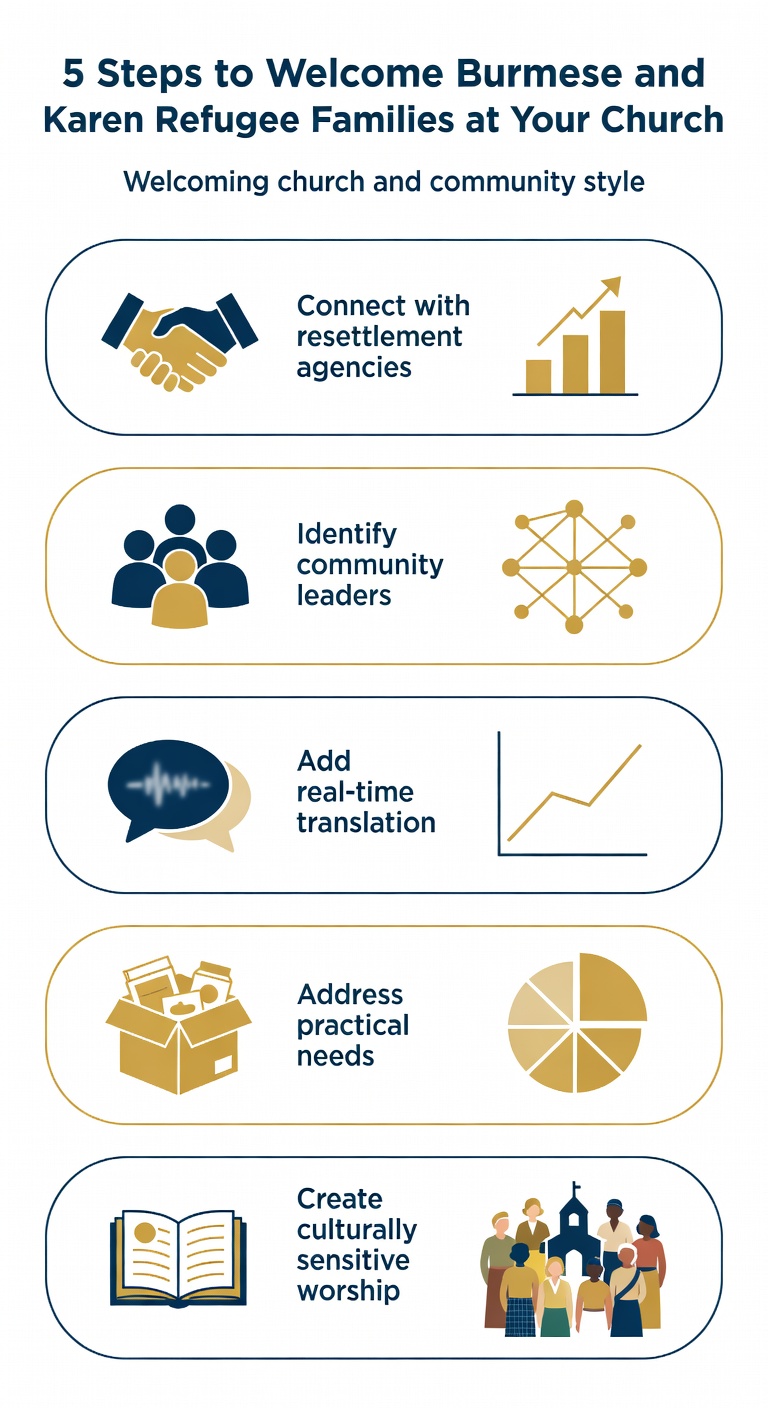
Practical Steps to Welcome Burmese and Karen Families
Connect With Local Resettlement Organizations
Start by contacting refugee resettlement agencies in your area. Organizations like World Relief, Church World Service, the International Rescue Committee, and local mutual aid associations—such as the Karen Organization of Minnesota or the Chin Community of Indiana—can connect you with families, leaders, and cultural liaisons. These organizations often need church partners for everything from English classes to furniture donations to spiritual support.
Identify Community Leaders and Elders
In Burmese and Karen culture, community leaders and elders carry enormous influence. A recommendation from a respected Karen pastor or Chin elder can open doors that no flyer or Facebook ad ever could. Invite these leaders to visit your church, share a meal, and explore how you might partner together. Relationships come first—programs come second.
Start With What You Have
You don't need a fully developed Burmese ministry to begin welcoming families. Start small: add Burmese or Karen translation to your main Sunday service using real-time translation technology. Print a bilingual welcome card. Ask a Karen family to teach your congregation a worship song in their language. Serve laphet thoke (Burmese tea leaf salad) at your next church potluck. Small gestures of cultural respect go a long way.
Address Practical Needs
Many Burmese refugee families face practical challenges that your church can help with: navigating healthcare systems, understanding school enrollment, finding employment, learning English, and accessing legal aid. Churches that address these tangible needs build trust far more effectively than those that only offer Sunday services. Consider partnering with other churches already doing this work—many Karen Baptist churches and Chin Presbyterian churches have established mutual aid networks you can learn from and support.
Create Culturally Sensitive Worship Spaces
Karen and Chin Christians often have their own worship traditions—including distinctive hymns, prayer styles, and fellowship customs. Rather than asking Burmese families to fully assimilate into your existing worship style, consider creating space for their traditions within your church community. This might mean hosting a monthly Karen worship night, inviting Chin choir groups to sing during your main service, or incorporating traditional Burmese prayers into your liturgy.
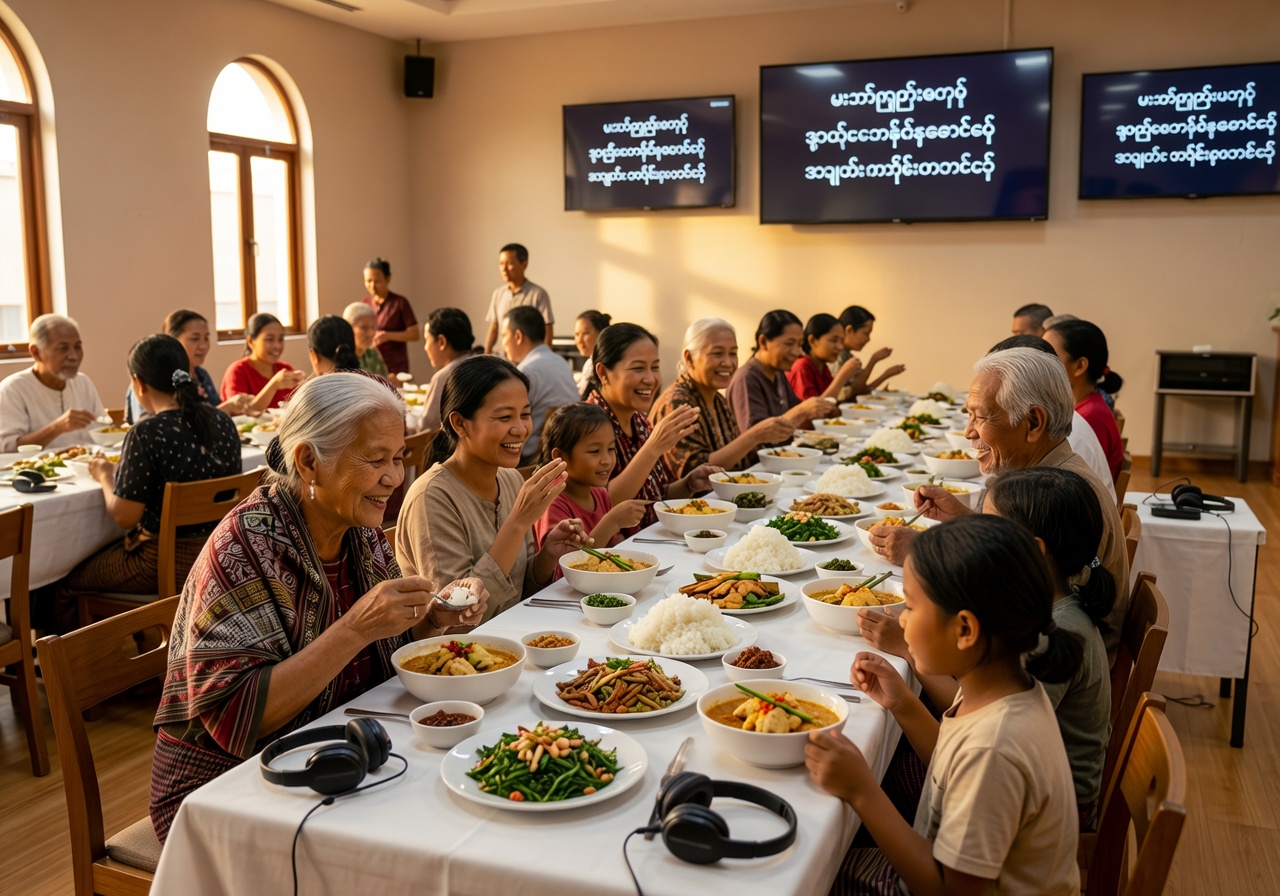
Building a Bridge: Burmese Youth and Second-Generation Ministry
One of the most important—and most overlooked—aspects of Burmese church ministry is reaching the second generation. Many Karen and Chin families who arrived as refugees in the 2000s and 2010s now have teenage and young adult children who grew up in America. These young people often speak fluent English, navigate two cultures daily, and face unique identity challenges.
The "1.5 generation"—those who arrived as children—and the second generation often feel caught between their parents' Karen or Chin church and the wider American church culture. They may attend a Karen Baptist church on Sunday morning out of family obligation, then feel disconnected because the service is entirely in Karen and doesn't address their bicultural experience.
Your church can serve as a bridge. By offering services that include both English and Burmese or Karen translation, you create a space where parents hear the message in their heart language while their children engage in English. Youth groups that intentionally welcome Burmese-American teens—acknowledging their unique cultural experience rather than ignoring it—can be transformative.
If you're thinking about how to bridge generational and cultural gaps, our article on how to build a multicultural church offers practical frameworks that apply directly to Burmese family ministry.
What Churches Reaching Burmese Families Are Getting Right
Across the country, churches are finding creative ways to welcome families from Myanmar. Here are patterns that consistently work.
Redeemer Church in Utica, New York partners directly with Karen and Burmese families, offering services that include translation and creating community programs that address resettlement needs alongside spiritual growth. Their approach recognizes that welcome isn't just a Sunday event—it's a seven-day-a-week commitment.
Karen Baptist churches across the US—from St. Paul to Fort Worth to Oakland—have built thriving congregations that serve as both spiritual homes and community hubs. The Burmese Christian Association of North America (BCANA) connects twelve member churches across the US and Canada, providing network support and shared resources. English-speaking churches that partner with these existing Karen congregations rather than competing with them find the most sustainable path forward.
Churches using real-time translation technology are reporting that Burmese and Karen families feel more included when they can worship alongside the broader congregation rather than being separated into a language-specific room. The technology handles the language barrier while the shared worship space handles the belonging barrier—and both matter equally.
For more ideas on making church translation affordable and accessible, our guide to church translation on a budget covers options for congregations of every size.
Common Concerns About Burmese Church Outreach
"We don't have anyone who speaks Burmese or Karen."
You don't need bilingual staff to get started. Real-time AI translation tools like Glossa.live handle the language piece, and local resettlement agencies can connect you with cultural liaisons. Many Karen and Chin leaders speak enough English to help bridge the gap as relationships develop.
"Won't they prefer their own church?"
Some families will. Karen Baptist churches and Chin Presbyterian churches serve an irreplaceable role in preserving language, culture, and community. But many families—especially younger families, mixed-language households, and those in areas without a Burmese-language church—are looking for a welcoming congregation that speaks their language. Your church can complement, not compete with, existing Burmese churches.
"We're a small church—can we really make a difference?"
Absolutely. Some of the most impactful Burmese ministry happens in small churches where families are known by name, where the pastor visits homes, and where the congregation rallies around specific needs. Small churches often offer the relational warmth that resonates most deeply with Burmese and Karen culture, where community and family bonds are everything.
"How do we handle the trauma many refugees carry?"
This is an important and sensitive question. Many Burmese refugees have experienced war, displacement, persecution, and loss. Trauma-informed ministry—which emphasizes safety, trust, transparency, and empowerment—is essential. Consider training your pastoral staff and volunteers in trauma-informed care. Partner with organizations experienced in refugee mental health. And above all, be patient. Trust takes time, and presence matters more than programs.
Getting Started This Week
You don't need months of planning to begin reaching Burmese-speaking families at your church. Here's what you can do this week.
First, research which Myanmar communities live near your church. Contact your local refugee resettlement agency or search for Karen, Chin, or Burmese community organizations in your city. Understanding who's already there is the foundation for everything else.
Second, add Burmese and Karen translation to your next Sunday service. With tools like Glossa.live, setup takes minutes—not weeks. Your congregation members from Myanmar simply scan a QR code and hear the sermon in their language on their own phone.
Third, reach out to a Karen or Chin church leader in your area. Even a simple invitation to coffee can open doors to meaningful partnership. The Burmese Christian Association of North America (BCANA) and Karen International Ministry (KIM) can help connect you with local leaders.
Fourth, learn one phrase in Burmese: "Mingalaba" (min-ga-la-ba)—it means "hello" and "blessings." When a Karen or Burmese family walks through your door and hears even one word of their language, it signals something powerful: you see them, you welcome them, and you've made room for them in your church.
The families from Myanmar in your community have already shown extraordinary courage. They've crossed oceans, learned new systems, and rebuilt their lives from scratch. Many of them are searching for a church that feels like home. With the right tools, cultural sensitivity, and genuine welcome, your church can be that home—in every language they speak.
For more strategies on overcoming language barriers in church, explore our practical guide for pastors who want to reach every family in their congregation.