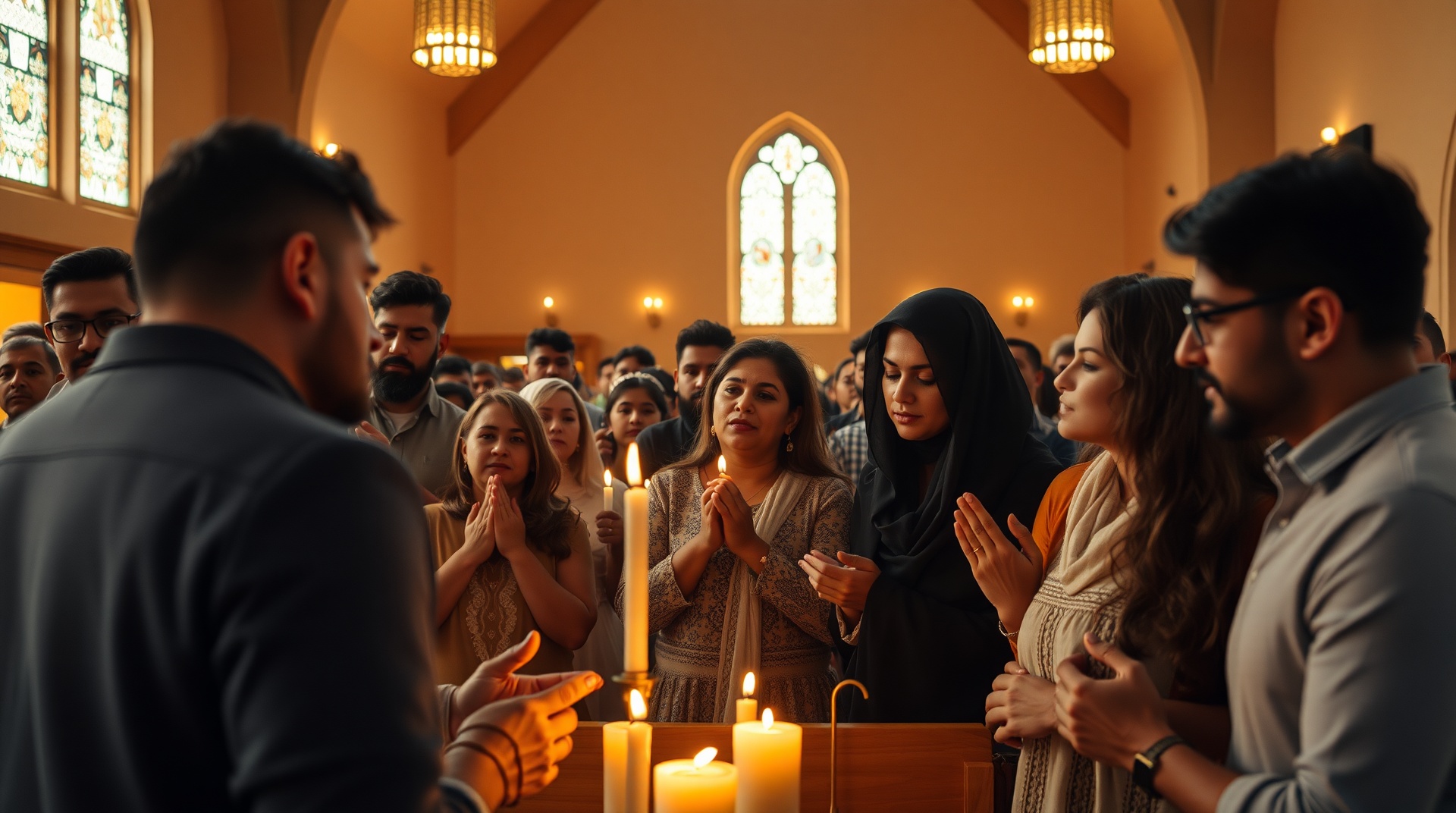
How to Reach Assyrian and Chaldean-Speaking Families at Your Church
Why Assyrian and Chaldean Families Deserve a Place in Your Church
Assyrian and Chaldean Christians are among the oldest Christian communities on earth. Their faith stretches back nearly two thousand years to the apostolic missions of Saint Thomas, Saint Thaddeus, and Saint Mari in ancient Mesopotamia — modern-day Iraq, Iran, Turkey, and Syria. When these families walk through your church doors, they carry a heritage of faith that predates most Western denominations by more than a millennium.
Yet many Assyrian and Chaldean families in the United States face a painful paradox. They fled persecution in the Middle East — from the Assyrian Genocide of 1914-1920 to the post-2003 violence in Iraq and the ISIS devastation of 2014 — seeking safety and religious freedom. But once here, language barriers often keep them isolated from the broader church community. Their heart languages — Neo-Aramaic (Sureth), Arabic, and Chaldean Neo-Aramaic — are rarely spoken in mainstream American churches.
That is where your church can make a profound difference. By offering real-time translation in Aramaic, Arabic, or Syriac, you can welcome families who have sacrificed everything for their faith and give them a spiritual home where they truly belong.
Understanding the Assyrian and Chaldean Community in America
Before you can effectively reach Assyrian and Chaldean families, it helps to understand who they are, where they live, and what makes their community unique. While the terms 'Assyrian' and 'Chaldean' are sometimes used interchangeably, there are important distinctions.
Assyrians and Chaldeans: Related but Distinct
Both Assyrians and Chaldeans trace their ancestry to ancient Mesopotamia and share the Neo-Aramaic language family. The primary distinction is ecclesiastical. Assyrians are traditionally members of the Assyrian Church of the East (also called the Holy Apostolic Catholic Assyrian Church of the East), one of the oldest Christian denominations in the world. Chaldeans are Eastern Rite Catholics — members of the Chaldean Catholic Church, which entered into communion with Rome in the 16th century. There are also Syriac Orthodox and Syriac Catholic Assyrians.
Despite these denominational differences, Assyrians and Chaldeans share deep cultural bonds: the same Aramaic linguistic heritage, similar foods and celebrations, overlapping geographic origins in northern Iraq (the Nineveh Plains), southeastern Turkey (Hakkari, Tur Abdin), northwestern Iran (Urmia), and northeastern Syria. Many families identify as both Assyrian and Chaldean, and intermarriage between the communities is common.
| Assyrian Church of the East | Chaldean Catholic Church | |
|---|---|---|
| Communion | Independent (autocephalous) | In communion with Rome |
| Head | Catholicos-Patriarch | Patriarch of Babylon |
| Language | Eastern Neo-Aramaic (Sureth) | Chaldean Neo-Aramaic / Arabic |
| Liturgy | Holy Qurbana of Addai and Mari | Chaldean Rite (East Syriac) |
| Key US cities | Chicago, Phoenix, Turlock CA | Metro Detroit, San Diego, Phoenix |
Where Assyrian and Chaldean Families Live
The United States is home to the largest Assyrian and Chaldean diaspora outside the Middle East, estimated at 500,000 to 600,000 people combined. The geographic concentrations are significant for church outreach planning.
- Metro Detroit, Michigan — The epicenter of Chaldean life in America. Sterling Heights, West Bloomfield, Farmington Hills, Troy, and Southfield are home to an estimated 160,000-200,000 Chaldeans, making it the largest Chaldean community outside Iraq. The Diocese of Saint Thomas the Apostle (Chaldean Catholic) has over a dozen parishes here.
- Chicago, Illinois — A historic center for Assyrians, with significant communities in Skokie, Niles, and the North Side. Both the Assyrian Church of the East and Chaldean Catholic parishes serve the area. The Assyrian Universal Alliance has maintained offices here for decades.
- Phoenix and Mesa, Arizona — A growing hub for both Assyrians and Chaldeans, with Mar Gewargis Assyrian Church of the East and several Chaldean Catholic parishes.
- Turlock and Modesto, California — One of the oldest Assyrian settlements in America, centered around the Assyrian Church of the East. Turlock hosts the annual Assyrian American Civic Club festivities.
- San Diego, California — Home to a thriving Chaldean community of 30,000-40,000, concentrated in El Cajon (sometimes called 'Little Iraq'). Saint Peter Chaldean Catholic Cathedral serves as a community anchor.
- Nashville, Tennessee — A growing Kurdish and Assyrian refugee community resettled through church sponsorship programs.
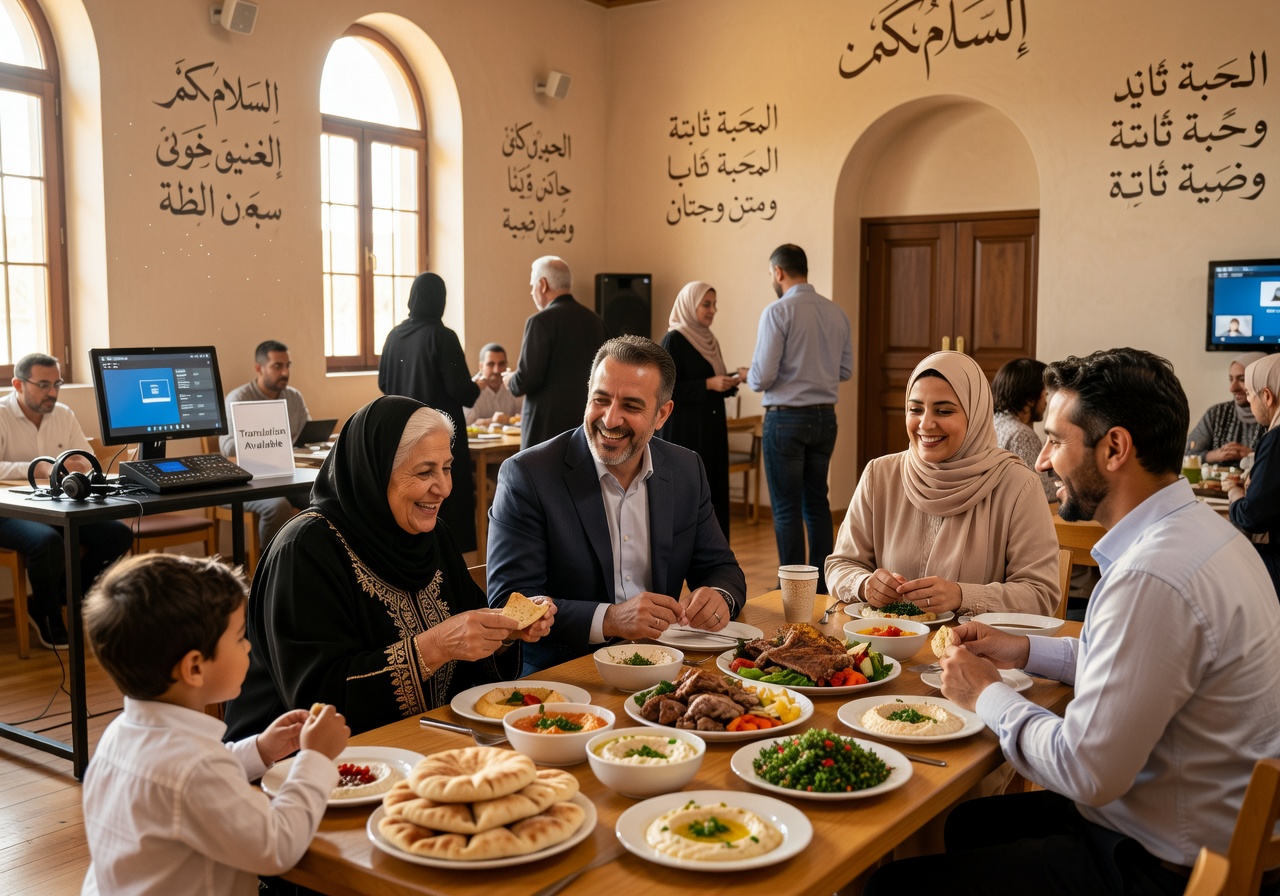
The Language Landscape: Aramaic, Arabic, and Everything Between
Language is where many church outreach efforts succeed or stumble when it comes to Assyrian and Chaldean families. The linguistic landscape is richer and more complex than most pastors expect.
Neo-Aramaic (Sureth/Suret) is the heart language for most Assyrians and many Chaldeans. It is a living descendant of the Aramaic that Jesus himself spoke — a fact that carries enormous spiritual significance for the community. There are several dialects, including Assyrian Neo-Aramaic (spoken by Church of the East members), Chaldean Neo-Aramaic (spoken by many Chaldean Catholics), and Turoyo (spoken by Syriac Orthodox Christians from Tur Abdin, Turkey).
Arabic is widely spoken as a second or first language, especially among Chaldeans from Baghdad and central Iraq who grew up in Arabic-dominant environments. Many younger Chaldean Americans are more comfortable in Arabic or English than in Sureth.
Classical Syriac remains the liturgical language of both the Assyrian Church of the East and the Chaldean Catholic Church, used in the ancient Holy Qurbana liturgy. It functions similarly to how Latin does in Western Catholic tradition — sacred but not conversational.
English is the primary language for second- and third-generation Assyrian and Chaldean Americans, especially those born in the US. However, many families are multilingual, switching between English, Neo-Aramaic, and Arabic depending on context.
For your church, this means offering translation in Neo-Aramaic or Arabic (or both) through a tool like Glossa.live can immediately connect with families across generations. The older generation hears the sermon in their heart language. The younger generation follows along in English. Everyone worships together.
Cultural Traditions That Shape Assyrian and Chaldean Church Life
Understanding Assyrian and Chaldean cultural traditions is not optional if you want your outreach to feel authentic rather than performative. These traditions are deeply woven into how families experience faith, community, and belonging.
Akitu (Assyrian New Year) — April 1
Akitu is the Assyrian New Year, celebrated on April 1 and rooted in traditions stretching back over 6,750 years to ancient Babylon. It is the most important secular-cultural celebration for Assyrians worldwide. Parades, traditional dress (including the stunning embroidered khosaba outfits), music, and community feasts mark the occasion. For churches, hosting or acknowledging an Akitu celebration is a powerful signal of welcome.
Assyrian Martyrs Day (Seyfo Remembrance) — August 7
August 7 commemorates the Assyrian Genocide (Seyfo, meaning 'sword'), when an estimated 250,000-750,000 Assyrians were killed by Ottoman forces during World War I. This is a day of solemn remembrance, and churches that acknowledge this history demonstrate that they see and honor the community's suffering. A brief mention during service or a special prayer can be deeply meaningful.
Food, Hospitality, and Fellowship
Assyrian and Chaldean hospitality is legendary. Meals are central to every gathering — dolma (stuffed grape leaves), kubba (meat-filled dumplings), biryani, masgouf (grilled fish), and kleicha (date-filled cookies) appear at every celebration. When welcoming families, offering food or sharing a meal together communicates care in a way that words sometimes cannot. Church potlucks, holiday dinners, and after-service fellowship with Middle Eastern food options are warmly received.
The Role of Family and Elders
Assyrian and Chaldean culture is deeply family-oriented. Extended families — grandparents, aunts, uncles, cousins — are central to daily life and decision-making. Elders (especially the raba d'bayta, the patriarch of the family) carry significant influence. When reaching out to a family, connecting with the elder generation first shows respect. Decisions about church attendance are often made collectively, not individually.
Practical Steps to Welcome Assyrian and Chaldean Families
Here is how your church can move from good intentions to genuine welcome. These steps have worked for churches across the country that are successfully reaching Assyrian and Chaldean families.
Step 1: Offer Real-Time Translation in Aramaic or Arabic
The single most impactful thing you can do is remove the language barrier. Glossa.live provides real-time AI translation in over 100 languages — including Arabic and Aramaic dialect variants — that works on any device. No special equipment needed. Families simply open their phones or tablets and hear the sermon translated into their language as it happens.
For a community whose ancient language (Aramaic) is the language Jesus spoke, hearing scripture and sermons in that tongue is not just convenient — it is spiritually profound. If you want to learn how to set up live translations on your church website or screens, check out our guide on how to embed Glossa on your website.
Step 2: Partner with Existing Assyrian and Chaldean Parishes
You do not need to replace the Assyrian Church of the East or Chaldean Catholic parish. Instead, partner with them. Many Assyrian and Chaldean families attend their traditional church for Sunday liturgy but are open to midweek Bible studies, youth groups, or community events at other churches — especially if those churches offer something their parish does not, like English-language programs for teenagers or young adults struggling to connect with the ancient liturgy.
Reach out to the local Chaldean Catholic diocese or Assyrian Church of the East parish and propose a joint community event — an Akitu celebration, a shared Lenten prayer vigil, or a refugee welcome dinner. These partnerships build trust and show respect for the community's existing faith traditions.
Step 3: Connect with Community Organizations
Every major Assyrian and Chaldean community has organizations that serve as cultural anchors. Connecting with them is often the fastest path to building relationships.
- Chaldean American Chamber of Commerce (Detroit) — Business and community networking hub
- Assyrian Aid Society of America — Humanitarian organization with chapters in multiple cities
- Chaldean Community Foundation (Sterling Heights, MI) — Social services, resettlement, youth programs
- Assyrian Universal Alliance (Chicago) — Political and cultural advocacy organization
- Catholic Charities and refugee resettlement agencies — Many Assyrian and Chaldean families arrived through these programs
Step 4: Acknowledge the Persecution and Refugee Experience
Many Assyrian and Chaldean families in America are refugees or children of refugees. They fled violence in Iraq after 2003 and especially after 2014 when ISIS systematically targeted Christian communities in the Nineveh Plains, destroying ancient churches, kidnapping families, and forcing hundreds of thousands to flee. Some families have experienced trauma that echoes across generations, from the 1914-1920 Seyfo genocide to the 1933 Simele massacre to the 2014 ISIS persecution.
Your church does not need to be a counseling center. But acknowledging this history — in sermons, in prayers, in personal conversations — communicates that you see their story and honor their resilience. Phrases like 'We know what your community has endured, and we want you to know you are safe and welcome here' carry tremendous weight.
Step 5: Create Culturally Inclusive Worship Moments
Small gestures create big impact. Consider incorporating an Aramaic scripture reading on special occasions — hearing the Lord's Prayer in Aramaic (the language Jesus prayed in) is a powerful experience for everyone in the congregation, not just Assyrian and Chaldean members. Include Assyrian and Chaldean hymns in your worship rotation. Display a welcome sign in Syriac script (ܫܠܡܐ, Shlama — 'Peace' or 'Hello'). These small acts of cultural inclusion signal that your church values what Assyrian and Chaldean families bring to the body of Christ.
Reaching the Next Generation: Second- and Third-Generation Challenges
One of the biggest challenges facing the Assyrian and Chaldean community — and one of the biggest opportunities for your church — is the generational divide. Second- and third-generation Assyrian and Chaldean Americans often feel caught between two worlds.
Many young people grew up attending the traditional Chaldean Catholic or Assyrian Church of the East liturgy with their families but struggled to connect with the ancient Syriac prayers and rituals. They crave a faith community that speaks their language — English — while still honoring their heritage. Some drift away from church entirely.
Your church can serve this generation by offering contemporary worship in English with real-time translation available for parents and grandparents who attend. This way, the whole family worships together — the young adults engage with the English-language sermon and worship music, while grandma follows along in Aramaic or Arabic on her phone through Glossa.live. Churches that have embraced this model — like those reaching Korean families and Chinese families — have seen remarkable multigenerational engagement.
What Assyrian and Chaldean Families Bring to Your Church
Reaching Assyrian and Chaldean families is not charity — it is an extraordinary enrichment of your church community. Here is what these families bring.
- Ancient Christian heritage — A living connection to the apostolic church that predates Western Christianity. Assyrian and Chaldean Christians can trace their faith to the first century AD.
- Deep devotion and faithfulness — These families maintained their Christian identity through centuries of persecution under Ottoman, Ba'athist, and ISIS rule. Their commitment to Christ is battle-tested.
- Strong family and community bonds — Assyrian and Chaldean families show up for each other. When one family joins your church, their extended network often follows.
- Cultural richness — From Aramaic scripture readings to traditional music and hospitality, Assyrian and Chaldean families add a depth and diversity to worship that benefits everyone.
- A heart for missions — Having experienced persecution firsthand, many Assyrian and Chaldean Christians are deeply passionate about reaching others who are suffering and sharing the Gospel across cultural lines.
Overcoming Common Challenges
Every church that reaches across cultural boundaries faces obstacles. Here are the most common challenges when welcoming Assyrian and Chaldean families, and how to navigate them.
Denominational differences. Assyrians and Chaldeans come from liturgical traditions (Church of the East, Chaldean Catholic, Syriac Orthodox) that may feel very different from Protestant, evangelical, or nondenominational worship styles. Be respectful of these differences. Do not try to 'convert' families away from their tradition — instead, offer your church as a supplementary community where they can grow, connect, and serve alongside believers from other backgrounds.
Trust takes time. Assyrian and Chaldean families have experienced betrayal — by governments, by neighbors, by institutions that promised protection and failed. Trust is earned slowly, through consistent presence and genuine care. Show up to community events. Follow through on promises. Be patient.
The language barrier is real but solvable. Even families who speak English well may prefer to hear scripture and sermons in their heart language. Real-time translation through Glossa.live removes this barrier without requiring interpreters, headsets, or separate services. Churches that have adopted this approach for other communities — from Arabic-speaking families to Vietnamese families — have seen dramatic improvements in engagement and belonging.
Getting Started This Week
You do not need a massive budget or a specialized staff to begin reaching Assyrian and Chaldean families. Here is what you can do this week.
- Identify your local community. Search for Chaldean Catholic parishes, Assyrian Church of the East congregations, or Assyrian/Chaldean community organizations in your area. If they exist, families are nearby.
- Set up real-time translation. Visit Glossa.live and add Arabic and Aramaic translation to your service. It takes less than 15 minutes, works on any device, and requires no special equipment.
- Reach out to a community leader. Contact the local Chaldean Catholic parish priest, an Assyrian community organization, or a refugee resettlement agency and introduce yourself. Express genuine interest in partnership — not recruitment.
- Learn three phrases. Shlama (ܫܠܡܐ, Peace/Hello), Tawdi (Thank you), and B'shena d'Maran (In the name of our Lord). These small efforts communicate enormous respect.
- Pray for the community. Lift up the Assyrian and Chaldean Christians in your area — and around the world — in your church prayers this Sunday. Name them. See them. Honor their ancient, enduring faith.
A Faith That Has Endured for Two Thousand Years
The Assyrian and Chaldean Christian community has survived empires, genocides, and displacement. Their faith has endured the Mongol invasions, the Ottoman massacres, the fall of Saddam Hussein, and the terror of ISIS. Through it all, they have held onto the Gospel — often at the cost of everything else.
When your church opens its doors to Assyrian and Chaldean families, you are not just adding diversity to your congregation. You are welcoming brothers and sisters whose faith was forged in fire. You are honoring one of the oldest Christian traditions on earth. And you are removing the last barrier — language — that keeps them from feeling fully at home in the body of Christ.
Ready to reach every language in your congregation? Try Glossa.live free and see how real-time translation can transform your church's outreach to Assyrian, Chaldean, and multilingual families around the world.