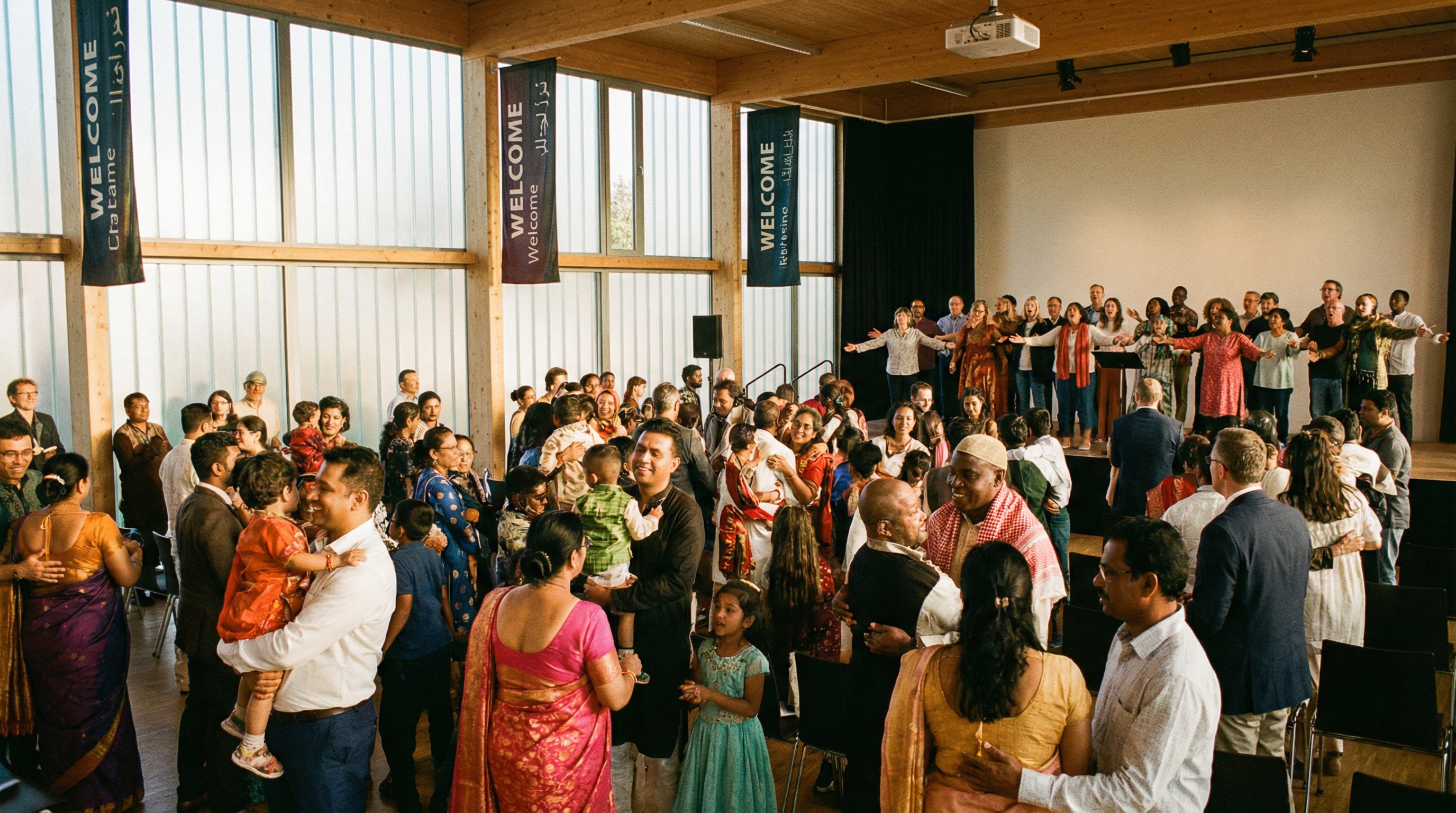
How to Reach Vietnamese-Speaking Families at Your Church
There are more than 2.4 million Vietnamese Americans in the United States—and that number has been growing steadily for decades. They live in your city. They shop at your local stores. Their children attend your neighborhood schools. And many of them are searching for a church where they can worship in a language they understand.
The question isn't whether Vietnamese families are in your community. They almost certainly are. The question is whether your church is ready to welcome them.
Reaching Vietnamese-speaking families doesn't require you to speak Vietnamese, hire a full-time interpreter, or rebuild your worship service from the ground up. What it does require is an intentional commitment to language inclusion—and the right tools to make it happen.
This guide walks you through everything you need to know: why Vietnamese outreach matters, where Vietnamese communities are growing, how other churches are doing it, and the practical steps you can take to start welcoming Vietnamese families this month.
Why Vietnamese Outreach Is a Missed Opportunity for Most Churches
Vietnamese Americans represent the fifth largest immigrant group in the United States. They're concentrated in cities like Houston, San Jose, Los Angeles, Orange County, New Orleans, and Dallas—but they're also scattered in smaller cities and suburbs across nearly every state.
Despite this, most English-speaking churches have made little effort to reach Vietnamese-speaking members. The barrier isn't usually hostility or indifference—it's simply that church leaders don't know where to start.
Here's what makes this a significant ministry opportunity right now:
Vietnamese Americans are highly community-oriented. Faith and family are central to Vietnamese culture, both for Catholic families (Vietnam has one of the largest Catholic populations in Asia) and for Protestant communities that grew through decades of missionary work. When Vietnamese families find a church that genuinely welcomes them in their language, they're deeply loyal and often bring extended family members with them.
Vietnamese communities also skew heavily toward immigrant generations. According to Pew Research Center data on Asian American religion, a significant share of Vietnamese Americans are immigrants or children of immigrants—meaning language access isn't a nice-to-have. It's essential for genuine belonging.
If your church is in a city with a Vietnamese community and you're not intentionally reaching them, you're likely invisible to them. Offering Vietnamese translation—even simple, AI-powered translation—sends a powerful signal: *You belong here. We want you here.*
Understanding Your Vietnamese Community Before You Start
Before you add Vietnamese translation to your service, it helps to understand the community you're hoping to reach. Not all Vietnamese communities are the same.
First-generation vs. second-generation dynamics: First-generation Vietnamese immigrants (those who came to the US as adults) often speak limited English and deeply appreciate hearing sermons in Vietnamese. Second-generation Vietnamese Americans (those born or raised in the US) typically speak English fluently, but many still carry a deep connection to Vietnamese language and culture—especially for worship. Both groups matter, and your outreach strategy may look different for each.
Catholic vs. Protestant background: A significant portion of Vietnamese Americans come from a Catholic background, particularly families who fled Vietnam after 1975. Protestant Vietnamese churches also have deep roots in the US, with Vietnamese Baptist, Alliance, and Presbyterian congregations in most major cities. Understanding this background helps you frame your outreach authentically.
Community gathering points: Vietnamese communities often cluster around specific neighborhoods, shopping districts, and community organizations. Connecting with Vietnamese-owned businesses, Vietnamese student associations, or Vietnamese community centers can help you understand where your neighbors are gathering—and how to reach them.
How Other Churches Are Welcoming Vietnamese Families
Churches across the US have found creative, practical ways to reach Vietnamese-speaking communities. You don't need to reinvent the wheel.
The "translation first" approach: Many churches start simply by adding real-time Vietnamese translation to their Sunday service. Congregation members who speak Vietnamese tune in via their phones or tablets while the service continues normally in English. This requires no changes to your worship flow—just translation technology that works quietly in the background.
One Vietnamese Baptist congregation in Southern California used this approach when merging with an English-speaking church. Rather than running separate services, they offered real-time translation so that both communities could worship together in the same room. Attendance at joint services increased significantly because families could invite English-speaking friends without anyone feeling excluded.
Bilingual welcome and signage: Even if your service is primarily in English, offering Vietnamese-language welcome materials, programs, and signage signals genuine hospitality. A brief bilingual welcome from the stage—just a sentence or two in Vietnamese—can go a long way.
Vietnamese small groups: Many Vietnamese families feel more comfortable opening up in a smaller, language-specific setting. Starting a Vietnamese small group or Bible study—even before launching full translation in services—can be a natural entry point for Vietnamese families exploring your church.
Partnership with Vietnamese community organizations: Some churches have built relationships with Vietnamese cultural associations, Vietnamese ESL classes, or Vietnamese student clubs at local universities. These partnerships create natural bridges for invitation and relationship-building.
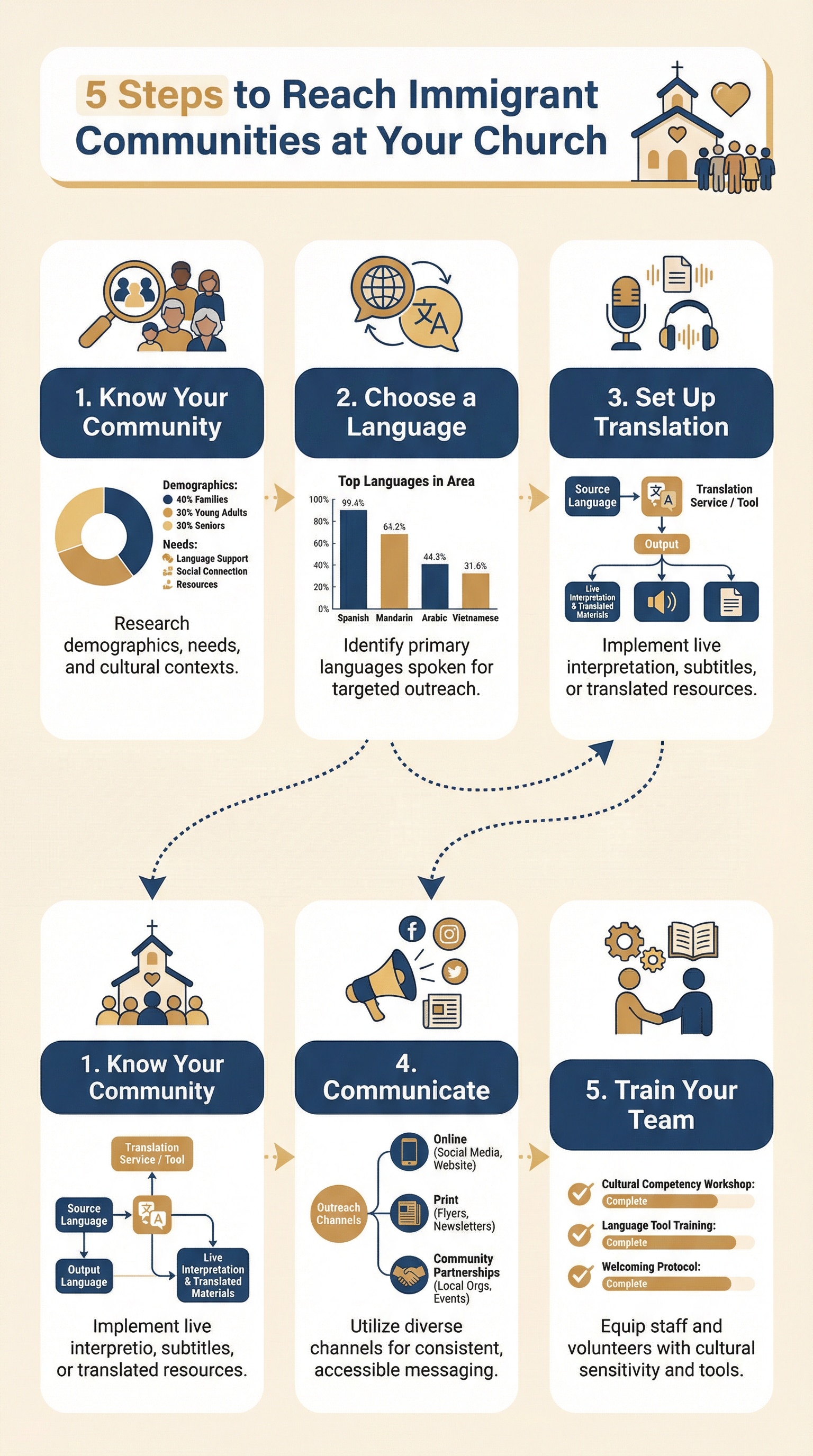
Setting Up Vietnamese Translation at Your Church
The most significant barrier to offering Vietnamese services used to be cost and logistics. Professional Vietnamese interpreters charge 5–50 per hour or more, and finding qualified interpreters with theological knowledge is genuinely difficult. Many Vietnamese translators are fluent in conversational language but struggle with biblical terminology, sermon structure, and worship vocabulary.
That's where AI-powered real-time translation has changed the equation. Tools like Glossa.live can translate your sermon into Vietnamese in real time—handling biblical language, proper names, and theological concepts more accurately than generic translation apps because they're trained on worship and ministry content.
Here's how it works in practice:
- Set up your translation broadcast. Connect Glossa.live to your audio feed (via your existing soundboard or microphone). The AI begins translating your service in real time as the pastor speaks.
- Share the access link with your congregation. Vietnamese-speaking attendees receive a link (via text, printed card, or QR code) to open on their phones or tablets. They put in an earbud and hear the service in Vietnamese while sitting with everyone else.
- The service runs normally. There's no separate room, no interpreter booth, no additional equipment. Vietnamese families are integrated into the congregation—not separated from it.
For churches that want to take it further, you can also embed the Vietnamese translation stream on your website so that Vietnamese-speaking families can follow your service online from home. Our guide on how to embed live translations on your website walks through the technical setup.
Practical Steps to Start Vietnamese Outreach This Month
Here's a realistic starting point for any church, regardless of size or budget:
- Pray and research first. Before launching anything, spend time learning about the Vietnamese community in your city. Talk to Vietnamese Christians in your area. Visit a Vietnamese restaurant or market and start building relationships. Ministry starts with genuine care—not a program.
- Identify your Vietnamese contacts. You may already have Vietnamese members or regular attenders who haven't felt empowered to invite their Vietnamese-speaking family members. Ask them about the barriers their family faces and what would make your church feel more welcoming.
- Start translation at one service. You don't need to overhaul everything. Begin by offering Vietnamese translation at one service. Starting multilingual church services is often simpler than churches expect.
- Promote the Vietnamese option actively. Don't just add translation and wait. Spread the word through your Vietnamese contacts, local Vietnamese community groups, social media, and any Vietnamese community organizations in your area.
- Add a bilingual greeting to your service. Even a simple "Chào mừng bạn đến với nhà thờ của chúng tôi" (Welcome to our church) from the stage communicates genuine hospitality. Ask a Vietnamese-speaking member or friend to help you practice the pronunciation.
- Follow up and adjust. After a month, check in with Vietnamese attendees. What's working? What would make them feel more welcomed? Treat this as an ongoing relationship, not a one-time program launch.
Common Questions About Vietnamese Church Outreach
Do we need a Vietnamese-speaking pastor or staff member?
Not necessarily—at least not to start. Real-time translation allows Vietnamese-speaking families to engage with your current pastoral team's sermons and teaching. That said, if you're hoping to truly build a Vietnamese-speaking community within your church, having a Vietnamese-speaking ministry leader (even a volunteer) who can connect with families and lead Vietnamese small groups is enormously valuable.
How accurate is AI translation for Vietnamese?
Vietnamese is a tonal language with significant regional dialect differences (Northern vs. Southern Vietnamese, for example). Modern AI translation has improved dramatically, and tools like Glossa.live are specifically trained on worship and biblical content. For most sermon delivery, the accuracy is excellent. It will occasionally miss nuances in complex theological illustrations—but this is true of human interpretation as well.
What if only a few families in our congregation speak Vietnamese?
Even two or three Vietnamese-speaking families represent a significant ministry opportunity—and they often have extended family and community networks that could grow quickly. Many churches have seen their Vietnamese ministry grow from a handful of families to dozens within a year of intentionally welcoming Vietnamese speakers.
Is it disrespectful to use AI rather than a human interpreter?
The most important thing is that Vietnamese families feel genuinely welcomed and understood—not that a particular technology or method is used. Many Vietnamese Christians who have experienced AI-powered translation at church describe it as freeing rather than diminishing: they get to sit with their family, worship together, and understand the full sermon. For a deeper look, see our overview of how AI translation works for church services.
The Bigger Picture: Vietnamese Ministry as Kingdom Work
Reaching Vietnamese-speaking families isn't a niche program or a demographic checkbox. It's an expression of the global, multilingual nature of the church.
Scripture describes a vision of people from every nation, tribe, language, and tongue gathered together in worship (Revelation 7:9). Every Vietnamese family that finds a genuine home in your church is a glimpse of that vision—realized in a practical, local, specific way.
The Vietnamese communities in your city are not waiting for a perfect Vietnamese-language church to materialize. Many of them are already looking for a church where they can belong, where their children can grow up alongside other families of faith, and where their elderly parents can worship in the language closest to their hearts.
Your church can be that place. It doesn't require a major budget or a complete overhaul. It requires a willingness to remove language barriers—and the right tools to do it effectively.
Start small, stay consistent, and let relationships lead the way. The Vietnamese families in your community are already your neighbors. They're waiting to become your congregation.
Ready to Welcome Vietnamese Families at Your Church?
Glossa.live makes it straightforward to add Vietnamese translation—and 100+ other languages—to your church services without special equipment or technical complexity. Many churches that have started overcoming language barriers say the response from their multilingual communities was immediate and deeply encouraging.
Whether you have two Vietnamese-speaking attendees today or two hundred, the process is the same: set up, share the link, and let your community know they're welcome. Your Vietnamese neighbors are looking for a church. Make sure yours is ready to welcome them.
Language should never be a barrier to belonging. Every Vietnamese family in your community deserves to hear the Gospel in the language of their heart. — Glossa.live