How to Reach Armenian-Speaking Families at Your Church
When an Armenian family walks through your church doors for the first time, they bring with them one of the oldest Christian traditions in the world. Armenia became the first nation to adopt Christianity as its state religion in 301 AD—more than a thousand years before most of Europe. That history runs deep.
But for many Armenian-American families attending English-language churches today, something is still missing: a service they can fully understand in their heart language. Whether it is grandparents who arrived recently from Yerevan or older diaspora members who speak Western Armenian at home, the language gap is real—and it is keeping people from fully belonging.
If you are a pastor or worship leader wondering how to reach Armenian-speaking families at your church, this guide will walk you through what you need to know—culturally, practically, and technologically.
Who Are Armenian-Americans, and Where Do They Live?
There are approximately 500,000 Armenian-Americans living in the United States today, with the largest communities concentrated in key metro areas across the country. Los Angeles and the San Fernando Valley—particularly Glendale and Burbank—are home to the largest Armenian-American population outside Armenia itself. Fresno, California has a historic Armenian community dating back to the early 20th century. New York, New Jersey, Boston, and Eastern Massachusetts have well-established Eastern Armenian diaspora communities. Detroit and the Washington, D.C. area also have growing Armenian populations, including many recent immigrants.
The Armenian diaspora in the US is divided into two distinct linguistic groups. Western Armenian is spoken by families whose ancestors fled the Ottoman Empire during the Armenian Genocide (1915-1923). Eastern Armenian is the language spoken in the Republic of Armenia today, and it is increasingly represented as newer immigrants arrive from post-Soviet Armenia. These two variants are mutually intelligible but distinct—similar to the difference between British and American English.
For churches, this means that "Armenian translation" is not one-size-fits-all. But the need for it is real and growing—and the opportunity to reach this deeply Christian community is significant.
Understanding Armenian Church Culture Before You Reach Out
To welcome Armenian families well, it helps to understand the religious landscape they come from. The Armenian Apostolic Church is the historic national church of Armenia—one of the oldest Christian denominations in the world. In the United States, it operates through two dioceses: the Eastern Diocese (headquartered in New York) and the Western Diocese (headquartered in Burbank, California). The Armenian Apostolic tradition uses Grabar (Classical Armenian) in its liturgy, which is different from modern spoken Armenian.
Beyond the Apostolic tradition, there are also Armenian Catholic churches (in communion with Rome), Armenian Evangelical churches (Protestant congregations with roots in 19th-century missionary work), and non-denominational churches attracting Armenian-Americans—particularly younger generations who have grown up bilingual or in English-only environments.
This matters for outreach strategy. An Armenian family visiting your English-language church may have a strong Apostolic or Evangelical background. They may feel proud of their ancient Christian heritage—and they will notice whether your church honors that history or ignores it.
Why Language Still Matters for Armenian-Speaking Members
You might wonder: are not most Armenian-Americans bilingual? Many younger Armenian-Americans are, yes. But fluency does not mean comfort, especially in worship.
There is a well-documented phenomenon researchers call "emotional language"—the language in which people first learned to pray, sing hymns, and hear Scripture. For many older Armenian-Americans, that language is Armenian. When they sit in an English-language service, they can follow the words, but the spiritual resonance is diminished. They are translating in their heads rather than simply receiving.
For newer immigrants from Armenia who arrived in the last decade, English proficiency may be limited—especially among seniors who arrived to join family. These are the grandparents sitting quietly in the pew, nodding along, but not truly grasping the sermon. They deserve better.
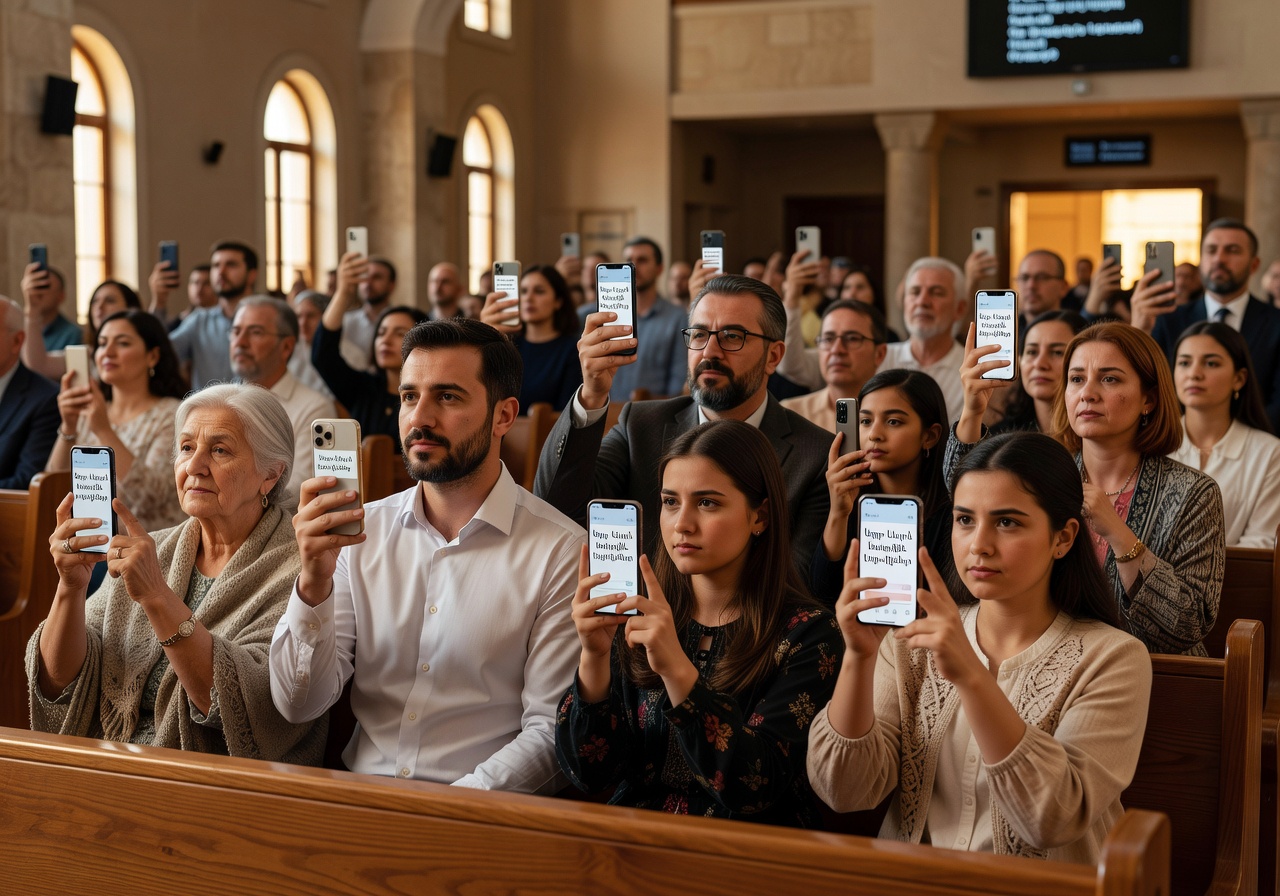
According to Barna Group research, immigrants and first-generation Americans who worship in their heart language show significantly higher engagement, retention, and sense of belonging in their faith communities. Adding Armenian translation to your worship service does not require hiring a professional interpreter or installing expensive equipment. Real-time AI translation tools like Glossa.live make it possible to offer Armenian language access for any service, any congregation size, with nothing more than smartphones in the hands of your Armenian-speaking attendees.
How to Add Armenian Translation to Your Church Service
The practical steps are simpler than most pastors expect.
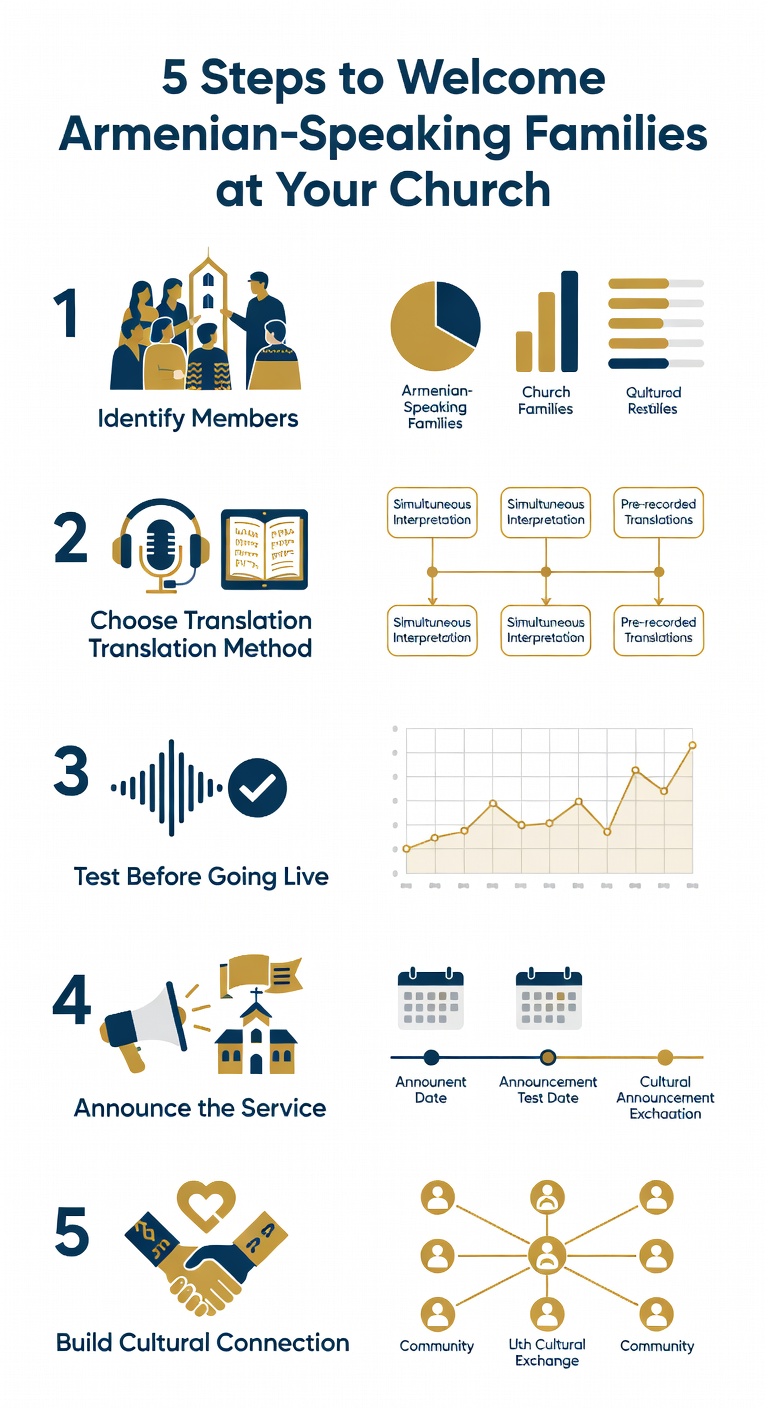
Step 1: Identify Armenian-Speaking Members in Your Congregation
Before adding any translation service, talk to people. Ask your congregation quietly if any members speak Armenian at home, or if they have family members who struggle with English during worship. Many Armenian-speaking members will not mention their language struggle unless directly invited to.
Step 2: Choose a Real-Time Translation Approach
You have several options for providing Armenian translation. A volunteer interpreter who is bilingual is personal and culturally sensitive, but availability and consistency can be challenging over time. Traditional RF headset systems work well for in-person services but come with equipment cost and logistical burden. Real-time AI translation via Glossa.live requires no special hardware—Armenian-speaking attendees use their own smartphones to access the translation feed, and the sermon is translated in real time and displayed as text or audio directly on their device. Setup takes about 15 minutes for the first service.
If you want to learn more about the technical setup, our guide on how to embed Glossa on your website walks through the integration details step by step.
Step 3: Test Before You Go Live
Before launching Armenian translation at a full service, run a test session. Have an Armenian-speaking member attend a rehearsal or recorded playback and give you honest feedback. Armenian has distinct phonology and vocabulary—particularly biblical and liturgical terms—so validating translation accuracy with a native speaker is worth the extra step.
Step 4: Communicate It to Your Armenian Community
Once you are ready, tell people. Include a note in your bulletin, announce it during service, and—if possible—reach out directly to Armenian-speaking members. Word of mouth spreads quickly in tight-knit diaspora communities. When one Armenian family finds out your church offers their language, they will often tell three more.
Cultural Moments That Matter for Armenian Outreach
If you want to build lasting relationships with Armenian families, a few cultural moments deserve special attention.
- Armenian Genocide Remembrance Day (April 24): This is the most significant date on the Armenian cultural calendar—a day of mourning and remembrance for the 1.5 million Armenians killed in the Ottoman Genocide. Acknowledging this date in your church with a moment of prayer or brief pastoral statement communicates profound respect that Armenian families will long remember.
- Easter and Holy Week: The Armenian Apostolic Church observes Easter on a different date than Western churches (using the Julian calendar). A multilingual Easter service is a powerful opportunity to welcome Armenian visitors who may be searching for a church home.
- Armenian Christmas (January 6): The Armenian Apostolic Church celebrates Christmas on January 6 (Epiphany), not December 25. Acknowledging this in your December bulletin demonstrates genuine cultural awareness.
- Coffee fellowship: Armenian culture is deeply relational and centered around hospitality. After-service coffee hour is not just a nice touch—it is where community is genuinely built. A bilingual welcome during fellowship time goes a long way.
Building a Welcoming Environment Beyond Translation
Translation is the foundation, but belonging requires more. If you have Armenian-speaking members who are willing, invite them to pray, read Scripture, or share testimonies in Armenian during service. Hearing their own language from the platform communicates that your church values who they are—not just their ability to adapt to an English-speaking norm.
Consider teaching your congregation even one simple Armenian greeting—"Barev" (Hello) or "Shnorhakalutyun" (Thank you)—before a service where Armenian visitors are expected. The effort signals respect in a way that goes beyond technology.
Connect with local Armenian organizations, cultural centers, and Apostolic parishes in your area. Building relationships with these institutions opens doors for referrals and trust—and demonstrates that your church is serious about more than a one-time visitor strategy.
For a broader framework on building truly inclusive communities, our guide on how to build a multicultural church offers practical leadership steps that apply across any denomination and diaspora group.
Real-Time Translation That Works for Armenian Services
Glossa.live supports both Eastern Armenian (the modern standard language of the Republic of Armenia) and Western Armenian (the traditional diaspora dialect). Church leaders can display translated sermon text on attendees smartphones in real time, covering both spoken sermon content and worship elements.
This is particularly valuable for multigenerational Armenian families. A grandmother who speaks only Armenian can follow the English-language sermon on her phone. Her grandchildren who grew up in America can hear the message in English while understanding that their heritage language is genuinely welcomed here.
You can read more about how other churches are using this approach in our overview of how churches are reaching immigrant communities through real-time translation. The pattern is consistent: when people hear God's word in their own language, walls come down and attendance grows.
Frequently Asked Questions About Armenian Church Outreach
Is Armenian hard to translate accurately?
Armenian is a distinct Indo-European language with its own unique alphabet created in 405 AD. AI translation has advanced significantly, and Glossa.live's biblical language training helps with theological terminology. For best results, do a test run with a native speaker before your first live service.
Should we offer Eastern or Western Armenian?
This depends on your congregation. If you serve recent immigrants from Armenia, Eastern Armenian is preferred. If you serve older diaspora families whose ancestors fled the Genocide, Western Armenian may be more familiar. When in doubt, ask your Armenian-speaking members directly—they will appreciate being consulted.
We have only two or three Armenian-speaking members. Is translation worth it?
Yes, often more than you would expect. Even if only two members benefit today, offering the service signals that your church is a place where their language is welcomed. That reputation spreads in tight-knit diaspora communities. Those two members may bring parents, cousins, or friends—and your Armenian outreach grows organically.
How do we find Armenian-speaking volunteers to help?
Connect with local Armenian community organizations, cultural centers, or the Armenian Apostolic diocese in your region. Many Armenian-Americans who attend English-language churches are eager to help bridge the gap for their community—they just need to be asked.
Getting Started: Reach Armenian Families This Sunday
The Armenian-American community carries a rich, ancient faith tradition. They are deeply Christian—historically more so than almost any other diaspora group in America. When an Armenian family walks into your church, they are often looking for what you already have: a living, worshipping community gathered around Jesus.
What they need from you is not a complete redesign of your service. They need to understand what is being said. That is where translation changes everything.
Glossa.live makes it simple to offer real-time Armenian translation—no equipment, no complicated setup, no dedicated interpreter budget. Start with a free trial and see how quickly Armenian-speaking members begin to feel at home in your congregation.
Want to reach more immigrant communities at your church? Explore our complete guide on how to start multilingual church services, or see how other pastors are overcoming language barriers in church week by week.