How to Reach Ghanaian-Speaking Families at Your Church
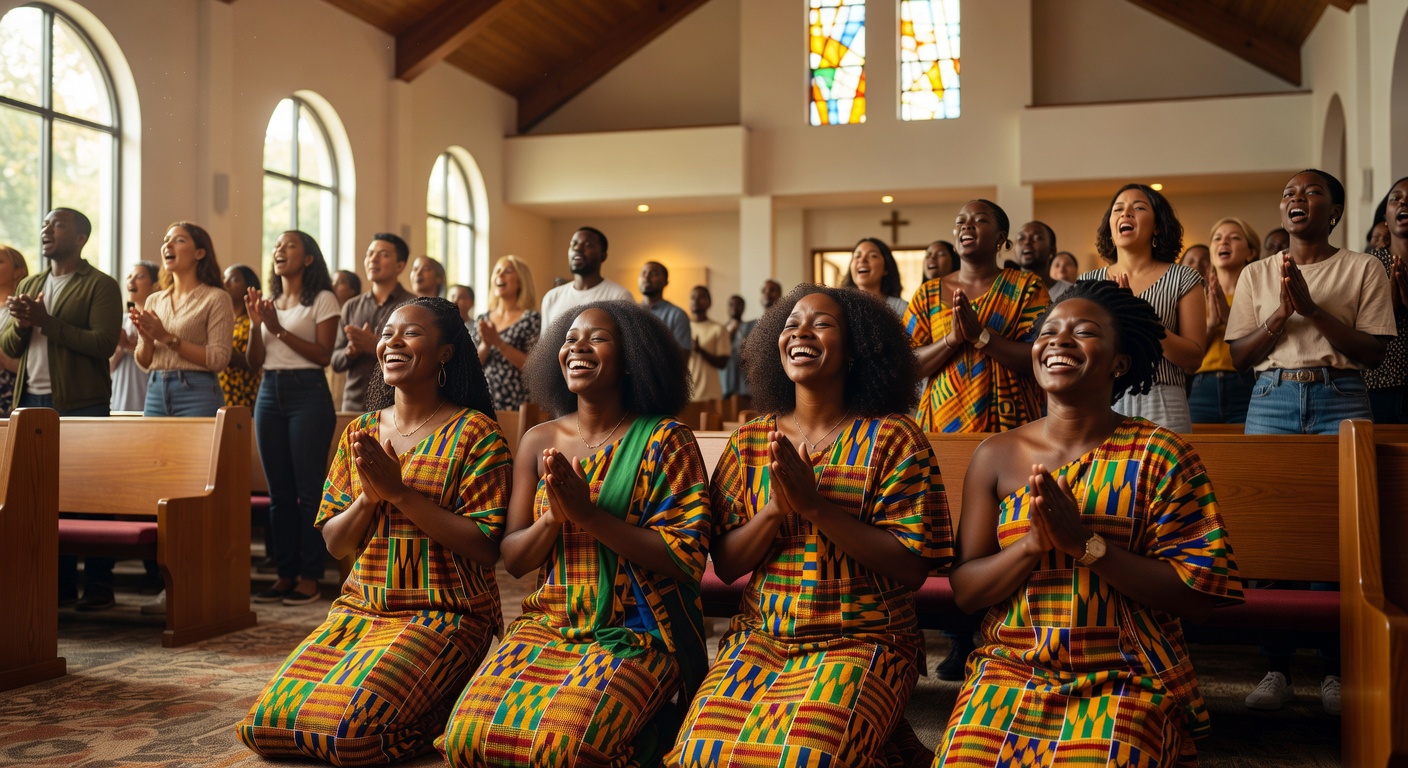
Ghanaian families are one of the fastest-growing African immigrant communities in the United States, with over 350,000 Ghanaians now calling America home. Many of these families arrive with deep Christian faith already woven into their identity — Ghana is one of the most Christian nations in Africa, with over 70% of the population identifying as Christian. Yet when Ghanaian families walk into an English-speaking American church, something vital can get lost in translation. The sermon that once moved them in Twi, Ga, or Ewe now feels distant in a language they understand but don't fully feel. If your congregation includes Ghanaian-speaking families — or your community has a growing Ghanaian population — reaching them in their heart language isn't just a nice idea. It's a ministry opportunity that could transform both your church and theirs.
Why Ghanaian Families Are Searching for a Spiritual Home
Every month, hundreds of Ghanaian families in America search for a "Ghanaian church near me" — looking for a place that feels like the churches they grew up in. They're searching for familiar worship styles, for sermons they can absorb deeply, and for a community that understands their culture. Many find Ghanaian-specific congregations — Ghanaian Presbyterian churches, Ghanaian SDA churches, or Ghanaian Pentecostal churches that operate entirely in Twi or Akan. But many others live in areas without a dedicated Ghanaian congregation, or they want their children to integrate into broader American church life while still staying connected to their roots.
This is where your church comes in. If you can offer even a portion of your service in Twi or another Ghanaian language, you signal something powerful: "You belong here, exactly as you are." And the technology to make that happen is simpler than you might think.
Understanding Ghana's Rich Christian Heritage
To reach Ghanaian families effectively, it helps to understand the spiritual landscape they come from. Christianity in Ghana isn't a Western import that arrived with missionaries and stayed on the margins. It's the dominant faith of the nation, shaping everything from politics to daily conversation to how people greet each other on the street.
Ghana's Christian landscape is remarkably diverse. The Presbyterian Church of Ghana, one of the oldest denominations in the country, has deep roots in the Akan-speaking regions. The Seventh-day Adventist Church has an enormous following, particularly among educated professionals. Pentecostal and Charismatic churches — like the Church of Pentecost, Lighthouse Chapel International, and International Central Gospel Church — have exploded in popularity, attracting millions with dynamic worship, powerful preaching, and emphasis on the Holy Spirit.
When Ghanaian families immigrate to America, they bring this rich faith tradition with them. They expect vibrant, Spirit-filled worship. They expect community that extends beyond Sunday morning. And they expect the Word of God to be preached with authority and passion. Understanding this helps your church create an environment that resonates with what Ghanaian believers already know and love about following Christ.
The Language Landscape: Twi, Ga, Ewe, and Beyond
Ghana is home to over 80 languages, but a few dominate the diaspora community in America. Understanding which languages your Ghanaian neighbors speak is the first step toward reaching them effectively.
Twi (Akan) is by far the most widely spoken Ghanaian language in the diaspora. It's the lingua franca of Ghana's Ashanti and Eastern regions, and most Ghanaians in America — regardless of their specific ethnic background — understand at least some Twi. If you're going to offer translation in one Ghanaian language, Twi is the place to start.
Ga is spoken primarily by families from the Greater Accra Region, Ghana's capital area. Ga-speaking Ghanaians are heavily represented in cities like New York, New Jersey, and the Washington D.C. area.
Ewe is spoken by families from Ghana's Volta Region, as well as by immigrants from neighboring Togo. Ewe-speaking communities are found throughout the eastern United States, often with their own churches and cultural associations.
Fante is closely related to Twi (both are Akan dialects) and is spoken by families from Ghana's Central and Western regions, particularly the coastal areas around Cape Coast and Takoradi.
Most Ghanaian immigrants also speak English fluently — Ghana is an English-speaking country, after all. But there's a profound difference between understanding a sermon in English and feeling it in your mother tongue. As one Ghanaian pastor in the Bronx described it: "When you worship in your native language, your spirit comes out, and everybody's edified, and everybody understands everything."
How Real-Time Translation Bridges the Gap
You might be thinking: "We don't have anyone on our team who speaks Twi." That's where technology changes everything. With real-time AI translation like Glossa.live, your pastor can preach in English while Ghanaian families hear the sermon simultaneously in Twi, Ga, or Ewe — right on their smartphones or tablets. No expensive equipment. No volunteer interpreters juggling two languages at once. Just clear, natural-sounding translation that lets every family member engage fully with the message.
Here's how it works in practice. Your pastor preaches normally. Glossa.live's AI — trained on biblical and theological language — translates the sermon in real time. Ghanaian families simply open the Glossa.live link on their phone, select their language, and listen through earbuds. The experience feels natural because the translation flows with the sermon, keeping pace with your pastor's delivery.
This approach solves several problems at once. It removes the awkward "interpretation pause" where a human interpreter repeats every sentence, doubling the length of the sermon. It works for multiple languages simultaneously — so if you also have Spanish-speaking or Korean-speaking families, they can all listen in their own language at the same time. And it's accessible to anyone with a smartphone, which means there's virtually no barrier to entry.
If you're curious about more ways to integrate translation into your services, our step-by-step multilingual services guide walks you through the entire setup process.
Culturally Sensitive Outreach That Resonates
Technology is the bridge, but culture is the foundation. Reaching Ghanaian families isn't just about translation — it's about creating a church environment where they feel genuinely welcomed and valued. Here are practical strategies that churches across America have used successfully.
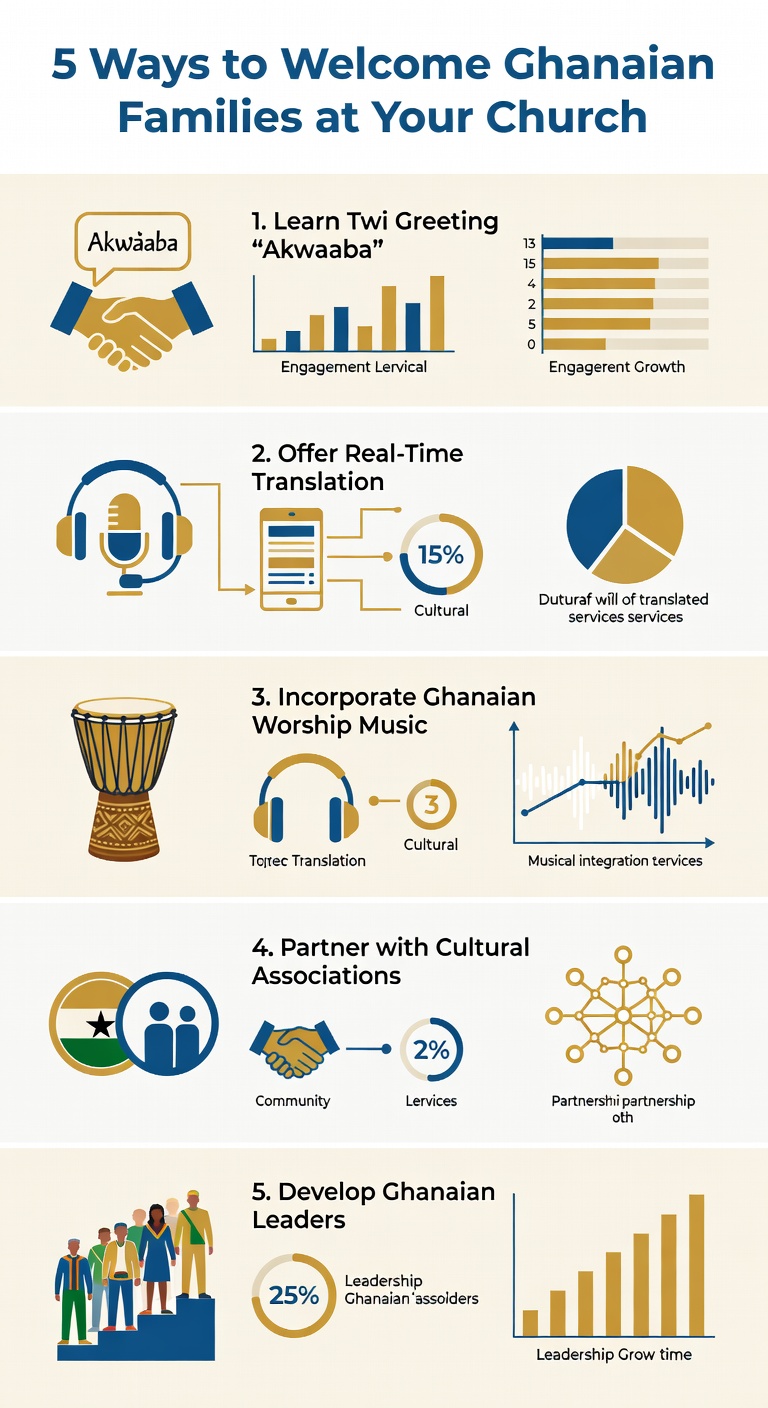
- Incorporate Ghanaian worship music. Songs in Twi by artists like Joe Mettle, Diana Hamilton, or Celestine Donkor are deeply beloved. Even playing one Ghanaian worship song during your service sends a powerful message of inclusion.
- Celebrate Ghanaian cultural moments. Ghana's Independence Day on March 6th is a source of deep national pride. Acknowledging it from the pulpit shows your Ghanaian members that their heritage matters.
- Welcome the extended family. Ghanaian culture is deeply communal. When one family member joins your church, they'll likely bring siblings, cousins, parents, and friends. Be ready to welcome groups, not just individuals.
- Learn basic Twi greetings. "Akwaaba" means welcome. "Onyame nhyira wo" means God bless you. When your greeters use even a single Twi phrase, it communicates something no English words ever could.
- Understand the role of respect and hospitality. Training your welcome team on Ghanaian cultural values — like the importance of greeting elders properly — goes a long way toward building trust.
Reaching Ghanaian Families Where They Already Gather
The Ghanaian community in America is tightly networked. Word of mouth travels fast through cultural associations, community events, and social media groups. Here are effective ways to connect with Ghanaian families in your area.
Partner with Ghanaian cultural associations. Every major city with a Ghanaian population has cultural associations — groups like the Ghana National Council, local Ghanaian Student Associations, or regional hometown associations. These organizations host events, community gatherings, and cultural celebrations. Offering your church as a venue or co-sponsoring community events opens doors that traditional church marketing never could.
Connect through Ghanaian businesses. Ghanaian restaurants, African grocery stores, and barber shops are community gathering points. Leaving flyers about your multilingual services in these locations — especially if the flyer includes some Twi — demonstrates genuine interest in the community.
Leverage social media and WhatsApp. Ghanaian diaspora communities are highly active on Facebook groups and WhatsApp. Many cities have active groups like "Ghanaians in Houston" or "Ghanaian Community - DMV Area." Sharing information about your multilingual services in these groups can reach hundreds of families at once.
Host community service events. Ghanaian families deeply value churches that serve their community. Hosting a back-to-school supply drive, immigration information session, or community health fair and promoting it within the Ghanaian community builds trust that eventually leads to Sunday morning attendance.
For more strategies on welcoming immigrant families, our guide on how churches welcome immigrant families offers practical steps that work across cultures.
Addressing Common Concerns About Ghanaian Outreach
"We only have a few Ghanaian families — is it worth the effort?"
Absolutely. The Ghanaian community is deeply interconnected. Reach one family well, and they'll bring others. Churches that have invested in welcoming even a small number of Ghanaian families often see rapid growth within that community. And with real-time translation technology, the cost of offering Twi translation is minimal — there's no need to hire a dedicated interpreter or restructure your entire service.
"Will adding translation disrupt our existing service flow?"
Not at all. With Glossa.live, translation happens silently on each person's device. Your English-speaking congregation won't notice any difference. The sermon proceeds normally, and Ghanaian families simply listen through their earbuds. It's completely non-disruptive.
"What about the generational divide?"
Second-generation Ghanaian-Americans are often fully bilingual or English-dominant. But offering translation isn't just about language comprehension — it's about honoring the parents and grandparents who still think, pray, and worship most deeply in Twi. When you offer translation, you're telling the older generation that they matter, and the younger generation sees their church loving their family well.
"How do we handle different Ghanaian denominations?"
Ghanaian Christianity spans a wide spectrum — from Presbyterian to Pentecostal to SDA. The key is focusing on what unites rather than divides: a love for Scripture, a passion for worship, and a commitment to community. Your church doesn't need to become a Ghanaian church. It needs to become a church where Ghanaian families feel they can worship fully alongside everyone else.
Building Long-Term Ghanaian Ministry
Reaching Ghanaian families isn't a one-time initiative — it's a long-term relationship. Here's how to build sustainable ministry.
- Develop Ghanaian leaders. As Ghanaian families become part of your congregation, identify and invest in leaders within that community. A Ghanaian small group leader, worship team member, or deacon does more for integration than any program ever could.
- Create a Ghanaian fellowship group. A monthly Ghanaian fellowship — perhaps with a shared meal featuring fufu, jollof rice, or kelewele — gives families a space to connect in their own language and culture while remaining part of the larger church body.
- Offer practical support. Many Ghanaian immigrants face challenges with immigration paperwork, professional credential recognition, and navigating American systems. Churches that offer ESL classes, immigration legal clinics, or professional mentoring become indispensable community resources.
- Connect with Ghanaian churches in your area. Rather than competing with existing Ghanaian congregations, partner with them. Joint worship events and shared community service projects create a stronger witness together.
For churches already on the path to becoming multilingual, our guide on overcoming language barriers in church provides additional strategies that complement the Ghanaian-specific approaches outlined here.
Getting Started This Sunday
You don't need a complete Ghanaian outreach strategy to take the first step. Here's what you can do this week.
Start by learning who's already in your congregation. You might be surprised to discover that Ghanaian families are already attending your church but haven't yet found a way to fully engage. A simple conversation — "Where is your family from originally?" — can reveal opportunities you didn't know existed.
Next, set up real-time translation for your next Sunday service. With Glossa.live, you can add Twi translation in minutes. Share the translation link with any Ghanaian families you know, and ask them to spread the word. Even if only one family uses it that first Sunday, you've planted a seed that will grow.
Finally, learn one phrase in Twi. "Akwaaba" means welcome. "Onyame nhyira wo" means God bless you. When your Ghanaian members hear their pastor or a greeter use even a single Twi phrase, it communicates something no English words ever could: "You are seen. You are valued. You belong here."
The Ghanaian community in America is vibrant, faithful, and looking for churches that welcome them fully. Your church can be that place — and the journey begins with a single step toward inclusion.