Church Translation System: How to Choose the Right One for Your Congregation
Church Translation System: How to Choose the Right One for Your Congregation
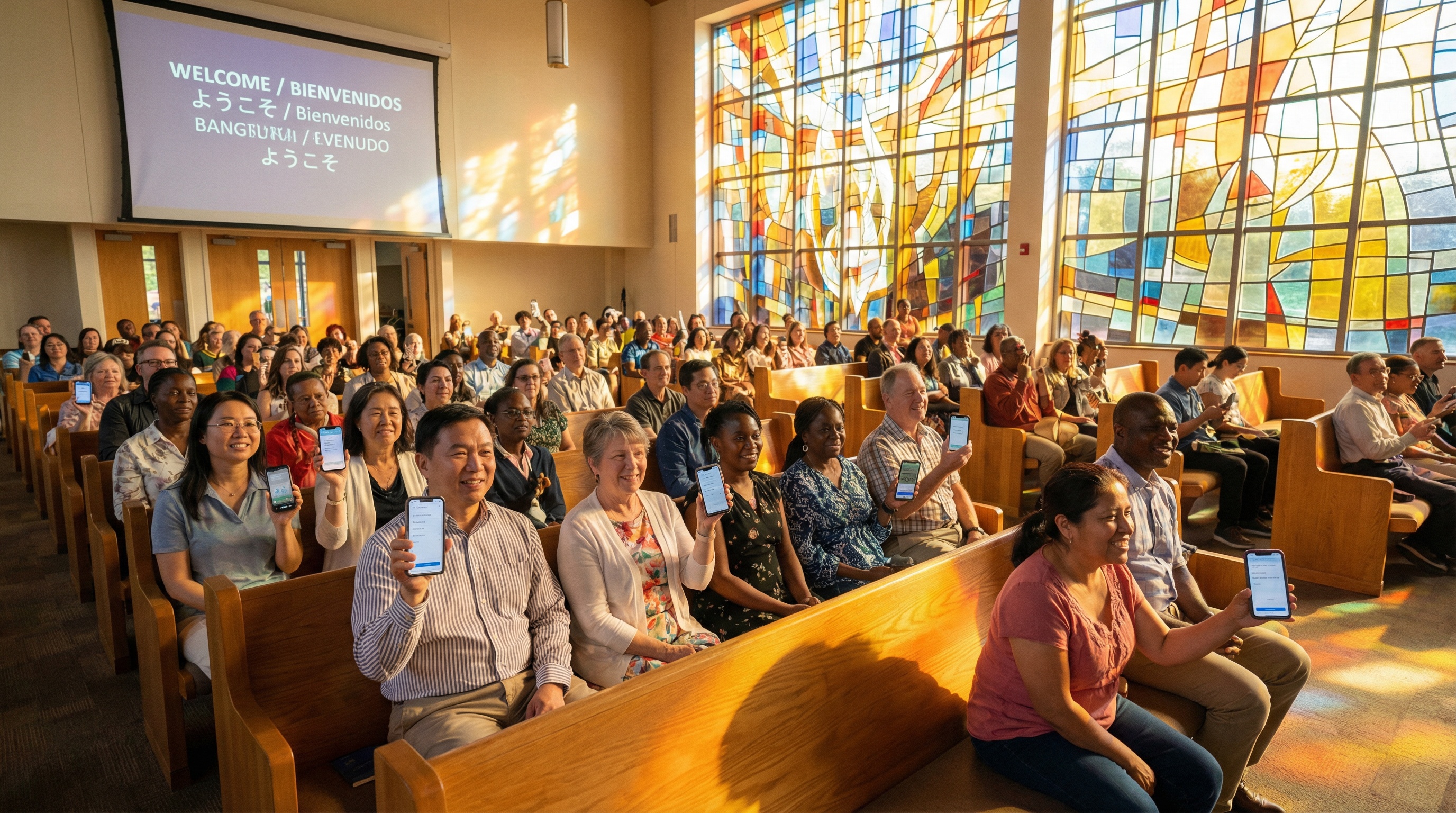
Your congregation is more diverse than ever. Families who speak Spanish, Vietnamese, Korean, Arabic, and dozens of other languages sit in your pews every Sunday—and many of them are only catching a fraction of what you're saying. A church translation system can change that, but with so many options available in 2026, how do you know which one is right for your church?
Whether you lead a 100-member community church or a multi-campus denomination with thousands of members, the right translation system can turn language barriers into bridges. In this guide, we'll walk through everything you need to know—from how modern church translation systems work to what they cost, what to look for, and how to get started this month.
Why Your Church Needs a Translation System Now
The numbers tell a compelling story. According to the U.S. Census Bureau, more than 67 million people in the United States speak a language other than English at home. That's roughly one in five Americans. In many metro areas—Houston, Los Angeles, Miami, New York, Dallas—that number climbs to one in three or higher.
For churches, this isn't just a demographic trend. It's a ministry opportunity. When a Guatemalan family walks into your church and can hear the sermon in Spanish, or when a Korean grandmother can follow along in her heart language, something powerful happens. They don't just attend—they belong.
Yet many churches still rely on outdated methods: printed bulletins in one or two languages, volunteer interpreters who may or may not show up, or simply hoping that non-English speakers will figure it out. These approaches leave people on the margins of your community when they should be at the center.
A modern church translation system removes those barriers, often in a matter of minutes and at a fraction of what you'd expect to pay.
How Modern Church Translation Systems Work
If your mental image of a translation system for church involves bulky headsets, radio receivers, and a sound booth full of wires, it's time for an update. Today's systems are almost entirely software-based, powered by AI, and designed so that anyone—not just your tech team—can set them up.
Here's the basic flow:
Step 1: Your pastor speaks naturally. No changes to your worship flow. The pastor preaches, the worship leader leads, announcements happen as usual.
Step 2: AI captures and translates in real time. The system picks up the audio (through your existing sound system or a simple microphone), processes it through AI trained on biblical and theological language, and translates it into the languages your congregation needs.
Step 3: Members listen on their own devices. Each person in your congregation opens a link on their phone, selects their preferred language, and hears the translation through their earbuds or reads along with captions on their screen. No special equipment needed.
The entire process happens in seconds. Your pastor says a sentence, and moments later, congregation members hear it in Spanish, Vietnamese, Mandarin, or any of 100+ supported languages.
What About Translation Quality?
This is the question every pastor asks first—and it's the right one. You're not translating a restaurant menu. You're translating the Word of God. The message matters deeply, and accuracy isn't optional.
The good news: AI translation has improved dramatically in recent years. The best church translation systems are specifically trained on religious content—biblical vocabulary, theological concepts, worship terminology, and the cadence of sermon delivery. This means they understand context that generic translation tools miss entirely.
For example, a general translation tool might stumble over phrases like "washed in the blood" or "born again." A church-specific system recognizes these as theological expressions and translates them with the proper spiritual meaning intact.
That said, no AI system is perfect. For high-stakes moments like wedding vows or baptism declarations, some churches pair AI translation with a human reviewer for an extra layer of confidence. But for weekly sermons, announcements, and worship—AI translation systems deliver consistent, reliable results that congregations trust.
Types of Church Translation Systems Compared
Not all translation systems are built the same. Here's a breakdown of the main approaches churches use today, so you can decide which fits your context.
Traditional Interpretation Equipment
How it works: Physical hardware—wireless receivers, headsets, transmitter units—with a live human interpreter speaking into a microphone in a separate booth.
Pros: High accuracy with skilled interpreters. Familiar to churches that have used this approach for years.
Cons: Expensive upfront ($2,000- style="min-width: 320px;"0,000+ for hardware). Requires finding, training, and scheduling interpreters for every service. Limited to 1-2 languages unless you hire multiple interpreters. Equipment needs maintenance. Interpreters burn out or move away.
Best for: Churches committed to one or two specific languages with reliable, trained interpreters already on staff.
AI-Powered Translation Platforms
How it works: Cloud-based software that uses artificial intelligence to translate speech in real time. Congregation members access translations on their personal devices via a link or QR code.
Pros: Supports 50-100+ languages simultaneously. No special equipment needed. Set up in minutes. Works for in-person services, livestreams, and recordings. Costs a fraction of traditional interpretation. Available every Sunday without scheduling volunteers.
Cons: Requires internet connectivity. AI accuracy, while excellent, isn't 100% perfect. Some congregants (especially older members) may need help connecting via their phones.
Best for: Churches serving diverse multilingual communities. Churches that want to reach many languages without the logistics of managing multiple interpreters.
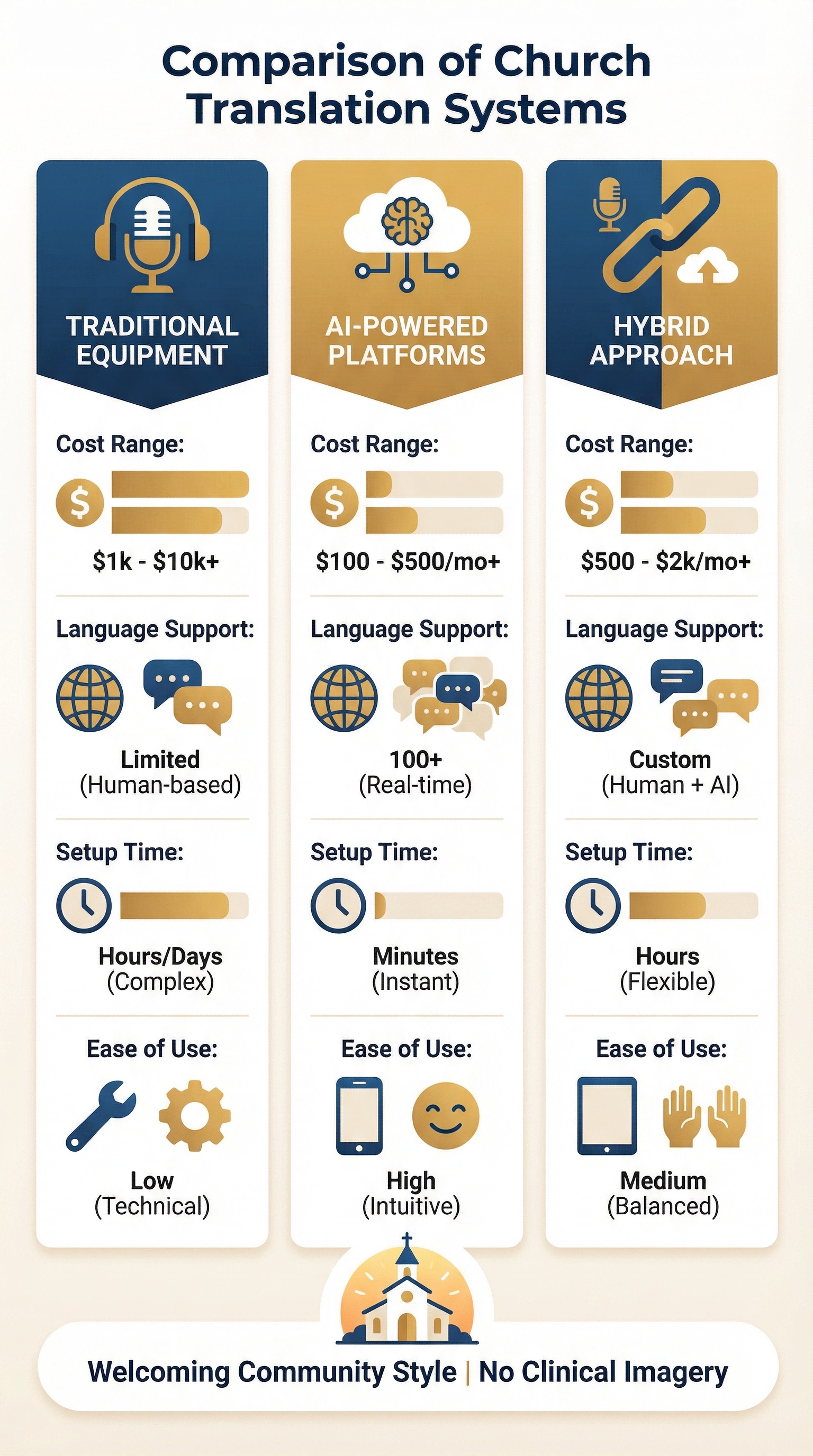
A quick comparison of church translation system types to help you decide which approach fits your congregation.
Hybrid Approach (AI + Human Review)
How it works: AI handles the initial translation in real time, while a human reviewer monitors and corrects any issues on the fly—similar to how live TV captions work.
Pros: Combines the speed and language breadth of AI with the precision of human oversight. Ideal for churches that want to broadcast translations on screens or in livestreams where accuracy is especially visible.
Cons: Requires at least one bilingual volunteer or staff member per language being reviewed. More complex to manage than pure AI.
Best for: Large churches or denominations broadcasting to wide audiences, where visible caption accuracy matters.
Translation Apps and Phone-Based Tools
How it works: Members download a specific app or use a browser-based tool on their phones to receive translated audio or captions during the service.
Pros: Minimal church infrastructure needed. Members control their own experience. Works across devices.
Cons: Relies on individual phones and internet access. Quality varies widely between apps. Some free tools lack church-specific training.
Best for: Smaller churches testing multilingual services for the first time, or churches supplementing an existing system.
What to Look for in a Church Translation System
Choosing the right system means thinking beyond just "does it translate?" Here are the factors that matter most for churches.
Language Coverage
How many languages does the system support? If your congregation speaks three languages, a system that handles 100+ gives you room to grow as your community changes. Ask specifically whether your congregation's languages are supported—some systems excel in European languages but lag behind in African or Southeast Asian ones.
Biblical and Theological Accuracy
This is non-negotiable for church use. Ask whether the AI has been specifically trained on biblical content, worship language, and theological terminology. Generic translation tools that work fine for business meetings can produce awkward or even misleading translations of Scripture. The best church translation systems are trained on religious content and understand the nuances of sermon delivery.
Ease of Setup
Your worship team shouldn't need an IT degree to run translations. Look for systems that require minimal setup—ideally just a microphone input or audio feed from your existing sound system. The congregation-facing side should be equally simple: a link or QR code they scan with their phone, no app download required.
Device Compatibility
Your congregation uses iPhones, Android phones, tablets, and maybe even laptops. The system should work across all of them without requiring specific hardware or app installations. Browser-based access is the gold standard here.
Streaming and Recording Integration
If you livestream services (and most churches do in 2026), your church translation system should integrate with your streaming setup. Can it add translated captions to your YouTube or Facebook stream? Can it provide translated audio tracks? Can you use translations in recorded sermon archives for later viewing?
Cost Structure
Church budgets are tight. Look for transparent pricing without long-term contracts. Common models include pay-per-use (charged by the hour or by language), monthly subscriptions, or annual plans. Some providers offer free tiers or trials so you can test before committing.
Support and Onboarding
When something goes wrong on a Sunday morning, you need help fast. Check whether the provider offers responsive support, onboarding assistance, and resources specifically designed for church teams—not generic IT documentation.
How Much Does a Church Translation System Cost?
Cost is one of the biggest concerns for church leaders, and understandably so. Here's a realistic breakdown of what you can expect in 2026.
Traditional interpretation equipment: $2,000- style="min-width: 320px;"0,000+ upfront for hardware, plus ongoing costs for interpreters ($50-$200 per service per language, depending on your area and interpreter availability).
AI-powered translation platforms: $0-$500 per month, depending on usage. Many platforms offer pay-as-you-go options starting at $5- style="min-width: 320px;"0 per hour per language. A church using Spanish translation for one weekly service might spend $20-$40 per month. A larger church translating into five languages for multiple services could spend $200-$500 per month.
Free options: Some platforms offer limited free tiers (fewer languages, limited minutes). These can be excellent for testing but may not scale for regular weekly use.
When you compare the cost of AI translation to hiring professional interpreters—which can easily run $500-$2,000+ per month for a single language—the savings are significant. And unlike interpreters, AI systems don't call in sick, move away, or need vacation coverage.
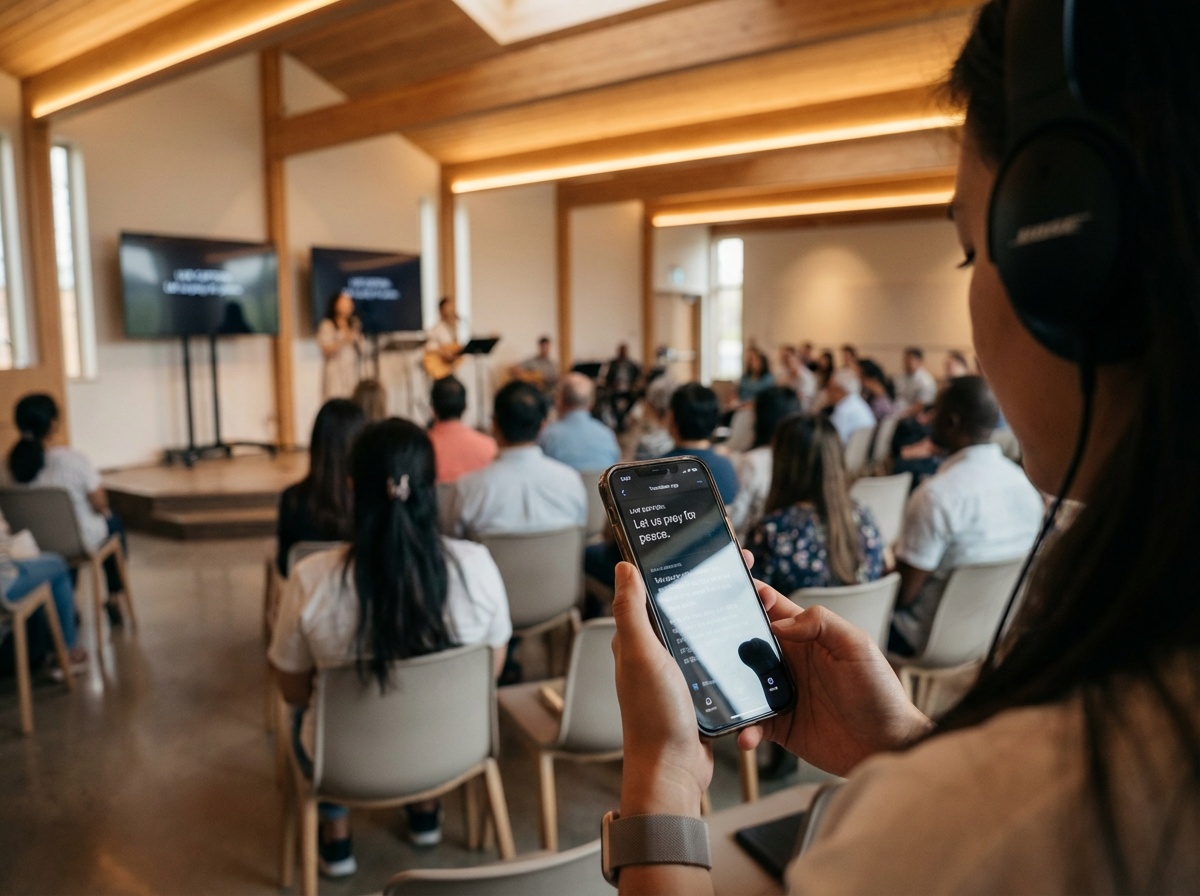
Congregation members simply open a link on their phone to hear or read the sermon in their preferred language.
Real Churches Using Translation Systems Today
Hundreds of churches worldwide are already using AI-powered translation systems to reach their multilingual congregations. Here are a few examples of how it works in practice.
Hillsong Church reaches congregants in 15+ languages across their global locations, using technology to ensure that every campus—regardless of the primary language spoken in that country—can participate fully in worship.
Korean Presbyterian churches in Texas have seen their English-speaking attendance grow significantly after adding real-time English translation to their Korean-language services. What was once a barrier for second-generation Korean Americans and curious neighbors became an invitation.
Small community churches in immigrant-rich neighborhoods use translation systems to serve Vietnamese, Spanish, and Arabic-speaking families who might otherwise never walk through the door. For these churches, translation isn't about technology—it's about hospitality.
The common thread? These churches didn't need massive budgets or technical expertise. They started with one language, saw the impact, and expanded from there.
How to Get Started This Week
You don't need to overhaul your entire worship setup to begin offering multilingual services. Here's a practical, step-by-step path that any church can follow.
1. Identify your languages. Talk to your congregation. Which languages are spoken at home? Which families are struggling to follow English-only services? Even a quick survey or informal conversation can reveal languages you didn't know were represented in your community.
2. Choose a platform. Based on the comparison above, select a translation system that fits your size, budget, and technical comfort level. Most AI-powered platforms offer free trials, so you can test before you commit. Glossa.live, for example, supports 100+ languages and requires no special equipment—just open a link on any device.
3. Run a test service. Before your public launch, run a test during a rehearsal or midweek service. Have a few bilingual volunteers listen to the translations and provide feedback on accuracy and clarity.
4. Announce it to your congregation. When you're ready to go live, make it easy for people to participate. Display a QR code on your screens. Include the link in your bulletin. Have greeters ready to help anyone who needs assistance connecting.
5. Start with one language and expand. Don't try to launch ten languages on your first Sunday. Start with the language most needed in your community, get comfortable, gather feedback, and add more languages over time.
If you've already explored related topics, our guide on how AI translation compares to traditional church interpreters breaks down the pros and cons of each approach, and our article on reaching Spanish-speaking families at your church offers practical outreach strategies you can use alongside your new translation system.
Common Questions About Church Translation Systems
Will older members of my congregation be able to use it?
Most AI translation systems work through a simple web link—no app download required. If someone can open a website on their phone, they can use it. Many churches also display translated captions on screens for members who prefer not to use their phones.
What about internet connectivity?
You'll need a stable internet connection for AI-powered translation. Most churches already have Wi-Fi for livestreaming, so this usually isn't an issue. If your connectivity is limited, talk to your provider about offline or low-bandwidth options.
Can I use it for events beyond Sunday services?
Absolutely. Church translation systems work for Bible studies, small groups, conferences, mission events, wedding ceremonies, and any gathering where language barriers exist. Many churches discover that mid-week events benefit even more than Sunday services, because smaller settings make the impact of translation more personal.
Is the translated audio natural-sounding?
Modern AI systems use voice cloning and natural language processing to produce audio that sounds smooth and natural—not robotic. The best systems are specifically trained on the pacing and tone of sermon delivery, so the translated audio feels like listening to a real person, not a machine.
Making Every Voice Heard in Your Church
A church translation system isn't just a piece of technology. It's a statement about who your church is and who it welcomes. When a family walks in and discovers they can hear the message in their own language, the impact goes far beyond comprehension—it says, "You belong here."
The tools are more accessible, more affordable, and more accurate than they've ever been. Whether your congregation speaks two languages or twenty, there's a solution that fits your church and your budget. The only question is: when will you start?
If you're ready to explore what multilingual services could look like for your church, try Glossa.live free and see how real-time AI translation works with your congregation—no equipment, no contracts, no credit card required.